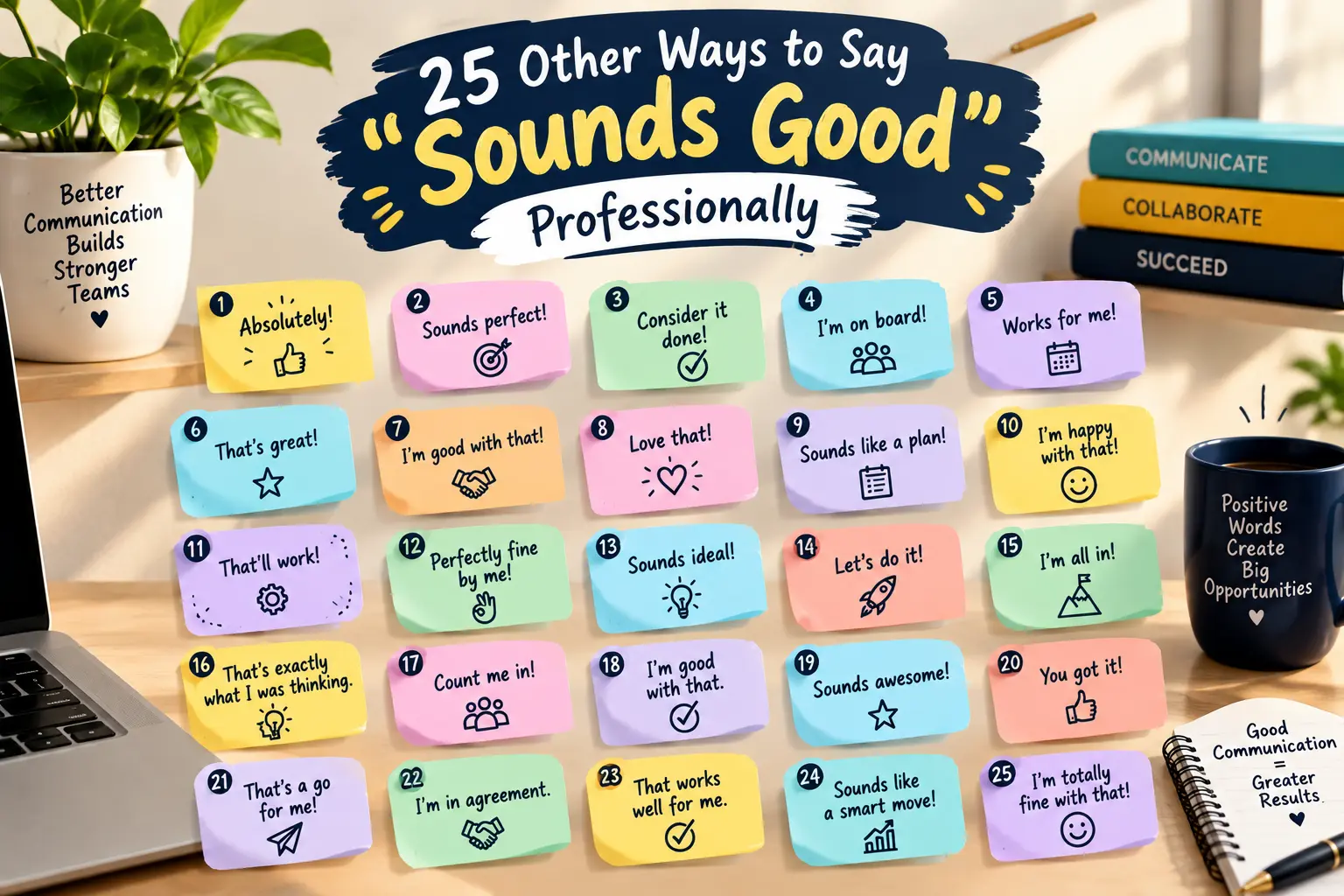

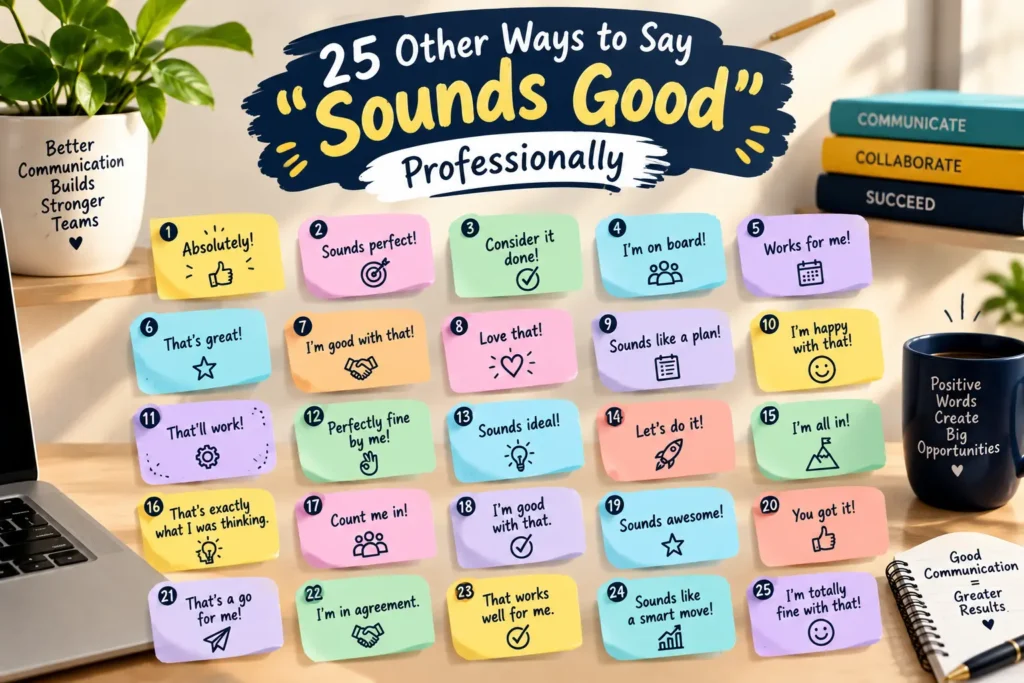
Finding the right professional alternative to “sounds good” can make a simple response feel more polished, confident, and appropriate. While “sounds good” is friendly and natural, it can sometimes feel too casual for a formal email, workplace conversation, client message, or academic setting.
Knowing different ways to say “sounds good professionally” gives you more control over your tone. In 2026, students, professionals, managers, freelancers, and ESL learners can all benefit from choosing expressions that match the situation, relationship, and level of formality. A small change in wording can make your communication sound more thoughtful without making it unnecessarily complicated.
When Should You Use These Alternatives?
The best alternative depends on who you are speaking to and how formal the situation is.
- Casual conversations: Use friendly alternatives when responding to classmates, coworkers you know well, or friends.
- Professional situations: Choose polished expressions when communicating with managers, clients, colleagues, or business partners.
- Academic writing: Use clear and neutral language when responding to professors, researchers, classmates, or academic teams.
- Emails and messages: Select an expression that fits the relationship and purpose of the message, especially when confirming plans or agreeing to a proposal.
- Social media posts: More relaxed alternatives can work well when responding publicly while still keeping your language respectful.
- Public speaking: Choose confident phrases that clearly show agreement and avoid sounding too informal.
⚠️ Warning: Avoid using highly formal expressions in relaxed conversations when they sound unnatural. Likewise, phrases such as “sounds good” may be too casual when you are replying to a formal business proposal, official request, or important professional email.
25+ Other Ways to Say “Sounds Good”
1. That works well.
Meaning / Definition
“That works well” means that you agree with an idea, plan, suggestion, or arrangement. It communicates approval in a simple and professional way.
Usage
This is a semi-formal expression that works especially well in workplace conversations and emails. Use it when you want to confirm that a proposed option is suitable for you.
💡 Tip
Use this phrase when you want to sound positive without being overly enthusiastic.
Examples
- That works well for me, so we can move forward with the plan.
- Your suggested meeting time works well.
- That schedule works well with our current deadlines.
- The revised delivery date works well for our team.
2. That sounds great.
Meaning / Definition
“That sounds great” shows that you strongly like or approve of an idea. It is warmer and more enthusiastic than simply saying “sounds good.”
Usage
This phrase is semi-formal and suitable for friendly professional conversations, emails, and messages. It works particularly well when someone has suggested an opportunity, plan, or solution.
💡 Tip
Use it when you genuinely want to show enthusiasm.
Examples
- That sounds great; I would be happy to participate.
- Your proposal sounds great, and I look forward to discussing it.
- That sounds great for the upcoming project.
- The idea sounds great, especially given our current timeline.
3. That works for me.
Meaning / Definition
“That works for me” means that a suggested plan or arrangement is acceptable to you. It clearly communicates agreement without sounding overly formal.
Usage
This is a semi-formal phrase commonly used in workplace discussions and emails. It is especially useful when confirming times, dates, tasks, or arrangements.
💡 Tip
Use it when the other person’s suggestion meets your needs.
Examples
- Thursday afternoon works for me.
- That deadline works for me, provided we receive the materials today.
- The proposed schedule works for me.
- Meeting online instead of in person works for me.
4. I agree with that.
Meaning / Definition
“I agree with that” directly communicates agreement with an idea or statement. It is clear, straightforward, and professional.
Usage
This is a neutral, semi-formal expression that works well in meetings, emails, and academic discussions. Use it when you want to clearly show that you share someone’s view.
💡 Tip
Use this phrase when agreement itself is more important than confirming an arrangement.
Examples
- I agree with that approach to the problem.
- I agree with that recommendation based on the available information.
- I agree with that assessment of the situation.
- I agree with that suggestion and think we should discuss the next steps.
5. I’m happy with that.
Meaning / Definition
“I’m happy with that” means that you are satisfied with an idea, decision, result, or arrangement. It communicates approval in a friendly way.
Usage
This is semi-formal and works well in professional conversations and less formal emails. It is useful when someone asks whether you are satisfied with a proposed option.
💡 Tip
Use it when you want to emphasize satisfaction rather than simple agreement.
Examples
- I’m happy with that arrangement.
- I’m happy with that version of the report.
- We’re happy with that proposal and can proceed.
- I’m happy with that solution as long as the deadline remains unchanged.
6. That’s acceptable.
Meaning / Definition
“That’s acceptable” means that something meets the required standard or is satisfactory. It shows approval without expressing strong enthusiasm.
Usage
This is a formal and neutral expression that can work in business, academic, and administrative communication. Use it when you want to communicate that an option is suitable.
💡 Tip
Because it can sound reserved, avoid it when you want to express strong excitement.
Examples
- The proposed timeline is acceptable.
- This revised version is acceptable for submission.
- The alternative arrangement is acceptable to our department.
- Your suggested changes are acceptable, so you may proceed.
7. That seems appropriate.
Meaning / Definition
“That seems appropriate” means that something appears suitable for the situation. It communicates agreement while leaving room for professional judgment.
Usage
This is a formal, measured expression that works well in professional and academic contexts. It is useful when responding to recommendations, procedures, or decisions.
💡 Tip
Use “seems” when you want to sound professional without presenting your opinion as absolute.
Examples
- That seems appropriate given the circumstances.
- The proposed response seems appropriate for the client.
- That seems appropriate for this stage of the project.
- Your recommended approach seems appropriate based on the information available.
8. I’m on board with that.
Meaning / Definition
“I’m on board with that” means that you support or agree with an idea or plan. It has a cooperative and positive tone.
Usage
This is semi-formal and common in modern workplace communication. Use it with colleagues or teams when you want to express active support.
💡 Tip
It is best for friendly professional environments rather than highly formal correspondence.
Examples
- I’m on board with that plan.
- I’m on board with the proposed changes to the workflow.
- The marketing team is on board with the new strategy.
- I’m completely on board with giving the project another week.
9. I’m in agreement.
Meaning / Definition
“I’m in agreement” means that your opinion or decision matches someone else’s. It is a more formal alternative to “I agree.”
Usage
This phrase is formal and can be useful in professional, academic, or official communication. Use it when you want your agreement to sound deliberate and measured.
💡 Tip
Use it sparingly because “I agree” is usually more natural in everyday professional communication.
Examples
- I’m in agreement with the recommendations outlined in the report.
- I’m in agreement with your assessment.
- After reviewing the evidence, I’m in agreement with the proposed approach.
- I’m in agreement that additional research would be useful.
10. I’m comfortable with that.
Meaning / Definition
“I’m comfortable with that” means that you have no objection to a proposed idea or arrangement. It can communicate approval while acknowledging that you have considered the option.
Usage
This is semi-formal and commonly used in workplace discussions and negotiations. Use it when someone is asking whether a particular decision is acceptable to you.
💡 Tip
This phrase is especially useful when you want to sound thoughtful rather than overly enthusiastic.
Examples
- I’m comfortable with that timeline.
- I’m comfortable with the proposed changes.
- If everyone agrees, I’m comfortable with that arrangement.
- I’m comfortable with moving forward under those conditions.
11. That’s a good approach.
Meaning / Definition
“That’s a good approach” expresses approval of someone’s method or strategy. It focuses specifically on how something will be handled.
Usage
This is a semi-formal phrase that works well in professional and academic settings. Use it when responding to a proposed method, solution, or strategy.
💡 Tip
Use “approach” when discussing processes rather than simple scheduling decisions.
Examples
- That’s a good approach to improving customer communication.
- Your suggestion is a good approach for organizing the data.
- That’s a good approach, especially given the limited budget.
- I think that’s a good approach to handling the situation.
12. That makes sense.
Meaning / Definition
“That makes sense” means that an idea or explanation is logical and understandable. It can show both agreement and understanding.
Usage
This is a neutral to semi-formal expression that is very common in workplace conversations. It can be used when someone explains a decision, process, or recommendation.
💡 Tip
Use it when you understand the reasoning behind an idea, not only when you approve of it.
Examples
- That makes sense given the project’s current requirements.
- Your explanation makes sense to me.
- That makes sense, so I’ll update the document accordingly.
- The revised process makes sense from an operational perspective.
13. I think that’s a good idea.
Meaning / Definition
“I think that’s a good idea” communicates positive agreement with a suggestion. It sounds friendly while still being appropriate for many professional situations.
Usage
This is semi-formal and useful in meetings, emails, and everyday workplace conversations. Use it when someone proposes a new idea or solution.
💡 Tip
Adding “I think” makes your response sound less forceful and more conversational.
Examples
- I think that’s a good idea for the next campaign.
- I think that’s a good idea, particularly if we want to save time.
- I think that’s a good idea for improving the onboarding process.
- I think that’s a good idea, and I’m happy to help implement it.
14. I support that.
Meaning / Definition
“I support that” means that you approve of or favor a particular proposal, decision, or course of action. It communicates clear and active agreement.
Usage
This is semi-formal and works well in meetings, workplace discussions, and professional messages. Use it when you want to make your position clear.
💡 Tip
This phrase is stronger than simply saying that something “works” for you.
Examples
- I support that proposal and believe we can begin next week.
- I support that decision based on the information we have.
- I support the team’s recommendation.
- I support that change because it should simplify the process.
15. That should work.
Meaning / Definition
“That should work” means that you expect a proposed idea or arrangement to be suitable. It communicates practical acceptance rather than strong excitement.
Usage
This is neutral to semi-formal and common in professional conversations and emails. Use it when you believe a plan is likely to meet the requirements.
💡 Tip
“Should” makes the statement slightly less absolute, which can be useful when circumstances may change.
Examples
- That should work for the meeting schedule.
- Sending the documents by Friday should work.
- That solution should work for most users.
- The revised process should work without affecting the deadline.
16. That’s a solid plan.
Meaning / Definition
“That’s a solid plan” means that you consider a proposed plan practical and well thought out. It communicates confident approval.
Usage
This is semi-formal and works best in modern workplace conversations. It may sound too conversational for highly formal documents.
💡 Tip
Use this expression when you want to give someone confidence in their proposed plan.
Examples
- That’s a solid plan for launching the new service.
- I think that’s a solid plan for managing the workload.
- That’s a solid plan, especially considering the available resources.
- Your team has developed a solid plan for the next quarter.
17. I approve of that.
Meaning / Definition
“I approve of that” means that you consider an idea, action, or decision acceptable or appropriate. It communicates explicit approval.
Usage
This is semi-formal and can be useful when someone is asking for your approval. It may sound more authoritative depending on the context.
💡 Tip
Use it when you actually have a role in approving something, rather than simply agreeing with a colleague.
Examples
- I approve of the proposed changes.
- The committee approves of the revised procedure.
- I approve of the way you handled the customer request.
- If the budget remains unchanged, I approve of the plan.
18. I’m happy to proceed.
Meaning / Definition
“I’m happy to proceed” means that you are willing and ready to continue with a plan. It communicates both agreement and willingness to take the next step.
Usage
This is a professional, semi-formal expression that works especially well in emails and business discussions. Use it when a decision has been made and you want to confirm that you are ready to continue.
💡 Tip
It is particularly useful when replying to a proposal or requesting confirmation.
Examples
- I’m happy to proceed with the revised agreement.
- We’re happy to proceed once the final details are confirmed.
- I’m happy to proceed with the proposed schedule.
- If you are comfortable with the terms, I’m happy to proceed.
19. I’m pleased with that.
Meaning / Definition
“I’m pleased with that” means that you are satisfied with a result, suggestion, or arrangement. It expresses positive approval in a polished way.
Usage
This is formal to semi-formal and works well in professional communication. Use it when you want to sound positive without being overly casual.
💡 Tip
This expression is particularly natural when responding to completed work or a revised proposal.
Examples
- I’m pleased with the final version of the report.
- We’re pleased with the proposed arrangement.
- I’m pleased with how the project has developed.
- The client was pleased with the updated presentation.
20. That meets my expectations.
Meaning / Definition
“That meets my expectations” means that something has reached the standard or result you were hoping for. It communicates clear satisfaction.
Usage
This is formal and useful in professional settings when evaluating work, results, or proposals. It can sound more evaluative than simply saying “sounds good.”
💡 Tip
Use this phrase when you are assessing an outcome rather than merely agreeing to a suggestion.
Examples
- The revised report meets my expectations.
- This solution meets my expectations for the initial launch.
- The final design meets our expectations.
- The completed work meets the expectations outlined in the original brief.
21. That is suitable.
Meaning / Definition
“That is suitable” means that something is appropriate for a particular purpose or situation. It gives a clear but measured indication of acceptance.
Usage
This is formal and appropriate for professional, academic, or administrative communication. Use it when discussing documents, arrangements, methods, or proposed solutions.
💡 Tip
Specify what the option is suitable for when greater clarity is needed.
Examples
- This format is suitable for the final report.
- The proposed location is suitable for the event.
- That method is suitable for this type of research.
- The revised wording is suitable for a professional audience.
22. I have no objections.
Meaning / Definition
“I have no objections” means that you do not oppose a proposed idea or action. It communicates acceptance without necessarily showing enthusiasm.
Usage
This is formal and useful in professional, administrative, and official-style communication. Use it when someone needs confirmation that you do not oppose a decision.
💡 Tip
Choose this phrase when neutrality is more appropriate than enthusiastic approval.
Examples
- I have no objections to the proposed schedule.
- I have no objections to proceeding with the revised plan.
- The department has no objections to the request.
- I have reviewed the changes and have no objections.
23. That is agreeable to me.
Meaning / Definition
“That is agreeable to me” means that a proposed arrangement is acceptable to you. It is a formal way to communicate agreement.
Usage
This is formal and more common in business, negotiation, or carefully worded correspondence than everyday conversation. Use it when discussing terms, arrangements, or agreements.
💡 Tip
In ordinary workplace conversation, “That works for me” will usually sound more natural.
Examples
- The proposed payment schedule is agreeable to me.
- The revised terms are agreeable to both parties.
- That arrangement is agreeable to me.
- The suggested timeline is agreeable to our team.
24. I can work with that.
Meaning / Definition
“I can work with that” means that a proposed option is practical and acceptable for you. It often suggests flexibility rather than strong enthusiasm.
Usage
This is semi-formal and natural in workplace conversations and messages. Use it when someone has offered an option that you can adapt to or accept.
💡 Tip
It is especially useful during negotiations or collaborative discussions.
Examples
- I can work with that deadline.
- I can work with the revised budget.
- I can work with that format if the remaining details are confirmed.
- The design is different from our original idea, but I can work with that.
25. That sounds reasonable.
Meaning / Definition
“That sounds reasonable” means that a suggestion appears fair, logical, or practical. It communicates agreement while remaining measured.
Usage
This is neutral to semi-formal and works well in professional conversations, negotiations, and emails. Use it when you want to acknowledge that someone’s proposal is sensible.
💡 Tip
This phrase is useful when you want to agree without sounding overly enthusiastic.
Examples
- That sounds reasonable given the circumstances.
- Your proposed deadline sounds reasonable to me.
- The requested adjustment sounds reasonable.
- That sounds reasonable, so we can discuss the remaining details.
H2: Bonus Section — Polite Variations
Polite variations are useful when you want to express agreement while keeping your tone respectful and professional. These options work particularly well in workplace emails, client communication, and conversations with people you do not know well.
- “That sounds good to me.” — A polite and natural option for confirming a suggestion or arrangement.
- “That works perfectly for me.” — Use this when you want to show stronger approval of a proposed plan.
- “I’m happy to go ahead with that.” — A friendly professional way to confirm that you are ready to proceed.
- “That seems like a good option.” — Useful when acknowledging a suggestion without sounding overly enthusiastic.
- “I’d be happy to proceed with that.” — A polished choice for professional emails and client communication.
- “That arrangement is perfectly fine with me.” — Suitable when you want to reassure someone that you have no concerns.
Final Tips — How to Choose the Right Phrase
Choosing the right alternative is less about using complicated vocabulary and more about matching your words to the situation.
- Consider the setting: Use relaxed phrases such as “That works for me” in everyday workplace conversations and more formal expressions such as “That is suitable” in formal communication.
- Know your audience: Consider whether you are speaking to a friend, coworker, manager, client, professor, or business partner.
- Match the formality: “I’m on board with that” is conversational, while “I have no objections” is considerably more formal.
- Spoken vs written: Some expressions sound natural when spoken but may feel less polished in formal emails. Choose wording that fits the communication channel.
- Cultural sensitivity: Professional English varies across countries and workplaces, so pay attention to how colleagues and organizations normally communicate.
- Emotional tone: Use “That sounds great” when you want enthusiasm, but choose “That sounds reasonable” when you want a more measured response.
- Practice naturally: Learn several alternatives and use them in real conversations and emails so your professional English becomes more flexible and natural.