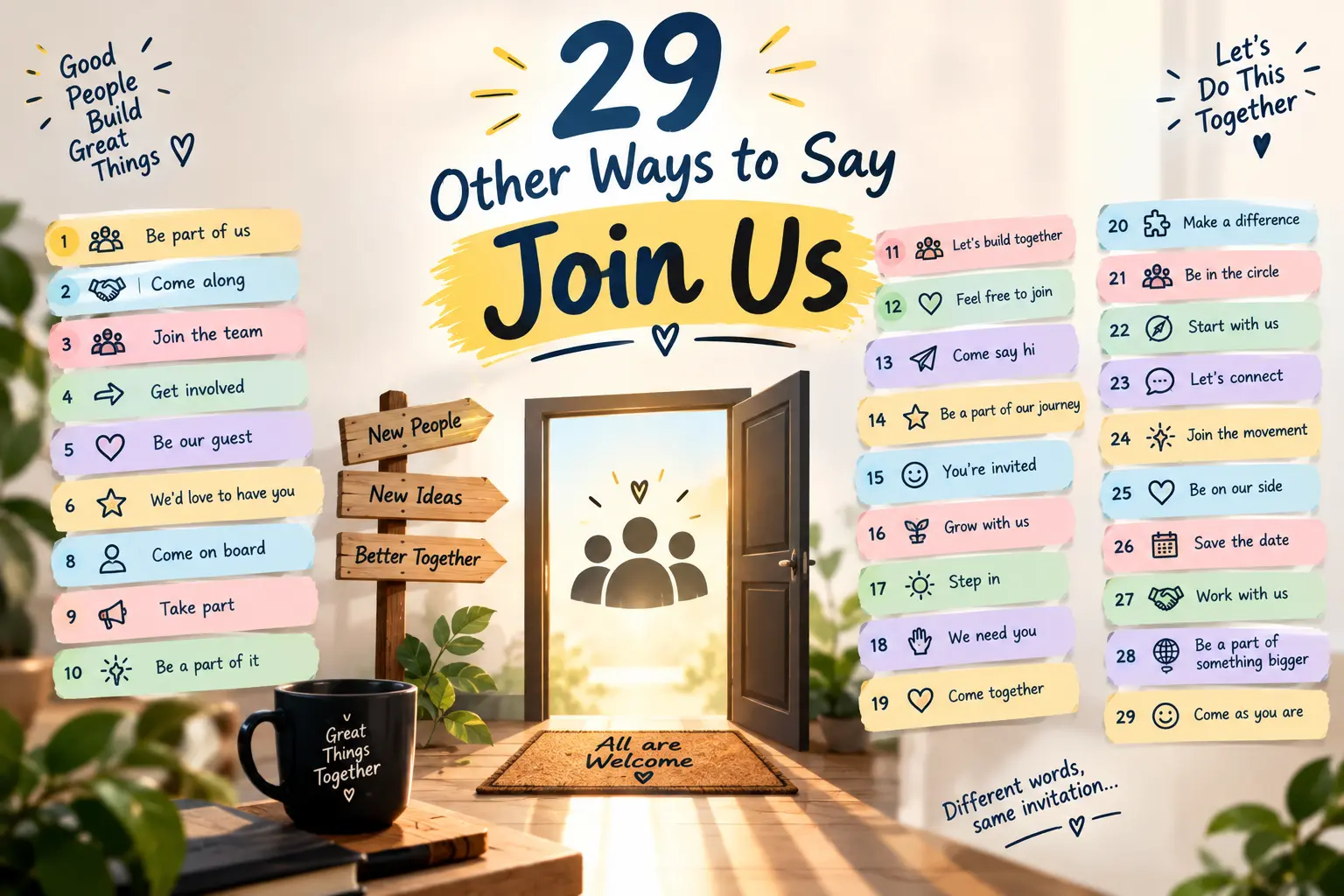

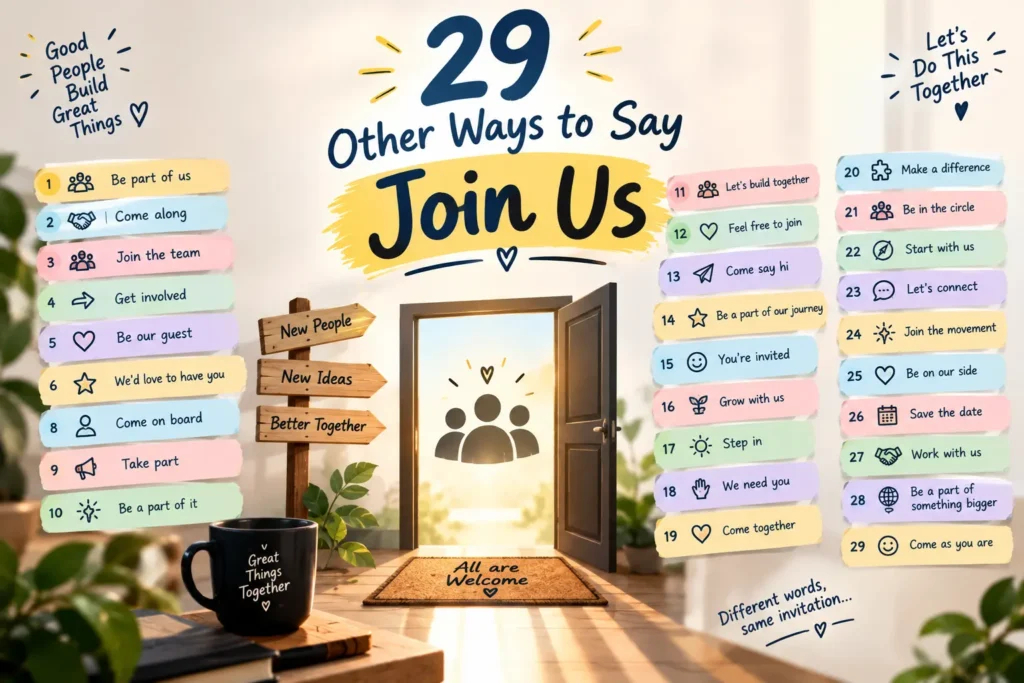
The phrase “join us” is a simple and welcoming way to invite someone to become part of an event, activity, group, meeting, celebration, or community. While it works in almost any situation, using different expressions can make your invitation sound more friendly, professional, exciting, or personal.
Whether you are writing an invitation, sending a message to friends, promoting an event, or welcoming someone to a team, having several alternatives to “join us” can make your English sound more natural and engaging. The best phrase depends on your relationship with the person and the situation in which you are inviting them.
In this guide, you’ll find 29 other ways to say “join us”, including casual, professional, warm, creative, and inviting expressions. Each phrase includes its meaning, usage, helpful tips, and examples so you can confidently choose the right alternative.
When Should You Use These Alternatives?
- Use casual alternatives when inviting friends, classmates, coworkers, or people you know well.
- Choose professional expressions for business meetings, workplace events, conferences, and formal invitations.
- Use warm and friendly phrases when you want your invitation to feel personal and welcoming.
- Choose creative expressions for social media posts, community events, parties, and promotional content.
- Use inclusive phrases when you want people to feel that their participation is genuinely valued.
- Consider the relationship, event, and tone before choosing an alternative to “join us.”
Warning: Not every alternative has exactly the same meaning. For example, “come along” is casual, while “we invite you to participate” sounds much more formal.
29 Other Ways to Say “Join Us”
1. Come Along
Meaning / Definition: “Come along” is a friendly and casual way to invite someone to accompany you or attend an event.
Usage: It is commonly used in conversations with friends, family members, and acquaintances.
💡 Tip: Use this phrase when the invitation is relaxed rather than formal.
Examples:
- Come along with us to the concert tonight.
- We’re going for coffee after work, so come along.
- Come along and enjoy the celebration.
- If you’re free this weekend, come along with us.
2. Come With Us
Meaning / Definition: “Come with us” directly invites someone to accompany you somewhere or participate in an activity.
Usage: This phrase is natural in everyday spoken English.
💡 Tip: It is especially useful when you are already planning to go somewhere with a group.
Examples:
- Come with us to the restaurant tonight.
- We’re heading to the park—come with us!
- Come with us if you have some free time.
- We’re going shopping after class. Come with us.
3. Come and Join Us
Meaning / Definition: “Come and join us” is a warm and welcoming invitation asking someone to become part of an activity or gathering.
Usage: It works well for social events, meals, celebrations, and group activities.
💡 Tip: This expression sounds slightly warmer than simply saying “join us.”
Examples:
- Come and join us for dinner.
- Come and join us at the party tonight.
- We’re having a great time—come and join us!
- Come and join us for a cup of coffee.
4. Be Part of It
Meaning / Definition: “Be part of it” invites someone to participate in or experience something with others.
Usage: It is useful for events, projects, campaigns, celebrations, and communities.
💡 Tip: This phrase creates a sense of inclusion and belonging.
Examples:
- We’re celebrating our anniversary, and we’d love you to be part of it.
- Be part of this exciting community.
- We hope you’ll be part of the project.
- Don’t miss your chance to be part of it.
5. Come Join the Fun
Meaning / Definition: “Come join the fun” is an energetic and informal invitation to participate in something enjoyable.
Usage: It is ideal for parties, games, social gatherings, and recreational activities.
💡 Tip: Use it when you want your invitation to sound enthusiastic.
Examples:
- Come join the fun at our summer party.
- Everyone is playing games, so come join the fun!
- Come join the fun this Saturday.
- We’re having a great afternoon—come join the fun.
6. Get Involved
Meaning / Definition: “Get involved” means to actively participate in an activity, organization, project, or community.
Usage: It is particularly common in professional, educational, volunteer, and community settings.
💡 Tip: This phrase suggests active participation rather than simply attending.
Examples:
- We’d love for you to get involved in our community.
- There are many ways to get involved with the project.
- Students are encouraged to get involved in campus activities.
- Get involved and help us make a difference.
7. Take Part
Meaning / Definition: “Take part” means to participate in an activity, event, or organized effort.
Usage: It works in both casual and formal English.
💡 Tip: “Take part” is a useful choice when you want to emphasize participation.
Examples:
- We hope you’ll take part in the celebration.
- Everyone is welcome to take part in the competition.
- Would you like to take part in our workshop?
- Many local residents took part in the event.
8. Participate With Us
Meaning / Definition: “Participate with us” is a polite way to invite someone to become actively involved in an activity.
Usage: It is more formal than “come with us” and works well in professional or educational contexts.
💡 Tip: Use it when the person is expected to contribute rather than simply attend.
Examples:
- We would be delighted if you could participate with us.
- Students are invited to participate with us in the discussion.
- We hope you’ll participate with us during the workshop.
- Please participate with us in this important initiative.
9. We’d Love to Have You
Meaning / Definition: “We’d love to have you” is a warm and friendly way to tell someone that their presence would be appreciated.
Usage: It is commonly used for parties, dinners, events, and informal gatherings.
💡 Tip: This phrase makes the invitation feel personal and sincere.
Examples:
- We’re having dinner on Saturday, and we’d love to have you.
- We’re hosting a small gathering, and we’d love to have you there.
- Come to the celebration—we’d love to have you.
- We’re planning a weekend trip and would love to have you with us.
10. We’d Be Happy to Have You
Meaning / Definition: This phrase politely communicates that someone is welcome and wanted at an event or activity.
Usage: It works well in friendly and semi-professional situations.
💡 Tip: It is a good choice when you want to sound welcoming without being overly casual.
Examples:
- We’d be happy to have you at the meeting.
- We’d be happy to have you join our event.
- If you’re available, we’d be happy to have you.
- We’d be happy to have you as part of the team.
11. Come Be Part of the Team
Meaning / Definition: This phrase invites someone to become a member of a team or group.
Usage: It is useful for workplaces, sports teams, volunteer organizations, and projects.
💡 Tip: Use it when the invitation involves an ongoing role rather than a single event.
Examples:
- Come be part of the team and help us grow.
- We’re looking for creative people to come be part of the team.
- Come be part of the team and share your ideas.
- We’d love for you to come be part of our team.
12. We Welcome You
Meaning / Definition: “We welcome you” expresses an open invitation and communicates that someone is accepted or encouraged to participate.
Usage: It is appropriate for communities, organizations, events, and formal announcements.
💡 Tip: This phrase sounds more formal and inclusive than “come with us.”
Examples:
- We welcome you to our annual celebration.
- We welcome you to become part of our community.
- We welcome you to participate in the program.
- Everyone is welcome, and we welcome you to join us.
13. You’re Invited
Meaning / Definition: “You’re invited” is a direct and friendly way to tell someone they are welcome to attend an event.
Usage: It is commonly used for parties, meetings, celebrations, dinners, and special occasions.
💡 Tip: This is one of the simplest alternatives when you want to make a clear invitation.
Examples:
- You’re invited to our annual dinner.
- You’re invited to celebrate with us this weekend.
- You’re invited to our community event.
- You’re invited to join the celebration.
14. We Invite You to Join
Meaning / Definition: “We invite you to join” is a polite and professional invitation to participate in something.
Usage: It is suitable for formal announcements, organizations, businesses, and events.
💡 Tip: Follow it with the specific event, group, or activity.
Examples:
- We invite you to join our upcoming workshop.
- We invite you to join our growing community.
- We invite you to join us for an evening of discussion.
- We invite you to join this exciting initiative.
15. Come On Over
Meaning / Definition: “Come on over” is a relaxed expression inviting someone to come to a particular place.
Usage: It is mainly used in casual conversations with friends, relatives, or people you know well.
💡 Tip: Use this phrase for informal gatherings rather than professional events.
Examples:
- Come on over and have dinner with us.
- We’re having a barbecue—come on over!
- Come on over whenever you’re ready.
- We’re all at Sarah’s house, so come on over.
16. Come Hang Out With Us
Meaning / Definition: “Come hang out with us” is a very casual invitation to spend relaxed, social time together.
Usage: It is commonly used among friends and younger speakers.
💡 Tip: This expression is perfect for informal plans but is too casual for most professional situations.
Examples:
- Come hang out with us after class.
- We’re watching a movie tonight—come hang out with us.
- Come hang out with us this weekend.
- Everyone is relaxing at the beach, so come hang out with us.
17. Join the Celebration
Meaning / Definition: “Join the celebration” invites someone to participate in a special occasion or festive event.
Usage: It works well for birthdays, anniversaries, achievements, holidays, and community events.
💡 Tip: This phrase immediately tells the reader that the event has a celebratory purpose.
Examples:
- Join the celebration as we mark our fifth anniversary.
- We hope you’ll join the celebration this weekend.
- Come and join the celebration with your friends.
- Join the celebration and make this day unforgettable.
18. Join the Conversation
Meaning / Definition: “Join the conversation” invites someone to participate in a discussion or exchange of ideas.
Usage: It is common in meetings, online communities, social media, and educational settings.
💡 Tip: Use it when you want someone to contribute their thoughts or opinions.
Examples:
- Have an opinion? Join the conversation below.
- We’d love for you to join the conversation.
- Join the conversation and share your experience.
- Everyone is welcome to join the conversation.
19. Join the Community
Meaning / Definition: “Join the community” encourages someone to become part of a group of people with shared interests or goals.
Usage: It is particularly common on websites, social platforms, organizations, and local groups.
💡 Tip: This phrase works especially well for online communities and membership-based organizations.
Examples:
- Join the community and connect with people who share your interests.
- Ready to learn something new? Join the community.
- Join the community to receive helpful updates.
- Thousands of people have already joined the community.
20. Become Part of Our Group
Meaning / Definition: “Become part of our group” is a welcoming invitation to enter an existing group or organization.
Usage: It works well for clubs, social groups, volunteer organizations, and teams.
💡 Tip: This expression emphasizes belonging and inclusion.
Examples:
- We’d love for you to become part of our group.
- Come meet new people and become part of our group.
- Anyone interested in photography can become part of our group.
- We invite you to become part of our growing group.
21. Come Aboard
Meaning / Definition: “Come aboard” traditionally means to come onto a ship, but it is also used figuratively to invite someone to join a team, company, or project.
Usage: It is especially common in business and workplace communication.
💡 Tip: Use it when you want your invitation to sound energetic and team-oriented.
Examples:
- We’re excited to have you come aboard.
- Come aboard and help us build something meaningful.
- We’re looking for talented people to come aboard.
- Welcome aboard—we’re glad you’re here.
22. Sign Up and Join Us
Meaning / Definition: “Sign up and join us” combines an invitation with a request to register or enroll.
Usage: It is useful for classes, events, workshops, newsletters, memberships, and online programs.
💡 Tip: Use this phrase when participation requires registration.
Examples:
- Sign up and join us for our free webinar.
- Sign up and join us this Saturday.
- Ready to learn? Sign up and join us today.
- Sign up and join us for the next session.
23. Come Be With Us
Meaning / Definition: “Come be with us” is a warm expression that invites someone to spend time with a group.
Usage: It is appropriate for social gatherings, celebrations, and personal invitations.
💡 Tip: This phrase focuses more on companionship and presence than formal participation.
Examples:
- Come be with us as we celebrate this special day.
- We’d love for you to come be with us.
- Come be with us for dinner tonight.
- If you’re free, come be with us this weekend.
24. Be Our Guest
Meaning / Definition: “Be our guest” is a polite and welcoming invitation asking someone to attend or participate.
Usage: It can be used for dinners, events, hospitality, and special occasions.
💡 Tip: This phrase has a warm, hospitable feeling and can sometimes sound slightly formal.
Examples:
- Please be our guest at the annual dinner.
- Be our guest and enjoy an evening of live music.
- We’d be delighted if you would be our guest.
- Be our guest at this special community event.
25. We’d Love for You to Come
Meaning / Definition: “We’d love for you to come” expresses a sincere desire for someone to attend.
Usage: It is ideal for personal invitations and friendly gatherings.
💡 Tip: This phrase sounds warm without being overly formal.
Examples:
- We’re having a party, and we’d love for you to come.
- We’d love for you to come to dinner on Friday.
- We’re hosting an open house and would love for you to come.
- We’d love for you to come and celebrate with us.
26. Make Yourself Part of It
Meaning / Definition: “Make yourself part of it” encourages someone to participate and become involved in an experience or community.
Usage: It is most natural in promotional, motivational, and community-focused writing.
💡 Tip: Use it when you want the invitation to sound encouraging and energetic.
Examples:
- Discover something new and make yourself part of it.
- Come along, meet the team, and make yourself part of it.
- There’s something for everyone, so make yourself part of it.
- Share your ideas and make yourself part of the movement.
27. We’d Be Delighted to Have You
Meaning / Definition: “We’d be delighted to have you” is a warm but formal way to communicate that someone is sincerely welcome.
Usage: It works especially well in professional invitations, formal events, and business communication.
💡 Tip: Choose this phrase when you want to sound polished and hospitable.
Examples:
- We’d be delighted to have you at our annual conference.
- We’d be delighted to have you join us for dinner.
- Our team would be delighted to have you participate.
- We’d be delighted to have you as our guest.
28. We Hope You’ll Join Us
Meaning / Definition: “We hope you’ll join us” is a polite and friendly invitation that expresses a desire for someone to attend.
Usage: It is widely used in event announcements, invitations, newsletters, and professional communication.
💡 Tip: This is one of the most versatile alternatives because it works in both formal and informal contexts.
Examples:
- We hope you’ll join us for our annual celebration.
- We hope you’ll join us at the workshop next week.
- We hope you’ll join us for an evening of conversation.
- We hope you’ll join us and become part of the community.
29. We’d Love to See You There
Meaning / Definition: “We’d love to see you there” is a warm invitation that emphasizes how much the person’s presence would be appreciated.
Usage: It is especially common in event invitations, parties, social gatherings, and announcements.
💡 Tip: Use it at the end of an invitation to create a friendly and welcoming closing.
Examples:
- We’re celebrating this Saturday, and we’d love to see you there.
- The event starts at 7 p.m., and we’d love to see you there.
- Bring your friends—we’d love to see you there!
- We hope you can make it because we’d love to see you there.
Bonus: Friendly & Casual Ways to Say “Join Us”
If you are talking to friends, classmates, coworkers, or people in an informal online community, these alternatives can make your invitation sound more natural:
- Come along!
- Come with us!
- Come join the fun!
- Come hang out with us!
- Come on over!
- Come be with us!
- You’re invited!
- We’d love to have you!
- Come and be part of it!
- We’d love to see you there!
These expressions work particularly well in texts, social media posts, casual emails, and everyday conversations.
Professional Ways to Say “Join Us”
For business emails, workplace announcements, conferences, workshops, and professional invitations, consider these alternatives:
- We invite you to participate.
- We invite you to join our team.
- We hope you’ll join us.
- We welcome your participation.
- We’d be delighted to have you.
- We’d be pleased to have you with us.
- We invite you to become part of our community.
- We encourage you to get involved.
- We would be pleased to welcome you.
- We look forward to having you with us.
These phrases create a more polished tone while still making the invitation feel welcoming.
Final Tips for Saying “Join Us” Naturally
- Choose “come with us” or “come along” for casual conversations.
- Use “we hope you’ll join us” when you need a flexible phrase that works in many situations.
- Choose “we invite you to participate” for formal or professional communication.
- Use “we’d love to have you” when you want your invitation to feel warm and personal.
- Choose “get involved” when you want to encourage active participation.
- Use “join the community” when inviting someone to an online, social, or interest-based group.
- Remember that the best alternative depends on the event, audience, relationship, and level of formality.
Whether you are inviting someone to a party, meeting, community, project, or casual outing, replacing “join us” with a more specific expression can make your English sound more natural and engaging.