
Introduction
Want to tell someone to keep a particular day free without repeating “save the date”? Whether you are planning a wedding, business event, birthday, meeting, graduation, or special celebration, the right wording can make your invitation sound more natural and memorable.
“Save the date” is a familiar expression that asks someone to reserve a specific date for an upcoming event. In 2026, having alternatives is especially useful because people communicate across emails, invitations, social media, text messages, workplace announcements, and formal correspondence. Students, professionals, event planners, and ESL learners can all benefit from knowing how to adjust this phrase for different situations.
The alternatives below range from casual and friendly expressions to polished professional wording. Some are better for invitations, while others work naturally in emails, announcements, or everyday conversations.
When Should You Use These Alternatives?
The best alternative depends on your relationship with the reader, the type of event, and how formal your message needs to sound.
- Casual conversations: Use friendly phrases when talking to friends, classmates, relatives, or people you know well.
- Professional situations: Choose polished expressions for conferences, company events, networking sessions, meetings, and workplace invitations.
- Academic writing: Use clear and neutral wording for university events, seminars, presentations, workshops, and student announcements.
- Emails and messages: Match the wording to the relationship and keep the message natural rather than overly formal.
- Social media posts: Short, energetic phrases work well for announcements, parties, launches, and public events.
- Public speaking: Choose expressions that are easy to understand when announcing an event to an audience.
⚠️ Warning: Not every alternative is a perfect replacement in every situation. Expressions such as “mark your calendar” are direct invitations, while phrases such as “keep the date open” can sound more conversational. Always consider the event, audience, and level of formality before choosing a phrase.
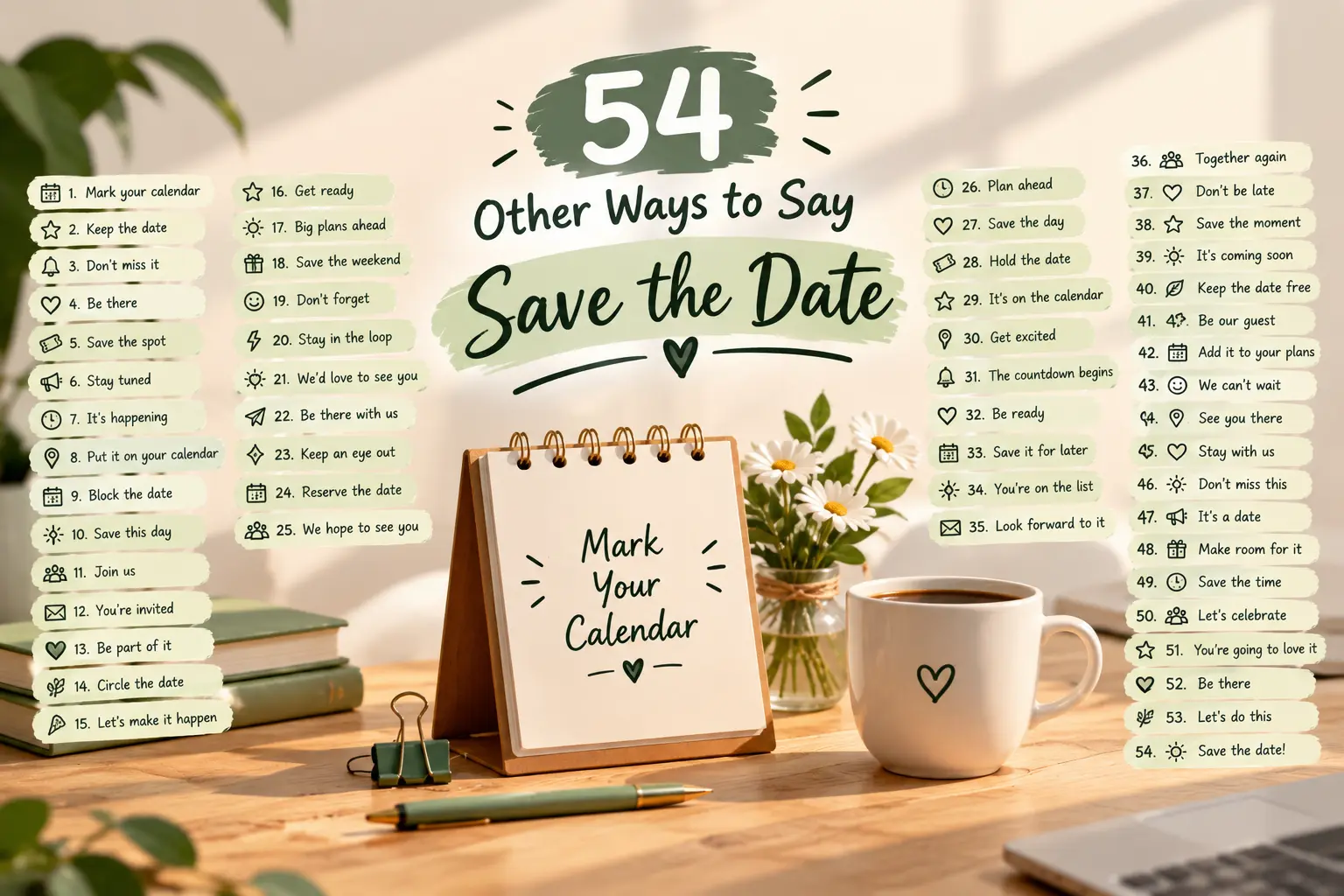
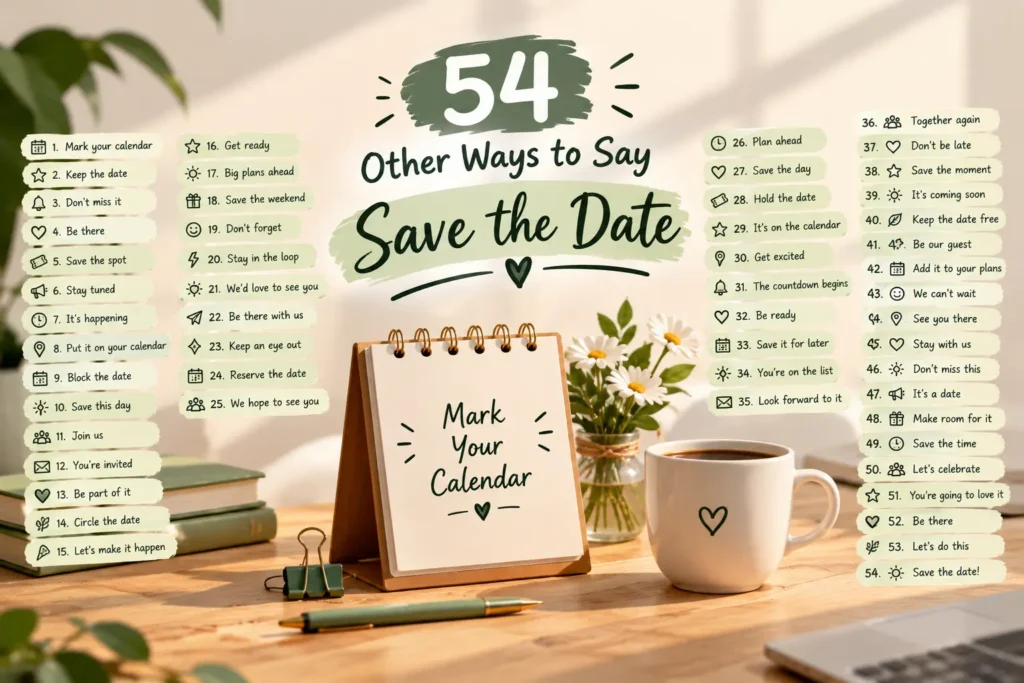
54 Other Ways to Say “Save the Date”
1. Mark Your Calendar
Meaning / Definition
“Mark your calendar” means to record a particular date so you remember an upcoming event. It is a clear and widely understood alternative to “save the date.”
Usage
Use this phrase in casual, professional, and semi-formal situations. It works especially well in emails, invitations, announcements, and social media posts.
💡 Tip
Add the event name or date immediately afterward for clarity.
Examples
- Mark your calendar for our annual family reunion on July 12.
- Please mark your calendar for the company meeting.
- Mark your calendar—we are celebrating Emma’s graduation.
- The workshop is coming soon, so mark your calendar today.
2. Keep the Date Open
Meaning / Definition
“Keep the date open” asks someone not to make other plans for a particular day. It suggests that the person will probably want to attend an upcoming event.
Usage
This phrase is natural in casual and semi-formal communication. It is particularly useful when the event details are not completely finalized.
💡 Tip
Use it when you want to reserve the date without making the message sound too formal.
Examples
- Please keep the date open for our wedding celebration.
- Keep Saturday evening open for a special surprise.
- Could you keep June 20 open for our team event?
- We are still planning the details, but please keep the date open.
3. Put It on Your Calendar
Meaning / Definition
“Put it on your calendar” means to add an event to your personal schedule. It is a direct and practical way to remind someone about an upcoming date.
Usage
This expression is casual to semi-formal and works especially well in emails, chats, and workplace communication.
💡 Tip
Use the exact date and time when possible.
Examples
- Put our dinner party on your calendar for Friday.
- Please put the meeting on your calendar.
- Put September 5 on your calendar for the school reunion.
- I hope you can join us, so put the date on your calendar.
4. Reserve the Date
Meaning / Definition
“Reserve the date” tells someone to keep a specific day available for an event. It sounds polished and is commonly associated with invitations.
Usage
Use it in semi-formal or formal invitations, especially for weddings, ceremonies, and important celebrations.
💡 Tip
This phrase sounds more formal than everyday expressions such as “keep the date open.”
Examples
- Please reserve the date for our wedding ceremony.
- Reserve the date for the annual awards dinner.
- We invite you to reserve the date for our celebration.
- Kindly reserve the date of October 18 for this special occasion.
5. Hold the Date
Meaning / Definition
“Hold the date” asks someone to keep a particular date available. It is a concise alternative often used in event planning.
Usage
It works well in semi-formal and professional invitations. It can also be used for weddings, conferences, dinners, and private events.
💡 Tip
Use this phrase when the event details will be provided later.
Examples
- Please hold the date for our annual conference.
- Hold the date—we would love to celebrate with you.
- Kindly hold the date of May 14 for our reception.
- We will send the full invitation soon, but please hold the date.
6. Keep the Day Free
Meaning / Definition
“Keep the day free” means not to schedule another activity on that day. It is friendly and easy to understand.
Usage
This phrase is best for casual or semi-formal conversations and invitations. It works particularly well when speaking to friends, family, or colleagues.
💡 Tip
Use “day” when the event could take place at different times during the day.
Examples
- Keep the day free because we have something special planned.
- Please keep the day free for the school festival.
- Keep Saturday free for my birthday celebration.
- We have not revealed the details yet, so keep the day free.
7. Keep That Date Free
Meaning / Definition
“Keep that date free” tells someone not to make plans for a specific date. It sounds conversational and direct.
Usage
Use it in casual and semi-formal messages. It is suitable for friends, colleagues, family members, and small event announcements.
💡 Tip
It sounds especially natural when the date has already been mentioned.
Examples
- We are planning something exciting, so keep that date free.
- The ceremony is on August 9, so keep that date free.
- Keep that date free for our team outing.
- I will share the details soon, but keep that date free.
8. Circle the Date
Meaning / Definition
“Circle the date” means to highlight a date on your calendar so you remember it. It creates a slightly more lively and engaging tone.
Usage
Use it in casual, semi-formal, and promotional announcements. It is particularly effective for social events and public invitations.
💡 Tip
Pair it with an exciting reason for the event.
Examples
- Circle the date for our summer celebration.
- Circle June 8 on your calendar for the big event.
- Circle the date—we are finally launching our new project.
- If you love live music, circle the date for our concert.
9. Block Off the Date
Meaning / Definition
“Block off the date” means to keep the date unavailable for other commitments. It emphasizes making time for a particular event.
Usage
This is common in professional and semi-formal communication. It works well for conferences, meetings, workshops, and special occasions.
💡 Tip
Use it when attendance requires someone to deliberately reserve time.
Examples
- Please block off the date for the leadership conference.
- Block off Friday evening for our team celebration.
- We recommend blocking off the date now.
- Be sure to block off the date before your schedule fills up.
10. Set Aside the Date
Meaning / Definition
“Set aside the date” means to reserve time for a particular event. It communicates that the date should receive priority.
Usage
It is semi-formal and suitable for professional emails, event announcements, and invitations.
💡 Tip
Use “set aside time” when you want to focus on the amount of time rather than only the date.
Examples
- Please set aside the date for our annual meeting.
- Set aside Saturday for the graduation ceremony.
- We hope you can set aside the date to join us.
- Employees should set aside the date for the training session.
11. Keep It Open
Meaning / Definition
“Keep it open” means to avoid making another commitment during a particular period. The phrase is short and conversational.
Usage
Use it when the date has already been established in the conversation. It is mostly casual or semi-formal.
💡 Tip
Make sure the date is already clear because “it” can otherwise be ambiguous.
Examples
- June 15 is important, so keep it open.
- We are planning a surprise, so keep it open.
- The event may last all afternoon, so keep it open.
- I will confirm the details later, but keep it open for now.
12. Keep the Date Available
Meaning / Definition
“Keep the date available” means to make sure you can attend an event on that date. It is clear and slightly more formal than “keep the date open.”
Usage
Use it in professional, academic, and semi-formal invitations. It works well when communicating with a larger group.
💡 Tip
This is a good choice when you want your invitation to sound polite and organized.
Examples
- Please keep the date available for the annual seminar.
- Keep March 21 available for the graduation event.
- We kindly ask guests to keep the date available.
- Students should keep the date available for the final presentation.
13. Save the Day
Meaning / Definition
“Save the day” can be used creatively to suggest keeping an entire day free. It is less standard than “save the date” and may sound playful.
Usage
Use it mainly in creative, casual, or promotional contexts. Avoid it when precision and formal wording are especially important.
💡 Tip
Do not use it in formal invitations where “save the date” or “reserve the date” is clearer.
Examples
- Save the day for our neighborhood festival.
- Save the day—we are celebrating together!
- Our summer picnic is coming, so save the day.
- Save the day for an unforgettable community event.
14. Keep This Date Free
Meaning / Definition
“Keep this date free” directly asks someone to avoid scheduling another activity on the mentioned date. It is simple and easy for ESL learners to understand.
Usage
It works in casual, semi-formal, and professional messages. It is especially useful when the date has already been stated.
💡 Tip
Use “this date” when the date is visible or obvious from the message.
Examples
- Keep this date free for our wedding reception.
- We have an important event planned, so keep this date free.
- Keep this date free for the company celebration.
- More details are coming soon, so keep this date free.
15. Hold This Date
Meaning / Definition
“Hold this date” means to reserve a specific date for a future event. It is brief, polished, and invitation-friendly.
Usage
Use it in semi-formal or formal event communication. It works particularly well for weddings, ceremonies, conferences, and receptions.
💡 Tip
Use it as a short heading on an invitation or announcement.
Examples
- Hold this date for our wedding celebration.
- Hold this date for the annual charity dinner.
- Please hold this date while we finalize the arrangements.
- Hold this date—we look forward to celebrating with you.
16. Reserve This Date
Meaning / Definition
“Reserve this date” asks someone to keep a particular day available. It has a polished and slightly formal tone.
Usage
Use it for formal invitations, professional events, ceremonies, and important announcements.
💡 Tip
This phrase is especially useful when the invitation itself contains the exact date.
Examples
- Reserve this date for our annual awards ceremony.
- Please reserve this date for the wedding.
- We invite you to reserve this date for our special event.
- Kindly reserve this date in your calendar.
17. Keep the Evening Open
Meaning / Definition
“Keep the evening open” means not to schedule anything else during the evening. It is useful when the event is specifically planned for nighttime.
Usage
This phrase is casual or semi-formal and works naturally in messages, invitations, and conversations.
💡 Tip
Use it instead of “save the date” when only part of the day needs to be reserved.
Examples
- Keep the evening open for a special dinner.
- Please keep Friday evening open for the celebration.
- Keep the evening open—we have a surprise planned.
- We would love to see you, so keep the evening open.
18. Keep the Weekend Open
Meaning / Definition
“Keep the weekend open” asks someone not to make other plans during the weekend. It is useful for events lasting more than one day.
Usage
Use it in casual and semi-formal communication. It works well for weddings, trips, reunions, retreats, and festivals.
💡 Tip
Use this phrase when the exact schedule may cover several days or times.
Examples
- Keep the weekend open for our family reunion.
- Please keep the weekend open for the wedding festivities.
- Keep the weekend open—we are planning a short trip.
- We will reveal the schedule later, so keep the weekend open.
19. Make a Note of the Date
Meaning / Definition
“Make a note of the date” asks someone to remember and record a particular date. It sounds clear and slightly formal.
Usage
Use it in professional emails, academic announcements, and organized event communication. It is usually semi-formal or formal.
💡 Tip
This phrase works well when the main goal is ensuring people remember the date.
Examples
- Please make a note of the date for the annual meeting.
- Make a note of June 3 for the workshop.
- We recommend that all students make a note of the date.
- Make a note of the date and watch for the full invitation.
20. Take Note of the Date
Meaning / Definition
“Take note of the date” means to pay attention to and remember a specific date. It sounds more formal than everyday expressions.
Usage
Use it in professional, academic, or official-style announcements. It is less natural for casual conversations.
💡 Tip
Choose this phrase when your message needs a serious or organized tone.
Examples
- Please take note of the date for the final seminar.
- Take note of the date before completing your schedule.
- All participants should take note of the event date.
- Kindly take note of the date shown on your invitation.
21. Remember the Date
Meaning / Definition
“Remember the date” simply asks someone not to forget an upcoming event. It is direct, friendly, and easy to understand.
Usage
Use it in casual, semi-formal, and promotional communication. It works particularly well for celebrations and social events.
💡 Tip
Pair it with an exciting phrase when creating a fun invitation.
Examples
- Remember the date—we are celebrating Dad’s birthday!
- Please remember the date of the school reunion.
- Remember the date for our annual picnic.
- We hope you can join us, so remember the date.
22. Don’t Forget the Date
Meaning / Definition
“Don’t forget the date” reminds someone to remember an upcoming event. It has a friendly and direct tone.
Usage
Use it mainly in casual and semi-formal messages. It can also work in promotional social media posts.
💡 Tip
Avoid using it when you want an especially formal or elegant tone.
Examples
- Don’t forget the date of our graduation ceremony.
- Don’t forget the date—we are meeting on Saturday.
- Don’t forget the date for the neighborhood party.
- The invitation is coming soon, so don’t forget the date.
23. Be Sure to Save the Date
Meaning / Definition
“Be sure to save the date” is a stronger version of the standard expression. It politely emphasizes that the recipient should remember the date.
Usage
It is suitable for casual, semi-formal, and promotional communication. It works well for important celebrations and public events.
💡 Tip
Use it when you want a little more emphasis without sounding demanding.
Examples
- Be sure to save the date for our wedding.
- Be sure to save the date for the annual conference.
- We hope you can join us, so be sure to save the date.
- Be sure to save the date for an evening of live music.
24. Be Sure to Mark Your Calendar
Meaning / Definition
“Be sure to mark your calendar” strongly encourages someone to record an event date. It is clear, familiar, and practical.
Usage
Use it in professional announcements, invitations, newsletters, social posts, and emails. It is semi-formal and adaptable.
💡 Tip
Include the date and event name directly after the phrase.
Examples
- Be sure to mark your calendar for our next workshop.
- Be sure to mark your calendar for October 4.
- Everyone is invited, so be sure to mark your calendar.
- Be sure to mark your calendar for our annual celebration.
25. Make Room in Your Calendar
Meaning / Definition
“Make room in your calendar” means to create space in your schedule for an event. It sounds energetic and modern.
Usage
Use it in casual, professional, or promotional communication. It is especially effective for exciting events or announcements.
💡 Tip
This phrase is more engaging than simply telling someone to remember the date.
Examples
- Make room in your calendar for our summer festival.
- Make room in your calendar for an exciting evening.
- Please make room in your calendar for the conference.
- Make room in your calendar—we have something special planned.
26. Make Time for the Event
Meaning / Definition
“Make time for the event” asks someone to arrange their schedule so they can attend. It focuses more on attendance than simply remembering the date.
Usage
Use it in casual, semi-formal, or professional situations. It works well when attendance is particularly important.
💡 Tip
Use this phrase when you want to encourage participation rather than only remembrance.
Examples
- Please make time for the annual team gathering.
- We hope you can make time for the graduation ceremony.
- Make time for the workshop if you are interested in the topic.
- Try to make time for this important community event.
27. Plan for the Date
Meaning / Definition
“Plan for the date” encourages someone to prepare their schedule around a particular day. It suggests that the event is worth considering in advance.
Usage
Use it in casual, professional, or semi-formal communication. It works best when some preparation may be needed.
💡 Tip
Use it when the recipient needs more than a simple reminder.
Examples
- Please plan for the date of our annual conference.
- Plan for the date and arrange your travel early.
- Guests should plan for the date of the ceremony.
- We recommend planning for the date in advance.
28. Plan Around the Date
Meaning / Definition
“Plan around the date” means to organize other activities so they do not conflict with a particular event. It strongly suggests prioritizing that date.
Usage
This phrase is semi-formal and natural in professional, family, and event-planning contexts.
💡 Tip
Use it when the date is important enough to affect other plans.
Examples
- Please plan around the date of the conference.
- We are asking relatives to plan around the wedding date.
- Try to plan around the date of the school ceremony.
- Our team should plan around the date of the company event.
29. Keep Your Calendar Clear
Meaning / Definition
“Keep your calendar clear” asks someone to avoid scheduling other commitments. It is friendly but can also sound professional.
Usage
Use it for events that require a significant amount of time. It works well in workplace messages, invitations, and announcements.
💡 Tip
Specify the date immediately so the request is easy to follow.
Examples
- Keep your calendar clear for the leadership summit.
- Please keep your calendar clear on June 14.
- Keep your calendar clear—we have a big celebration coming.
- We recommend keeping your calendar clear for the full afternoon.
30. Leave the Date Open
Meaning / Definition
“Leave the date open” means not to commit to another activity on a particular day. It sounds natural and conversational.
Usage
Use it in casual and semi-formal communication. It is especially useful when the final details are still being arranged.
💡 Tip
Use this phrase when you want flexibility around the event.
Examples
- Please leave the date open for our family gathering.
- Leave Saturday open because we have plans for you.
- We are finalizing the schedule, so leave the date open.
- Leave the date open until we send the official invitation.
31. Keep Your Schedule Open
Meaning / Definition
“Keep your schedule open” means to avoid making other commitments during a certain period. It can refer to a day, evening, or longer period.
Usage
This is useful in professional and casual communication. It sounds natural when the exact duration of an event is not yet known.
💡 Tip
Use it when you need someone to remain flexible rather than reserve one exact appointment.
Examples
- Keep your schedule open for the afternoon conference.
- Please keep your schedule open next Friday.
- Keep your schedule open—we may have a surprise event.
- Team members should keep their schedules open for the workshop.
32. Keep the Date on Your Radar
Meaning / Definition
“Keep the date on your radar” means to remember and remain aware of an upcoming event. It has a modern, conversational tone.
Usage
Use it mainly in casual or semi-formal messages. It can work well in workplace communication with a friendly culture.
💡 Tip
Avoid it in highly formal invitations because it is more conversational.
Examples
- Keep the date on your radar for our summer event.
- Please keep October 9 on your radar.
- Keep the conference date on your radar as we finalize details.
- The event is still several weeks away, but keep the date on your radar.
33. Keep the Date in Mind
Meaning / Definition
“Keep the date in mind” asks someone to remember a particular date for future planning. It is polite and relatively neutral.
Usage
Use it in casual, academic, and professional communication. It works especially well when details are still being finalized.
💡 Tip
This is a useful choice when you want to remind someone without sounding forceful.
Examples
- Please keep the date in mind when planning your schedule.
- Keep the date in mind for our annual reunion.
- We are still confirming the venue, but keep the date in mind.
- Students should keep the examination date in mind.
34. Keep the Date in Your Plans
Meaning / Definition
“Keep the date in your plans” means to include a particular event when organizing your future schedule. It sounds warm and inviting.
Usage
Use it in semi-formal and casual invitations. It works especially well for celebrations, reunions, and community events.
💡 Tip
This expression sounds more personal than a simple calendar reminder.
Examples
- Please keep the date in your plans for our anniversary party.
- We hope you will keep the date in your plans.
- Keep the date in your plans for the family reunion.
- If you love live music, keep the date in your plans.
35. Put the Date in Your Diary
Meaning / Definition
“Put the date in your diary” means to record an event in your personal schedule. It is especially common in British English.
Usage
Use it in casual and semi-formal situations, particularly when speaking with people familiar with British English.
💡 Tip
In American English, “put the date on your calendar” may sound more natural.
Examples
- Put the date in your diary for our annual dinner.
- Please put the date in your diary now.
- Put the conference date in your diary before you forget.
- We would love you to attend, so put the date in your diary.
36. Put the Date in Your Planner
Meaning / Definition
“Put the date in your planner” means to record the event in a planner or scheduling system. It is practical and straightforward.
Usage
Use it in casual, academic, or professional situations. It works well for students and people who organize their schedules carefully.
💡 Tip
This phrase is useful when talking to someone who regularly uses a physical or digital planner.
Examples
- Put the workshop date in your planner.
- Please put the meeting in your planner.
- Students should put the exam date in their planners.
- Put the date in your planner so you do not miss the event.
37. Add It to Your Calendar
Meaning / Definition
“Add it to your calendar” means to enter an event into a digital or physical calendar. It is one of the most practical modern alternatives.
Usage
Use it in casual, professional, and academic communication. It is particularly natural in emails, workplace chats, and digital invitations.
💡 Tip
Include a calendar link when available for online events.
Examples
- Add the webinar to your calendar for next Tuesday.
- Please add the meeting to your calendar.
- Add our anniversary dinner to your calendar.
- The event is coming soon, so add it to your calendar today.
38. Put It on Your Schedule
Meaning / Definition
“Put it on your schedule” means to include an event among your planned activities. It is direct and commonly used in everyday and workplace English.
Usage
Use it in casual, professional, and semi-formal situations. It works particularly well for meetings, appointments, and organized events.
💡 Tip
Use the phrase when you want to emphasize scheduling rather than remembering.
Examples
- Please put the conference on your schedule.
- Put the event on your schedule for next Friday.
- I hope you can put the celebration on your schedule.
- Everyone should put the training session on their schedules.
39. Make a Space for It
Meaning / Definition
“Make a space for it” means to create room in your schedule for an upcoming event. It sounds friendly and slightly creative.
Usage
Use it in casual or semi-formal communication. It can work well for social events, announcements, and promotional messages.
💡 Tip
Make sure the event is already clear so “it” has an obvious reference.
Examples
- Make a space for it in your calendar.
- We hope you can make a space for our celebration.
- Make a space for it because this event will be special.
- If you enjoy networking, make a space for it on your schedule.
40. Make Room for the Event
Meaning / Definition
“Make room for the event” means to adjust your schedule so you can attend. It communicates that the event deserves time and attention.
Usage
Use it in casual, semi-formal, and promotional communication. It is suitable for parties, conferences, workshops, and community activities.
💡 Tip
This phrase has an encouraging tone and works well in invitations.
Examples
- Make room for the event in your busy schedule.
- Please make room for our annual celebration.
- Make room for the event if you would like to meet industry experts.
- We hope everyone can make room for this special occasion.
41. Keep the Occasion in Mind
Meaning / Definition
“Keep the occasion in mind” asks someone to remember an upcoming event. It focuses more on the occasion than the specific date.
Usage
Use it in semi-formal or formal communication when the event itself is important. It is less common in casual invitations.
💡 Tip
Use it when the purpose of the event matters as much as the date.
Examples
- Please keep the occasion in mind when planning your travel.
- Keep the occasion in mind as you organize your schedule.
- We hope you can attend, so keep the occasion in mind.
- Guests should keep the occasion in mind when choosing their attire.
42. Keep This Occasion Free
Meaning / Definition
“Keep this occasion free” asks someone to reserve time for a particular event. It has a polite and invitation-focused tone.
Usage
Use it in semi-formal or formal invitations. It works especially well for ceremonies, receptions, and celebrations.
💡 Tip
This wording is better suited to special events than ordinary meetings.
Examples
- Please keep this occasion free for our wedding reception.
- We kindly ask you to keep this occasion free.
- Keep this occasion free for the annual awards ceremony.
- We would be delighted if you could keep this occasion free.
43. Be Available on the Date
Meaning / Definition
“Be available on the date” asks someone to make sure they can attend on a specific day. It focuses directly on availability.
Usage
Use it in professional, academic, and semi-formal communication. It can sound more direct than “save the date.”
💡 Tip
Use it when attendance or availability is particularly important.
Examples
- Please be available on the date of the conference.
- We ask all presenters to be available on the event date.
- Kindly be available on the date shown in your invitation.
- Make sure you are available on the date of the ceremony.
44. Be Free on the Date
Meaning / Definition
“Be free on the date” means not to have another commitment on that day. It is simple and conversational.
Usage
Use it mainly in casual and semi-formal communication. It is natural when speaking with friends, relatives, or familiar colleagues.
💡 Tip
Use “be available” instead if you need a more professional tone.
Examples
- I hope you can be free on the date of the party.
- Are you free on the date of our reunion?
- Please try to be free on the date of the celebration.
- We would love for you to be free on the date.
45. Arrange Your Schedule Around It
Meaning / Definition
“Arrange your schedule around it” means organizing other plans so they do not conflict with an event. It suggests that the event should be prioritized.
Usage
Use it in semi-formal, professional, or casual communication. It is appropriate when the event requires advance planning.
💡 Tip
Use this phrase when travel, work, or several other commitments may be involved.
Examples
- Please arrange your schedule around the conference.
- We hope you can arrange your schedule around the ceremony.
- Try to arrange your schedule around the event.
- Guests traveling from out of town should arrange their schedules around it.
46. Plan to Join Us
Meaning / Definition
“Plan to join us” invites someone to make arrangements to attend an event. It focuses on participation rather than simply remembering a date.
Usage
Use it in casual, semi-formal, and professional invitations. It is warm and welcoming.
💡 Tip
Add the date and event name to make the invitation complete.
Examples
- Plan to join us on June 22 for our summer celebration.
- Plan to join us for the annual networking event.
- We hope you can plan to join us for dinner.
- Plan to join us as we celebrate this important milestone.
47. We Hope You Can Join Us
Meaning / Definition
“We hope you can join us” expresses a friendly desire for someone to attend an event. It sounds warmer than a simple scheduling instruction.
Usage
Use it in invitations, emails, social posts, and personal messages. It is suitable for casual through semi-formal communication.
💡 Tip
Pair it with the date and event details.
Examples
- We hope you can join us on September 10 for dinner.
- We hope you can join us for the graduation ceremony.
- Our annual festival is approaching, and we hope you can join us.
- We hope you can join us as we celebrate this exciting achievement.
48. We Look Forward to Seeing You
Meaning / Definition
“We look forward to seeing you” communicates that the sender expects or hopes to meet the recipient at an event. It creates a warm and welcoming tone.
Usage
Use it in invitations and professional correspondence. It is polite, semi-formal, and formal enough for many events.
💡 Tip
Use it near the end of an invitation after providing the date and location.
Examples
- We look forward to seeing you at our annual dinner.
- We look forward to seeing you on the big day.
- Thank you for joining us; we look forward to seeing you at the conference.
- We look forward to seeing you at the graduation celebration.
49. We’d Love to Have You There
Meaning / Definition
“We’d love to have you there” warmly tells someone that their presence would be appreciated. It feels personal and inviting.
Usage
Use it in casual and semi-formal invitations. It is particularly suitable for parties, weddings, reunions, and celebrations.
💡 Tip
Avoid it in highly formal corporate communication where a more neutral phrase may be better.
Examples
- We’d love to have you there for our wedding.
- We’d love to have you there when we celebrate the launch.
- Please join us for dinner—we’d love to have you there.
- Your presence would mean a lot, and we’d love to have you there.
50. We’d Be Delighted to See You
Meaning / Definition
“We’d be delighted to see you” is a warm but polished invitation. It communicates genuine pleasure at the possibility of someone’s attendance.
Usage
Use it in semi-formal or formal invitations, professional events, receptions, and special occasions.
💡 Tip
This phrase is a good choice when you want warmth without sounding overly casual.
Examples
- We’d be delighted to see you at our annual reception.
- We’d be delighted to see you at the wedding celebration.
- Please join us for the ceremony; we’d be delighted to see you.
- We’d be delighted to see you at this special event.
51. We’re Looking Forward to Celebrating With You
Meaning / Definition
This phrase tells someone that the organizers are excited about sharing a celebration with them. It creates a warm, personal feeling.
Usage
Use it for birthdays, weddings, anniversaries, graduations, and other celebrations. It is friendly and semi-formal.
💡 Tip
Use it when the event is genuinely celebratory rather than purely professional.
Examples
- We’re looking forward to celebrating with you at the wedding.
- We’re looking forward to celebrating with you on graduation day.
- Our anniversary is coming up, and we’re looking forward to celebrating with you.
- We’re looking forward to celebrating this milestone with you.
52. Join Us on [Date]
Meaning / Definition
“Join us on [date]” directly invites someone to attend an event on a specific day. It is short, clear, and flexible.
Usage
Use it in invitations, posters, social media posts, emails, and announcements. It can be casual, semi-formal, or professional depending on the rest of the message.
💡 Tip
Replace the bracket with the exact date and add the event details.
Examples
- Join us on October 12 for our annual community festival.
- Join us on Friday for an evening of live music.
- Join us on March 6 for our professional networking event.
- Join us on graduation day as we celebrate our students.
53. We’ve Set the Date
Meaning / Definition
“We’ve set the date” announces that the organizers have chosen a specific day for an event. It tells readers that the date is now confirmed.
Usage
Use it in casual, semi-formal, and promotional communication. It works especially well for weddings, parties, launches, and announcements.
💡 Tip
Follow it with the exact date so readers immediately know what to remember.
Examples
- We’ve set the date for our wedding: June 18.
- We’ve set the date for the annual company retreat.
- Good news—we’ve set the date for the reunion!
- We’ve set the date, and we cannot wait to celebrate with everyone.
54. The Date Is Set
Meaning / Definition
“The date is set” means that the organizers have finalized the day of an upcoming event. It is concise and creates a sense of anticipation.
Usage
Use it in casual, semi-formal, and promotional announcements. It is especially effective for weddings, launches, celebrations, and public events.
💡 Tip
Follow it with the date and event name for a stronger announcement.
Examples
- The date is set: our wedding will be on August 15.
- The date is set for this year’s charity event.
- The date is set, so start making your plans!
- The date is set for our next community celebration.
Bonus Section — Polite Variations
These polite alternatives are useful when you want your invitation to sound warm, respectful, and considerate. They work especially well in wedding invitations, professional emails, formal announcements, and messages to people you do not know closely.
- Please keep the date available for this special occasion.
- We kindly ask you to reserve the date in your calendar.
- We would be delighted if you could join us on this special day.
- Please make a note of the date and watch for further details.
- We hope you will be able to join us on the date mentioned.
- Kindly keep your schedule open for this important event.
Final Tips — How to Choose the Right Phrase
The best alternative to “save the date” is the one that matches your audience, setting, and intended tone.
- Consider the setting: A wedding invitation, workplace announcement, birthday message, and academic event may all need different wording.
- Know your audience: Use relaxed expressions with friends and family, and clearer professional language with colleagues or clients.
- Match the formality: “Mark your calendar” is versatile, while “kindly reserve the date” sounds more formal.
- Spoken vs written: Short phrases such as “keep the date open” sound natural in conversation, while polished expressions can work better in written invitations.
- Cultural sensitivity: Remember that expressions such as “diary” are more common in British English, while “calendar” is widely understood in international English.
- Emotional tone: Choose warm phrases such as “we’d love to have you there” when the event is personal, and neutral phrases such as “please mark your calendar” for professional situations.
- Practice naturally: ESL learners should practice several alternatives in real sentences instead of memorizing isolated phrases. The more you use them, the easier it becomes to choose the right expression naturally.