
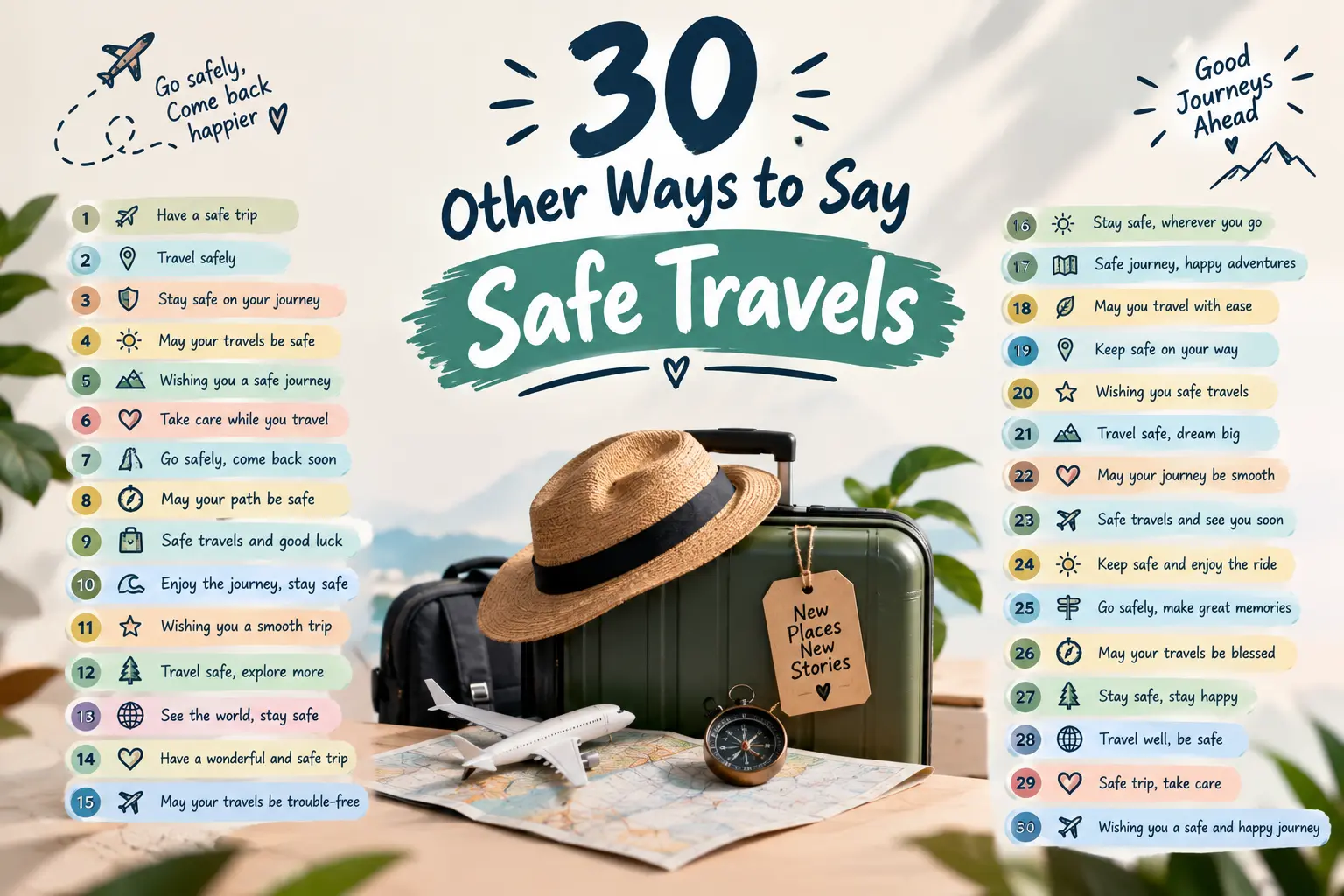

“Safe travels” is a warm and thoughtful way to wish someone well before they leave for a trip. It works in casual conversations, texts, emails, social media messages, and even professional settings.
However, repeating “safe travels” every time can feel a little predictable. Whether someone is going on vacation, taking a business trip, moving to another city, or simply heading home, there are many natural ways to wish them a safe and pleasant journey.
In this guide, you’ll find 30 other ways to say “safe travels”, including casual, friendly, professional, caring, and heartfelt alternatives. Each phrase includes its meaning, when to use it, helpful tips, and examples so you can choose the right expression for the situation.
When Should You Use These Alternatives?
Different travel situations call for different expressions. A message to your best friend can be much more relaxed than a farewell email to a coworker.
- Casual: Use friendly expressions when talking to friends, family, classmates, or people you know well.
- Professional: Choose polished phrases for coworkers, clients, managers, or business contacts.
- Academic: Use respectful but friendly expressions when wishing classmates, teachers, or students well.
- Emails: Keep the wording warm and appropriate for the relationship.
- Social Media: Short and cheerful expressions work especially well in captions and comments.
- Public Speaking: Choose clear, warm phrases that sound natural when spoken aloud.
Warning: Not every alternative has exactly the same meaning as “safe travels.” Some focus more on safety, while others emphasize enjoying the trip, having fun, or arriving safely. Choose the phrase based on what you actually want to wish the person.
30 Other Ways to Say “Safe Travels”
1. Have a Safe Journey
Meaning/Definition: This is a direct way to wish someone safety during their trip. It emphasizes getting from one place to another without problems.
Usage: It works well in both casual and professional conversations. The phrase is polite and slightly more formal than simply saying “safe travels.”
Tip: Use this when you want your message to sound warm but respectful.
Examples:
- Have a safe journey to New York!
- I hope you have a safe journey home.
- Have a safe journey, and let us know when you arrive.
- Wishing you a safe journey and a wonderful trip.
2. Have a Safe Trip
Meaning/Definition: “Have a safe trip” is one of the most natural alternatives to “safe travels.” It simply wishes someone safety while they are traveling.
Usage: You can use it with friends, family, coworkers, or acquaintances. It sounds friendly and works in both speech and writing.
Tip: Choose this when you want a simple phrase that almost everyone understands.
Examples:
- Have a safe trip to California!
- Have a safe trip, everyone.
- I hope you have a safe trip home.
- Have a safe trip and enjoy your vacation.
3. Travel Safely
Meaning/Definition: “Travel safely” directly tells someone to take care while traveling. It places more emphasis on safety than enjoyment.
Usage: It is suitable for casual conversations and caring messages. It can also sound natural at the end of a conversation before someone leaves.
Tip: This is a great choice when you want your message to be short and sincere.
Examples:
- Travel safely and enjoy your weekend.
- Take care and travel safely.
- Travel safely on your way home.
- I hope you travel safely and have a great time.
4. Have a Good Trip
Meaning/Definition: This phrase wishes someone a pleasant overall travel experience. It focuses more on having a good time than specifically emphasizing safety.
Usage: It is very common in everyday English. You can use it with friends, relatives, coworkers, or classmates.
Tip: Use it when you want to wish someone well without making the message too serious.
Examples:
- Have a good trip to Paris!
- Have a good trip, and send us some pictures.
- I hope you have a good trip.
- Have a good trip and enjoy every minute.
5. Enjoy Your Journey
Meaning/Definition: This phrase encourages someone to enjoy the experience of traveling. It can refer to both the physical journey and the experience as a whole.
Usage: It sounds warm and slightly more thoughtful than “have a good trip.” It works especially well in cards, messages, and farewell conversations.
Tip: Use this when the journey itself is an important part of the experience.
Examples:
- Enjoy your journey across Europe.
- Have fun and enjoy your journey.
- Enjoy your journey and take lots of photos.
- I hope you enjoy your journey from start to finish.
6. Wishing You a Safe Journey
Meaning/Definition: This is a warm expression used to wish someone safety during their travels. It sounds thoughtful and caring.
Usage: It works particularly well in written messages, cards, emails, and farewell notes. It is more polished than the casual “have a safe trip.”
Tip: Use this when you want your message to feel sincere and respectful.
Examples:
- Wishing you a safe journey to London.
- Wishing you a safe journey and a relaxing vacation.
- Wishing you a safe journey home.
- Wishing you a safe journey and many happy memories.
7. Take Care on Your Trip
Meaning/Definition: This phrase reminds someone to look after themselves while traveling. It combines a caring message with a travel wish.
Usage: It is especially natural with friends, family, and people you care about. It can also work in a warm professional message.
Tip: Use it when you want your farewell to sound personal and caring.
Examples:
- Take care on your trip to Boston.
- Have fun and take care on your trip.
- Take care on your trip, and text me when you arrive.
- Take care on your trip and enjoy your time away.
8. Bon Voyage
Meaning/Definition: “Bon voyage” is a French expression commonly used in English to wish someone a pleasant journey. It has a cheerful and slightly stylish feel.
Usage: It is often used casually or playfully with friends and family. It can also appear in travel cards and social media posts.
Tip: Use it when you want a short and memorable alternative to “safe travels.”
Examples:
- Bon voyage! Have an amazing time.
- Bon voyage, and enjoy your European adventure.
- Bon voyage! Send us pictures when you arrive.
- Wishing you a wonderful trip—bon voyage!
9. Have a Smooth Journey
Meaning/Definition: This phrase wishes someone an easy trip without unnecessary problems or delays. “Smooth” suggests that everything goes according to plan.
Usage: It works well for flights, road trips, train journeys, and business travel. It sounds friendly and polished.
Tip: This is especially useful when someone has a long or complicated journey ahead.
Examples:
- Have a smooth journey to Chicago.
- I hope you have a smooth journey home.
- Have a smooth journey and enjoy your stay.
- Wishing you a smooth journey from beginning to end.
10. Get There Safely
Meaning/Definition: This phrase focuses on reaching the destination without harm or trouble. It is direct and caring.
Usage: It is very common in casual conversations and text messages. It works especially well when someone is driving or traveling late.
Tip: Use this when you mainly want to emphasize arriving safely.
Examples:
- Get there safely and call me when you arrive.
- Have fun tonight, and get there safely.
- Get there safely, everyone!
- I hope you get there safely before it gets dark.
11. Arrive Safely
Meaning/Definition: “Arrive safely” expresses a simple wish that someone reaches their destination without problems. It is concise and clear.
Usage: It works in both personal and professional communication. It can sound slightly more formal than “get there safely.”
Tip: Use it when the main concern is the person’s arrival.
Examples:
- I hope you arrive safely.
- Please let me know when you arrive safely.
- Have a great flight and arrive safely.
- We hope you arrive safely at your destination.
12. Have a Pleasant Journey
Meaning/Definition: This phrase wishes someone a comfortable and enjoyable trip. It has a polite and refined tone.
Usage: It is appropriate for professional emails, formal messages, and respectful conversations. It can also be used in personal situations.
Tip: Choose this when “safe travels” feels too casual for the situation.
Examples:
- Have a pleasant journey to Singapore.
- We wish you a pleasant journey.
- Have a pleasant journey and enjoy your stay.
- I hope you have a pleasant journey home.
13. Wishing You a Wonderful Trip
Meaning/Definition: This expression wishes someone an enjoyable and memorable travel experience. It focuses more on happiness than safety.
Usage: It works especially well for vacations, holidays, and leisure trips. It sounds warm and positive in cards and messages.
Tip: Use this when you want to emphasize enjoyment.
Examples:
- Wishing you a wonderful trip to Italy.
- Wishing you a wonderful trip with your family.
- Have fun—we’re wishing you a wonderful trip!
- Wishing you a wonderful trip filled with great memories.
14. Take Care and Have a Safe Trip
Meaning/Definition: This combines a personal expression of care with a direct travel safety wish. It sounds warm and thoughtful.
Usage: It is best suited to friends, family, and people you know well. It is natural in texts, phone conversations, and personal notes.
Tip: Use this when you want your farewell to feel more personal than simply saying “safe travels.”
Examples:
- Take care and have a safe trip!
- Take care and have a safe trip to Florida.
- Enjoy your vacation, and take care and have a safe trip.
- Take care and have a safe trip home.
15. Have a Safe Flight
Meaning/Definition: This specifically wishes someone safety during an airplane journey. It is one of the most common travel expressions in English.
Usage: Use it when you know someone is flying. It is natural in both casual and professional conversations.
Tip: Choose this instead of “safe travels” when the person is traveling by plane.
Examples:
- Have a safe flight to Los Angeles!
- Have a safe flight and enjoy your vacation.
- I hope you have a safe flight home.
- Have a safe flight, and text me when you land.
16. Have a Safe Drive
Meaning/Definition: This phrase wishes someone safety while driving. It is especially appropriate for road trips or short drives.
Usage: It is casual, friendly, and very common in everyday English. Use it when the person will be driving themselves.
Tip: This is more specific and natural than “safe travels” when someone is behind the wheel.
Examples:
- Have a safe drive home.
- Have a safe drive to the airport.
- Take care and have a safe drive.
- Have a safe drive, especially with the weather today.
17. Drive Safely
Meaning/Definition: “Drive safely” directly reminds someone to be careful while driving. It is short, practical, and caring.
Usage: It is mainly used in casual conversations with someone who is driving. Parents, friends, partners, and coworkers commonly use it.
Tip: Use this when safety on the road is your main concern.
Examples:
- Drive safely and call me when you get home.
- It’s raining, so drive safely.
- Have fun tonight, and drive safely.
- Drive safely and take your time.
18. Have a Great Adventure
Meaning/Definition: This phrase wishes someone an exciting and enjoyable travel experience. It focuses on adventure rather than safety.
Usage: It works especially well for vacations, road trips, hiking trips, and other exciting journeys. It sounds enthusiastic and friendly.
Tip: Use it when the trip is expected to be fun or adventurous.
Examples:
- Have a great adventure in Alaska!
- Have a great adventure and take plenty of pictures.
- Wishing you a great adventure abroad.
- Have a great adventure and make unforgettable memories.
19. Enjoy Your Trip
Meaning/Definition: This simple phrase wishes someone happiness and enjoyment during their travels. It is one of the easiest alternatives to “safe travels.”
Usage: It works in almost any casual travel situation. You can say it to friends, family, classmates, or coworkers.
Tip: Use it when you want something short, natural, and positive.
Examples:
- Enjoy your trip to Spain!
- Have fun and enjoy your trip.
- Enjoy your trip with your family.
- I hope you enjoy your trip and get plenty of rest.
20. Have Fun on Your Trip
Meaning/Definition: This phrase encourages someone to enjoy themselves while traveling. It has a cheerful and informal tone.
Usage: It is best for friends, relatives, classmates, and other familiar people. It is less suitable for formal business communication.
Tip: Use it when the purpose of the trip is mainly vacation or entertainment.
Examples:
- Have fun on your trip to Miami!
- Have fun on your trip and take lots of pictures.
- I hope you have fun on your trip.
- Have fun on your trip with your friends.
21. Wishing You an Easy Journey
Meaning/Definition: This expression wishes someone a comfortable trip with as few difficulties as possible. It can imply an uncomplicated travel experience.
Usage: It works well in thoughtful written messages and farewell notes. It has a gentle and considerate tone.
Tip: Use this when someone has a long or potentially tiring journey.
Examples:
- Wishing you an easy journey home.
- Wishing you an easy journey and a relaxing arrival.
- I’m wishing you an easy journey to your new home.
- Wishing you an easy journey and a wonderful experience.
22. Hope You Get There Safely
Meaning/Definition: This phrase expresses a friendly wish that someone reaches their destination safely. It sounds conversational and sincere.
Usage: It is especially common in texts and casual conversations. It can be used when someone is driving, flying, or taking public transportation.
Tip: Use this when you want something that sounds natural and personal.
Examples:
- Hope you get there safely!
- Have a great time, and I hope you get there safely.
- Hope you get there safely before the storm arrives.
- I hope you get there safely and have a wonderful time.
23. Have a Safe Passage
Meaning/Definition: “Safe passage” refers to traveling safely from one place to another. The phrase has a somewhat formal or literary tone.
Usage: It can be used in formal writing, farewell messages, and certain travel contexts. It is less common in everyday casual speech.
Tip: Choose this when you want your wording to sound more formal or distinctive.
Examples:
- We wish you a safe passage across the country.
- Have a safe passage and enjoy your journey.
- Wishing you safe passage on your travels.
- May you have a safe passage to your destination.
24. Wishing You Safe and Happy Travels
Meaning/Definition: This combines a wish for safety with a wish for happiness. It gives the message a warm and positive feeling.
Usage: It is suitable for cards, social media messages, emails, and personal conversations. It works especially well for vacations.
Tip: Use this when you want to mention both safety and enjoyment.
Examples:
- Wishing you safe and happy travels!
- Safe and happy travels to you and your family.
- Wishing you safe and happy travels across Europe.
- Have a wonderful vacation and safe and happy travels.
25. May Your Journey Be Safe
Meaning/Definition: This is a thoughtful way to express a sincere wish for someone’s safety. It has a warm and slightly formal tone.
Usage: It works well in farewell cards, heartfelt messages, and meaningful conversations. It can sound more elegant than everyday phrases.
Tip: Use this when you want your message to feel sincere and memorable.
Examples:
- May your journey be safe and peaceful.
- May your journey be safe and full of wonderful memories.
- We hope your journey is safe and comfortable.
- May your journey be safe from beginning to end.
26. Have a Wonderful Journey
Meaning/Definition: This phrase wishes someone an enjoyable and memorable journey. It emphasizes the positive experience of traveling.
Usage: It works well in personal messages and farewell notes. It can also sound polished in professional communication.
Tip: Choose this when you want your farewell to sound warm and optimistic.
Examples:
- Have a wonderful journey to Japan.
- I hope you have a wonderful journey.
- Have a wonderful journey and enjoy every moment.
- Wishing you a wonderful journey with your family.
27. Take Care and Enjoy the Journey
Meaning/Definition: This expression combines concern for someone’s well-being with encouragement to enjoy the experience. It sounds caring and positive.
Usage: It is especially suitable for friends and family. It can also work in a thoughtful farewell message.
Tip: Use this when you want to balance safety and enjoyment.
Examples:
- Take care and enjoy the journey!
- Take care and enjoy the journey across Europe.
- Have fun, take care, and enjoy the journey.
- Take care and enjoy every part of the journey.
28. Wishing You a Smooth and Safe Trip
Meaning/Definition: This phrase wishes someone both safety and an easy travel experience. It suggests that you hope they avoid delays, problems, or difficulties.
Usage: It works in both personal and professional communication. It is especially useful for business trips and long journeys.
Tip: Use it when you want to combine two common travel wishes into one message.
Examples:
- Wishing you a smooth and safe trip to Boston.
- We’re wishing you a smooth and safe trip home.
- Have a smooth and safe trip.
- Wishing you a smooth and safe trip and a successful meeting.
29. See You When You Get Back
Meaning/Definition: This phrase focuses on seeing the person again after their trip. It can indirectly communicate care and a positive farewell.
Usage: It is mainly used with friends, family, and people you know personally. It sounds casual and friendly rather than formal.
Tip: Use it when you expect to see the person again soon.
Examples:
- Have fun in Italy—see you when you get back!
- Enjoy your vacation. See you when you get back.
- Take care and see you when you get back.
- Have a great trip, and see you when you get back.
30. Come Back Safe
Meaning/Definition: “Come back safe” expresses a caring wish that someone returns home safely. It emphasizes their safe return rather than the journey itself.
Usage: It is informal and personal, making it best for close friends and family. It can sound especially heartfelt when someone is going on a long trip.
Tip: Use this when you want your message to show genuine concern for someone’s return.
Examples:
- Have fun, and come back safe!
- Enjoy your trip and come back safe.
- Take care out there and come back safe.
- Have an amazing adventure, and come back safe.
Bonus: Polite Variations of “Safe Travels”
If you need a more polite or professional way to wish someone well before a trip, these options can make your message sound thoughtful without being overly formal.
- Wishing you a safe and pleasant journey.
- I hope you have a safe and enjoyable trip.
- Wishing you a smooth and successful journey.
- I hope your travels go smoothly.
- Have a pleasant and safe trip.
- Wishing you a comfortable journey and a wonderful stay.
Final Tips for Choosing the Right Alternative
- For friends: Try “Have a safe trip,” “Travel safely,” or “Have fun on your trip.”
- For family: “Take care and have a safe trip” or “Come back safe” sounds warm and personal.
- For coworkers: Choose “Have a safe journey” or “Wishing you a smooth and safe trip.”
- For business emails: “I hope you have a safe and enjoyable trip” sounds professional and friendly.
- For someone flying: “Have a safe flight” is more specific and natural.
- For someone driving: “Drive safely” or “Have a safe drive” is the better choice.
- For vacations: “Enjoy your trip,” “Have a wonderful journey,” or “Have a great adventure” adds a cheerful tone.
The best alternative to “safe travels” depends on your relationship with the person, the type of journey, and the feeling you want to communicate. A simple “Have a safe trip” works in most situations, while phrases such as “Come back safe” or “Wishing you a smooth and safe trip” can make your message feel more personal or professional.