
“Please advise” is a common phrase in professional emails, especially when you need someone to provide information, make a decision, or tell you what to do next. While it is grammatically correct, using the same phrase repeatedly can make your emails feel a little formal or repetitive.
Fortunately, there are many other ways to ask for guidance, clarification, confirmation, or a response. The best alternative depends on your relationship with the reader and the situation.
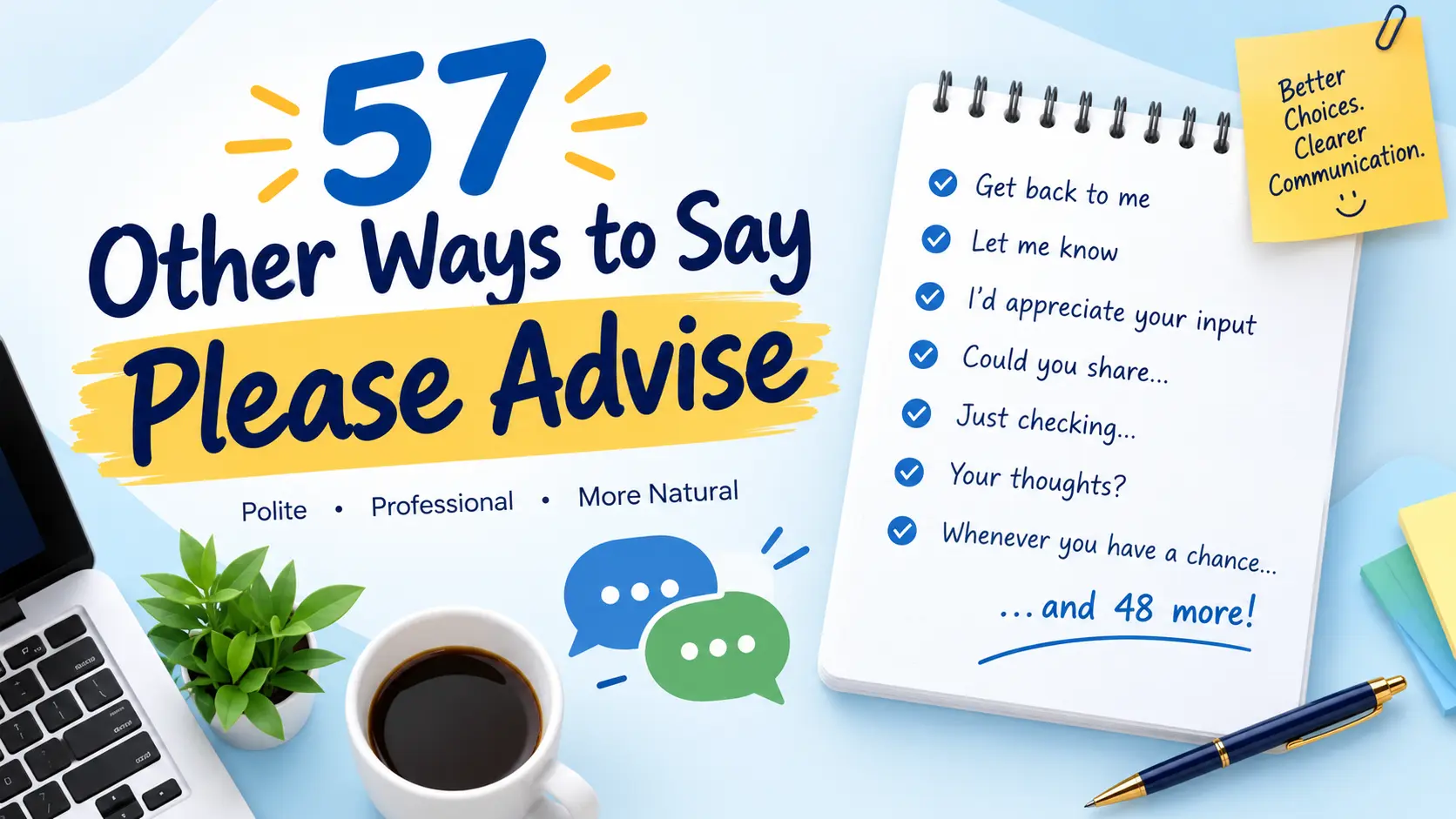
In this guide, you’ll find 57 other ways to say “please advise,” ranging from polite and professional expressions to friendly, direct, and highly formal alternatives.
When Should You Use Alternatives to “Please Advise”?
You might want to replace “please advise” when you need someone to:
- Provide information or an update
- Confirm a detail
- Explain something you do not understand
- Recommend what you should do
- Make a decision
- Tell you the next steps
- Respond to a question
- Confirm whether something is acceptable
The key is to choose a phrase that matches the context. A message to your manager may require a more professional expression, while a quick message to a coworker can sound more natural and conversational.
57 Other Ways to Say “Please Advise”
1. Please let me know
Meaning: This is one of the most natural alternatives to “please advise.” It politely asks the recipient to provide information or respond to your question.
Usage: It works well in professional emails, workplace messages, and everyday communication. It sounds polite without being overly formal.
Example:
- Please let me know if you need anything else.
- Please let me know how you would like to proceed.
- Please let me know your thoughts on this proposal.
- Please let me know if the proposed date works for you.
2. Please let me know your thoughts
Meaning: This phrase asks someone to share their opinion, feedback, or reaction.
Usage: It is particularly useful when you want feedback rather than a simple factual answer.
Example:
- Please let me know your thoughts on the new design.
- Please let me know your thoughts when you have a chance.
- I’ve attached the proposal; please let me know your thoughts.
- Please let me know your thoughts before we move forward.
3. Could you please advise?
Meaning: This is a softer and more polite version of “please advise.”
Usage: Use it when you want guidance or clarification while maintaining a professional tone.
Example:
- Could you please advise on the next steps?
- Could you please advise which option we should choose?
- Could you please advise how we should proceed?
- Could you please advise whether this is acceptable?
4. Could you please let me know?
Meaning: This polite phrase asks the recipient to provide specific information.
Usage: It is suitable for professional emails and situations where you want to sound respectful but natural.
Example:
- Could you please let me know when the meeting is scheduled?
- Could you please let me know if you received the document?
- Could you please let me know your availability?
- Could you please let me know what you recommend?
5. I’d appreciate your guidance
Meaning: This expression politely asks someone for advice or direction.
Usage: It works especially well when speaking to a manager, senior colleague, teacher, or experienced professional.
Example:
- I’d appreciate your guidance on this matter.
- I’d appreciate your guidance regarding the next steps.
- I’d appreciate your guidance before making a final decision.
- I’d appreciate your guidance on how to handle this situation.
6. I’d appreciate your advice
Meaning: This directly asks someone for their recommendation or professional opinion.
Usage: It is polite, professional, and appropriate when you genuinely value the recipient’s experience.
Example:
- I’d appreciate your advice on this issue.
- I’d appreciate your advice before proceeding.
- I’d appreciate your advice on which option is best suited to our needs.
- I’d appreciate your advice regarding the proposed changes.
7. What do you recommend?
Meaning: This asks someone to suggest the best course of action.
Usage: It is clear and direct, making it useful in both professional and everyday conversations.
Example:
- What do you recommend we do next?
- What do you recommend for this situation?
- What do you recommend as the best approach?
- What do you recommend we prioritize?
8. How would you recommend proceeding?
Meaning: This asks someone to suggest how a situation should be handled.
Usage: It has a polished professional tone and works well in business emails.
Example:
- How would you recommend proceeding with this request?
- How would you recommend proceeding from here?
- How would you recommend proceeding given the current circumstances?
- How would you recommend proceeding with the project?
9. How should we proceed?
Meaning: This asks for direction about the next step.
Usage: It is concise and professional, particularly when a decision or action is needed.
Example:
- How should we proceed with the application?
- We have received the documents. How should we proceed?
- How should we proceed from this point?
- Please let me know how we should proceed.
10. Please guide me
Meaning: This directly asks someone to provide direction or assistance.
Usage: It is appropriate when you need help understanding what to do next.
Example:
- Please guide me on the next steps.
- Please guide me through the process.
- Please guide me if any additional information is required.
- Please guide me on how to resolve this issue.
11. I’d welcome your guidance
Meaning: This politely communicates that you are open to someone’s advice.
Usage: It sounds professional and respectful, especially when communicating with someone more experienced.
Example:
- I’d welcome your guidance on this matter.
- I’d welcome your guidance regarding the project.
- I’d welcome your guidance before making a decision.
- I’d welcome your guidance on the best approach.
12. Your guidance would be appreciated
Meaning: This is a formal way to request assistance or direction.
Usage: It works well in formal business correspondence and official communication.
Example:
- Your guidance would be appreciated on this issue.
- Your guidance would be appreciated regarding the next steps.
- Any guidance you can provide would be appreciated.
- Your guidance would be appreciated before we proceed.
13. Could you provide some guidance?
Meaning: This politely asks the recipient for direction or assistance.
Usage: Use it when you are unsure how to handle a situation.
Example:
- Could you provide some guidance on this matter?
- Could you provide some guidance regarding the application?
- Could you provide some guidance on what to do next?
- Could you provide some guidance before we proceed?
14. Could you clarify?
Meaning: This asks someone to explain something that is unclear.
Usage: Use this instead of “please advise” when your main goal is clarification.
Example:
- Could you clarify the requirements?
- Could you clarify which document is needed?
- Could you clarify the deadline?
- Could you clarify what you meant in your previous message?
15. Could you clarify this for me?
Meaning: This is a slightly warmer way to request an explanation.
Usage: It works well in professional and casual workplace communication.
Example:
- Could you clarify this for me when you have a moment?
- Could you clarify this for me before I proceed?
- Could you clarify this for me so I can update the report?
- Could you clarify this for me regarding the payment?
16. Please confirm
Meaning: This asks someone to verify that information is correct.
Usage: It is best when you need confirmation rather than general advice.
Example:
- Please confirm the meeting time.
- Please confirm whether you received the attachment.
- Please confirm the correct delivery address.
- Please confirm if these details are accurate.
17. Could you confirm?
Meaning: This is a polite request for verification.
Usage: It is concise and highly suitable for professional emails.
Example:
- Could you confirm the appointment date?
- Could you confirm whether the request was approved?
- Could you confirm the information below?
- Could you confirm your availability?
18. Please share your feedback
Meaning: This asks someone to provide their opinion or evaluation.
Usage: It is ideal when reviewing documents, designs, proposals, or ideas.
Example:
- Please share your feedback on the proposal.
- Please share your feedback when you have time.
- Please share your feedback on the updated draft.
- We would appreciate it if you could share your feedback.
19. I’d appreciate your input
Meaning: This politely asks someone to contribute their opinion or expertise.
Usage: It is especially useful when collaborating with coworkers or team members.
Example:
- I’d appreciate your input on this issue.
- I’d appreciate your input before we finalize the plan.
- I’d appreciate your input on the proposed changes.
- Your input would be valuable as we move forward.
20. Could you share your thoughts?
Meaning: This asks someone for their opinion or reaction.
Usage: It sounds friendly and professional without being too formal.
Example:
- Could you share your thoughts on the proposal?
- Could you share your thoughts before tomorrow’s meeting?
- Could you share your thoughts on these options?
- Could you share your thoughts when you have a moment?
21. What are your thoughts?
Meaning: This is a natural and conversational way to ask for an opinion.
Usage: It works well with coworkers, clients, managers, and friends.
Example:
- What are your thoughts on the new plan?
- What are your thoughts about this approach?
- What are your thoughts on the revised schedule?
- What are your thoughts before we move ahead?
22. What would you suggest?
Meaning: This asks someone to recommend an appropriate action or solution.
Usage: Use it when you want advice while keeping the tone open and collaborative.
Example:
- What would you suggest we do next?
- What would you suggest as the best solution?
- What would you suggest in this situation?
- What would you suggest we change?
23. What would you advise?
Meaning: This is a direct but polite request for someone’s recommendation.
Usage: It is particularly appropriate when speaking with someone whose expertise you value.
Example:
- What would you advise in this situation?
- What would you advise we do next?
- What would you advise regarding the contract?
- What would you advise as the best course of action?
24. Could you point me in the right direction?
Meaning: This asks someone to help you determine where to start or what to do.
Usage: It has a friendly, natural tone and is excellent for asking for assistance.
Example:
- Could you point me in the right direction regarding this issue?
- Could you point me in the right direction for submitting the form?
- Could you point me in the right direction?
- I’m not sure where to begin. Could you point me in the right direction?
25. Please let me know how to proceed
Meaning: This asks the recipient to explain the appropriate next step.
Usage: It is a strong professional alternative when you are waiting for instructions.
Example:
- Please let me know how to proceed with the request.
- Please let me know how to proceed from here.
- Please let me know how to proceed once you have reviewed the document.
- Please let me know how to proceed with the application.
26. Please advise on the next steps
Meaning: This asks specifically for instructions about what should happen next.
Usage: It remains formal but is more specific than simply saying “please advise.”
Example:
- Please advise on the next steps.
- Please advise on the next steps after approval.
- Could you please advise on the next steps?
- Please advise on the next steps required from our side.
27. Please let me know what you recommend
Meaning: This combines a polite request for a response with a request for a recommendation.
Usage: It is useful when several possible solutions are available.
Example:
- Please let me know what you recommend.
- Please let me know what you recommend we do next.
- Please let me know what you recommend based on these results.
- Please let me know what you recommend before we proceed.
28. I’d value your opinion
Meaning: This communicates that the recipient’s perspective is important to you.
Usage: It sounds respectful and professional without feeling overly formal.
Example:
- I’d value your opinion on this matter.
- I’d value your opinion before we finalize the proposal.
- I’d value your opinion on these two options.
- I’d value your opinion regarding the next steps.
29. I’d like your opinion
Meaning: This directly asks someone to share their view.
Usage: It is simple and natural for workplace discussions and everyday communication.
Example:
- I’d like your opinion on this proposal.
- I’d like your opinion before making a decision.
- I’d like your opinion on the revised plan.
- I’d like your opinion about how we should handle this.
30. Could you offer some advice?
Meaning: This politely asks someone to provide a recommendation or useful perspective.
Usage: It is appropriate when you need help with a decision or problem.
Example:
- Could you offer some advice on this matter?
- Could you offer some advice on how to proceed?
- Could you offer some advice based on your experience?
- Could you offer some advice before I respond?
31. Please share your recommendation
Meaning: This asks someone to identify the option or approach they prefer.
Usage: It works especially well in business settings and decision-making situations.
Example:
- Please share your recommendation.
- Please share your recommendation before Friday.
- Please share your recommendation regarding the available options.
- We would appreciate it if you could share your recommendation.
32. What course of action would you recommend?
Meaning: This formally asks someone which action they believe should be taken.
Usage: It is particularly suitable for professional, legal, administrative, or business communication.
Example:
- What course of action would you recommend?
- What course of action would you recommend in this situation?
- What course of action would you recommend based on the information provided?
- Please let me know what course of action you would recommend.
33. How do you suggest we proceed?
Meaning: This asks someone for their preferred approach.
Usage: It is professional and collaborative, making it useful when decisions involve multiple people.
Example:
- How do you suggest we proceed?
- How do you suggest we proceed with the project?
- How do you suggest we proceed given the delay?
- How do you suggest we proceed from here?
34. Could you provide an update?
Meaning: This asks someone to share the latest information about a situation.
Usage: Use it when “please advise” really means “please tell me what has happened so far.”
Example:
- Could you provide an update on the order?
- Could you provide an update when you have a chance?
- Could you provide an update on the application?
- Could you provide an update regarding the project?
35. Please keep me informed
Meaning: This asks someone to continue sharing important developments.
Usage: It is useful when a situation is ongoing and you expect future updates.
Example:
- Please keep me informed of any changes.
- Please keep me informed as the situation develops.
- Please keep me informed about the project.
- Please keep me informed if anything changes.
36. Please keep me posted
Meaning: This is a friendly way to ask someone to provide updates.
Usage: It is less formal than “please keep me informed” and works well with coworkers and familiar contacts.
Example:
- Please keep me posted on the progress.
- Please keep me posted if anything changes.
- Please keep me posted about the meeting.
- Please keep me posted as you hear more.
37. Let me know what you think
Meaning: This asks someone to share their opinion or reaction.
Usage: It is natural, friendly, and suitable for many professional and casual situations.
Example:
- Let me know what you think of the proposal.
- Let me know what you think when you have time.
- Let me know what you think about these options.
- Let me know what you think before we finalize it.
38. Let me know what you suggest
Meaning: This asks the recipient to offer a recommendation.
Usage: It is slightly more conversational than “please advise” and works well in workplace communication.
Example:
- Let me know what you suggest.
- Let me know what you suggest we do next.
- Let me know what you suggest based on your experience.
- Let me know what you suggest before I respond.
39. Let me know how you’d like to proceed
Meaning: This asks the recipient to choose the next course of action.
Usage: It is particularly useful when the recipient has authority to make the decision.
Example:
- Let me know how you’d like to proceed.
- Let me know how you’d like to proceed with the proposal.
- Let me know how you’d like to proceed from here.
- Let me know how you’d like to proceed, and I’ll take care of the rest.
40. Please direct me accordingly
Meaning: This formally asks someone to provide instructions about what should be done.
Usage: It is best reserved for formal workplace or administrative communication.
Example:
- Please direct me accordingly regarding the next steps.
- Please direct me accordingly once the review is complete.
- Please direct me accordingly if additional action is required.
- I await your response; please direct me accordingly.
41. Please provide further instructions
Meaning: This explicitly asks the recipient to tell you what actions to take.
Usage: It is formal and useful when you are waiting for instructions.
Example:
- Please provide further instructions when available.
- Please provide further instructions regarding the application.
- Please provide further instructions if anything else is required.
- We will await your response and further instructions.
42. Kindly provide your guidance
Meaning: This is a formal request for advice or direction.
Usage: It is more formal than everyday alternatives and may suit official or business correspondence.
Example:
- Kindly provide your guidance on this matter.
- Kindly provide your guidance regarding the next steps.
- Kindly provide your guidance when convenient.
- Kindly provide your guidance so we can proceed accordingly.
43. Kindly let me know
Meaning: This politely asks the recipient to provide information or a response.
Usage: It is professional, although “please let me know” generally sounds more natural in modern business English.
Example:
- Kindly let me know if you require anything else.
- Kindly let me know your availability.
- Kindly let me know how you would like to proceed.
- Kindly let me know if these details are correct.
44. I look forward to your guidance
Meaning: This indicates that you are expecting direction or advice from the recipient.
Usage: It is a formal and respectful closing sentence.
Example:
- I look forward to your guidance on this matter.
- I look forward to your guidance regarding the next steps.
- Thank you for your assistance. I look forward to your guidance.
- I look forward to your guidance before moving forward.
45. I look forward to your response
Meaning: This politely communicates that you are expecting a reply.
Usage: It is useful when “please advise” is simply being used to request a response.
Example:
- I look forward to your response.
- I look forward to your response regarding this matter.
- I look forward to your response when convenient.
- Thank you, and I look forward to your response.
46. I await your instructions
Meaning: This formally communicates that you are waiting for directions.
Usage: It is best suited to formal professional or administrative correspondence.
Example:
- I await your instructions regarding the next steps.
- I have completed the initial review and await your instructions.
- I await your instructions before proceeding.
- We await your instructions on how to proceed.
47. Please indicate how you would like to proceed
Meaning: This politely asks the recipient to specify the next course of action.
Usage: It has a formal, professional tone and is useful when the recipient needs to make a decision.
Example:
- Please indicate how you would like to proceed.
- Please indicate how you would like us to proceed.
- Please indicate how you would like to proceed with the request.
- Please indicate your preferred approach.
48. Please let me know your preference
Meaning: This asks someone to choose between options or state what they prefer.
Usage: It is especially helpful when several dates, methods, or choices are available.
Example:
- Please let me know your preference.
- Please let me know your preference regarding the meeting time.
- Please let me know your preferred option.
- Please let me know your preference so we can finalize the arrangements.
49. Which option would you prefer?
Meaning: This directly asks someone to choose their preferred option.
Usage: It sounds natural and is ideal when you have already provided several choices.
Example:
- Which option would you prefer?
- Which option would you prefer for the meeting?
- Which of these approaches would you prefer?
- Which date would you prefer?
50. Could you recommend the best approach?
Meaning: This asks someone to use their knowledge or experience to suggest an appropriate solution.
Usage: It is useful when you want expert input rather than simple confirmation.
Example:
- Could you recommend the best approach?
- Could you recommend the best approach for this situation?
- Could you recommend the best approach based on the available information?
- Could you recommend the best approach before we proceed?
51. Would you be able to advise?
Meaning: This is a polite and indirect way of asking for advice.
Usage: It is suitable for professional emails when you want to sound especially courteous.
Example:
- Would you be able to advise on the next steps?
- Would you be able to advise which option is appropriate?
- Would you be able to advise how we should proceed?
- Would you be able to advise on this matter?
52. Could you assist me with this?
Meaning: This asks someone to help you with a problem or task.
Usage: Use it when you need practical assistance rather than simply an opinion.
Example:
- Could you assist me with this request?
- Could you assist me with the application?
- Could you assist me with this issue?
- Could you assist me with the next steps?
53. Could you help me determine the next steps?
Meaning: This asks someone to help establish what should happen next.
Usage: It sounds collaborative and works well when you are unsure how to move forward.
Example:
- Could you help me determine the next steps?
- Could you help me determine what needs to be done?
- Could you help me determine the best way forward?
- Could you help me determine how to handle this?
54. I’d be grateful for your advice
Meaning: This is a warm and respectful way to request someone’s guidance.
Usage: It works particularly well when you want to show appreciation for the person’s expertise.
Example:
- I’d be grateful for your advice on this matter.
- I’d be grateful for your advice before proceeding.
- I’d be grateful for your advice regarding the available options.
- I’d be grateful for your advice on how to handle this situation.
55. Any guidance would be appreciated
Meaning: This politely indicates that any useful direction or advice would be helpful.
Usage: It is appropriate when you are open to suggestions rather than seeking one specific answer.
Example:
- Any guidance would be appreciated.
- Any guidance you can provide would be appreciated.
- Any guidance regarding the next steps would be appreciated.
- Any additional guidance would be greatly appreciated.
56. Please share how you would like us to proceed
Meaning: This asks the recipient to give clear instructions about the next action.
Usage: It is particularly useful in customer service, business, and workplace emails.
Example:
- Please share how you would like us to proceed.
- Please share how you would like us to proceed with the request.
- Please share how you would like us to proceed from here.
- Please share how you would like us to proceed once you have reviewed the documents.
57. I’d appreciate your direction
Meaning: This formally asks someone to provide instructions or guidance.
Usage: It works well when communicating with a manager, supervisor, client, or another person responsible for making a decision.
Example:
- I’d appreciate your direction on this matter.
- I’d appreciate your direction regarding the next steps.
- I’d appreciate your direction before proceeding.
- I’d appreciate your direction on how we should handle this request.
Quick Guide: Which Alternative Should You Use?
The best replacement for “please advise” depends on what you actually want from the other person.
| What You Need | Best Alternative |
|---|---|
| General information | Please let me know |
| An opinion | What are your thoughts? |
| Advice | I’d appreciate your advice |
| Instructions | Please provide further instructions |
| Confirmation | Could you confirm? |
| Clarification | Could you clarify? |
| A recommendation | What do you recommend? |
| Next steps | How should we proceed? |
| An update | Could you provide an update? |
| A decision | Please let me know your preference |
| Ongoing information | Please keep me posted |
| Formal guidance | I’d appreciate your direction |
Professional Alternatives to “Please Advise”
If you are writing a professional email, these options are especially useful:
- Please let me know how you would like to proceed.
- I’d appreciate your guidance on this matter.
- Could you please advise on the next steps?
- Please provide further instructions.
- I’d appreciate your advice.
- Please share your recommendation.
- How would you recommend proceeding?
- I look forward to your guidance.
- Please indicate how you would like to proceed.
- I’d appreciate your direction.
These expressions sound more specific because they tell the reader exactly what kind of response you need.
Friendly Alternatives to “Please Advise”
For coworkers or people you communicate with regularly, you can use more conversational expressions such as:
- Let me know what you think.
- What do you recommend?
- What are your thoughts?
- What would you suggest?
- Let me know what you suggest.
- Could you point me in the right direction?
- How do you think we should proceed?
- Please keep me posted.
- Could you help me with this?
- What would you do in this situation?
Formal Alternatives to “Please Advise”
For highly formal correspondence, consider:
- I would appreciate your guidance.
- Kindly provide your guidance.
- Please provide further instructions.
- I await your instructions.
- I look forward to your guidance.
- Please indicate how you would like to proceed.
- Your guidance would be appreciated.
- I would be grateful for your advice.
- I would appreciate your direction.
- Any guidance you can provide would be appreciated.
How to Choose the Right Alternative
The phrase you choose should match your actual purpose.
If you simply need information, “Please let me know” is usually enough.
If you need an opinion, try “What are your thoughts?”
If you need a recommendation, use “What do you recommend?”
If you need instructions, “Please provide further instructions” is clearer.
If something is confusing, “Could you clarify?” is more precise.
If you need confirmation, “Could you confirm?” is better than the vague “please advise.”
Being specific makes your emails easier to understand and increases the chance that the recipient gives you the exact response you need.
Common Mistakes When Using “Please Advise”
Using it when you actually need confirmation
If you need someone to verify a date, number, or document, say “Please confirm” instead.
Using it when you need an opinion
If you want someone’s personal or professional view, “What are your thoughts?” or “I’d appreciate your opinion” sounds more natural.
Using overly formal language in casual communication
Phrases such as “I await your instructions” can sound unnecessarily formal when messaging a coworker you regularly communicate with.
Being too vague
Instead of simply writing “Please advise,” explain what you need:
Please let me know which option you recommend.
This gives the recipient a clear task and can make the conversation much more efficient.
Examples for Professional Emails
Here are a few ways to replace “please advise” naturally in complete email sentences:
Instead of:
“Please advise on the status of my application.”
Try:
“Could you please provide an update on the status of my application?”
Instead of:
“Please advise what I should do next.”
Try:
“Please let me know how you would recommend proceeding.”
Instead of:
“Please advise if the meeting time works.”
Try:
“Could you please confirm whether the meeting time works for you?”
Instead of:
“Please advise regarding these options.”
Try:
“I’d appreciate your recommendation regarding these options.”
Final Tips
When looking for another way to say “please advise,” remember these simple rules:
- Use “Please let me know” for general information.
- Use “Could you confirm?” when you need verification.
- Use “Could you clarify?” when something is unclear.
- Use “What do you recommend?” when you need advice.
- Use “How should we proceed?” when you need direction.
- Use “I’d appreciate your guidance” for a respectful professional tone.
- Use “Please keep me posted” when you want future updates.
- Use “What are your thoughts?” when you want someone’s opinion.
- Avoid unnecessarily formal expressions in casual workplace conversations.
- Be specific about the response you need whenever possible.
The best alternative to “please advise” is not always the most formal one. In most cases, the clearest phrase is the one that tells the reader exactly what you need from them.