
Introduction
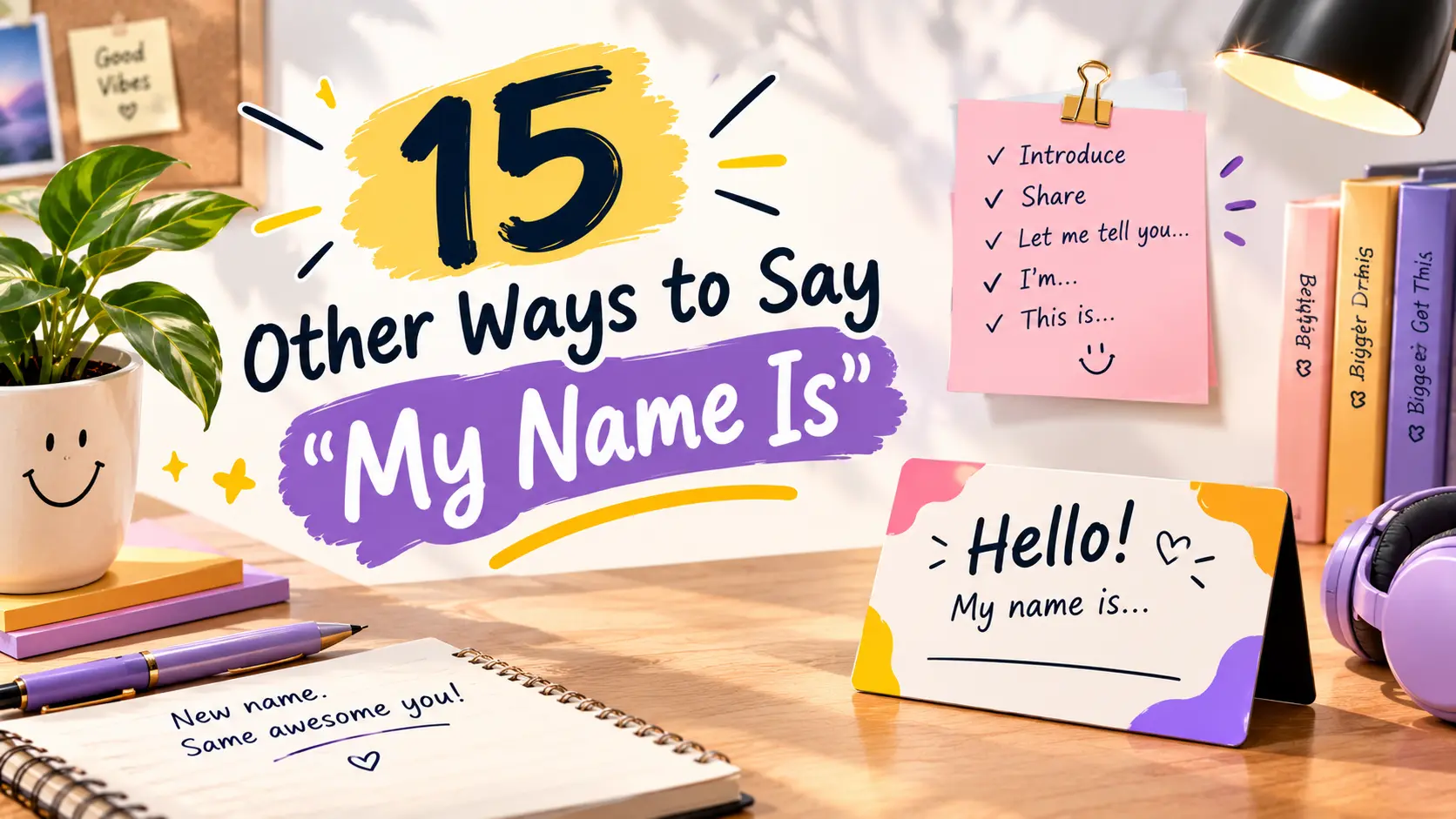
Introducing yourself is one of the first communication skills you learn in English, but saying “my name is” every time can quickly sound repetitive. Fortunately, English gives you several natural alternatives that can make your introductions sound more confident, friendly, professional, or conversational.
Knowing 15 other ways to say “my name is” is especially useful in 2026, when English is commonly used in classrooms, workplaces, online meetings, emails, networking, and social media. Students, professionals, ESL learners, and anyone speaking English with new people can benefit from choosing an introduction that fits the situation.
The best alternative depends on your audience and the setting. Some expressions are relaxed and friendly, while others are better suited to formal meetings, presentations, or professional introductions.
When Should You Use These Alternatives?
Choose your introduction based on the situation and the relationship you have with the person you are meeting.
- Casual conversations: Use relaxed expressions when meeting friends, classmates, neighbors, or people in everyday situations.
- Professional situations: Choose polished expressions when introducing yourself to coworkers, clients, employers, or business contacts.
- Academic writing: Use formal wording when introducing yourself in academic presentations, assignments, or professional profiles.
- Emails and messages: Select a clear introduction that helps the recipient immediately understand who you are.
- Social media posts: Friendly and conversational expressions usually work better for online introductions.
- Public speaking: Use confident phrases that clearly identify you before moving into your topic.
⚠️ Warning: Not every alternative works in every situation. Avoid overly casual expressions in formal interviews, presentations, or business settings, and remember that some phrases introduce your identity rather than literally replacing “my name is.”
15+ Other Ways to Say “My Name Is”
1. I’m [Name]
Meaning / Definition
“I’m [Name]” is a short and natural way to introduce yourself. It communicates your name directly without sounding overly formal.
Usage
This expression is common in casual and semi-formal conversations. You can use it when meeting classmates, coworkers, neighbors, or someone new.
💡 Tip
Use “I’m” when you want your introduction to sound natural and relaxed.
Examples
- Hi, I’m Daniel. Nice to meet you.
- I’m Sarah, and I work in the marketing department.
- Hello, I’m James. Are you waiting for the meeting to start?
- I’m Olivia, your new English tutor.
2. My Name’s [Name]
Meaning / Definition
“My name’s” is the contracted form of “my name is.” It has the same basic meaning but sounds more conversational.
Usage
It is suitable for casual and semi-formal spoken English. It is especially common when meeting someone face-to-face for the first time.
💡 Tip
Use the contraction “name’s” in everyday speech rather than formal writing.
Examples
- Hi, my name’s Emma.
- Good afternoon, my name’s Robert, and I have an appointment.
- My name’s Lily, and I’m from Canada.
- Hello, my name’s Noah. I believe we’re in the same class.
3. I’m Called [Name]
Meaning / Definition
“I’m called [Name]” means that people use a particular name to identify you. It is grammatically correct, although it is less common in everyday American English than “I’m [Name].”
Usage
This expression can be used in casual or semi-formal situations. It is more natural in some varieties of British English and can also be useful when discussing what people call you.
💡 Tip
For a simple introduction, “I’m [Name]” will usually sound more natural.
Examples
- I’m called Ben, but my friends call me Benny.
- I’m called Maria, and I recently moved here.
- In my hometown, I’m called Alex because my full name is difficult to pronounce.
- I’m called Sophie, and I’m studying graphic design.
4. You Can Call Me [Name]
Meaning / Definition
“You can call me [Name]” tells someone what name you would like them to use. It can also introduce a nickname or preferred form of your name.
Usage
This phrase is usually casual or semi-formal. It is helpful when your full name is long, difficult to pronounce, or different from the name you normally use.
💡 Tip
Use this expression when you want to make it easier for someone to address you.
Examples
- My full name is Alexander, but you can call me Alex.
- You can call me Mia; everyone here does.
- My name is Christopher, but you can call me Chris.
- You can call me Sam if that’s easier.
5. Please Call Me [Name]
Meaning / Definition
“Please call me [Name]” politely tells someone which name you prefer them to use. It can make an introduction feel friendly and welcoming.
Usage
This phrase is generally semi-formal and polite. It works well when meeting coworkers, clients, teachers, or other people you want to make comfortable.
💡 Tip
Use it when you are specifically inviting someone to use a preferred name.
Examples
- My full name is Elizabeth, but please call me Liz.
- Please call me Michael; that’s what I normally go by.
- My name is Jonathan, but please call me Jon.
- Please call me Anna if you prefer something shorter.
6. I Go By [Name]
Meaning / Definition
“I go by [Name]” means that you normally use that name when people address you. It is particularly useful for nicknames and preferred names.
Usage
This expression is casual to semi-formal and very common in modern conversational English. You can use it at work, school, social events, or online.
💡 Tip
Use “I go by” when the name you use is different from your full or legal name.
Examples
- My full name is Samantha, but I go by Sam.
- I go by Chris at work.
- My name is Katherine, although I go by Kate.
- I go by Jay online because it’s easier to remember.
7. I’m [Name], by the Way
Meaning / Definition
“I’m [Name], by the way” introduces your name in a casual and natural manner. The phrase “by the way” makes the introduction feel spontaneous rather than formal.
Usage
It is best for casual conversations and informal social situations. It can be useful when you have already started talking before introducing yourself.
💡 Tip
Use this expression when your introduction happens naturally during an ongoing conversation.
Examples
- I’m Daniel, by the way. I don’t think we’ve met before.
- I’m Rachel, by the way. What’s your name?
- I’m Kevin, by the way, and I work with Lisa.
- I’m Hannah, by the way. Thanks for helping me earlier.
8. Let Me Introduce Myself
Meaning / Definition
“Let me introduce myself” signals that you are about to give your name and possibly some information about yourself. It focuses more on the act of making an introduction than simply stating your name.
Usage
This phrase is semi-formal to formal and works well in presentations, meetings, classes, and professional settings. It is less common in quick casual conversations.
💡 Tip
Follow it with your name and a short detail about your role when appropriate.
Examples
- Let me introduce myself. I’m David, the new project manager.
- Before we begin, let me introduce myself. I’m Laura from the sales team.
- Let me introduce myself. My name is Ahmed, and I’ll be leading today’s workshop.
- Good morning, everyone. Let me introduce myself before we get started.
9. I’d Like to Introduce Myself
Meaning / Definition
“I’d like to introduce myself” is a polite way to announce that you want to tell people who you are. It sounds more formal and deliberate than simply saying “I’m [Name].”
Usage
Use it in formal or semi-formal settings such as meetings, presentations, professional events, or written introductions. It is usually unnecessary for very casual conversations.
💡 Tip
Use this phrase when you want your introduction to sound organized and professional.
Examples
- I’d like to introduce myself. I’m Olivia, the new department coordinator.
- I’d like to introduce myself before we discuss the project.
- Good morning. I’d like to introduce myself as your new instructor.
- I’d like to introduce myself and explain my role in the organization.
10. I’m Known as [Name]
Meaning / Definition
“I’m known as [Name]” means that people recognize or refer to you by that particular name. It can describe a nickname, professional name, or commonly used identity.
Usage
This expression is semi-formal and is often more descriptive than conversational. It is useful when explaining how you are known rather than simply introducing yourself.
💡 Tip
Use this phrase when the name has some context or significance.
Examples
- My full name is Benjamin, but I’m known as Ben.
- She is known as Maya in the design community.
- I’m known as Coach Lee among my students.
- Although my official name is William, I’m known as Will.
11. You May Call Me [Name]
Meaning / Definition
“You may call me [Name]” politely tells someone which name they can use when addressing you. It sounds respectful and slightly more formal than “you can call me.”
Usage
This expression is semi-formal to formal and may be appropriate in professional, academic, or respectful introductions. It can sound somewhat formal in everyday conversation.
💡 Tip
Use it when you want to sound courteous rather than casual.
Examples
- My full name is Theodore, but you may call me Theo.
- You may call me Dr. Patel during the conference.
- My name is Jacqueline, but you may call me Jackie.
- You may call me Mr. Wilson if you prefer a formal address.
12. I’m Known By the Name [Name]
Meaning / Definition
“I’m known by the name [Name]” explains that a particular name is how people identify or refer to you. It is more descriptive than the everyday phrase “I’m [Name].”
Usage
This phrase is formal and is more appropriate when explaining naming conventions or identity than making a quick introduction. It can appear in professional, historical, cultural, or descriptive contexts.
💡 Tip
For ordinary introductions, choose a simpler expression unless the naming context matters.
Examples
- I’m known by the name Daniel in my professional work.
- The author is known by the name George rather than his full first name.
- In the local community, I’m known by the name Noor.
- She is known by the name Lily among her international colleagues.
13. Allow Me to Introduce Myself
Meaning / Definition
“Allow me to introduce myself” is a polite and formal way to begin an introduction. It creates a respectful transition into stating your name and role.
Usage
Use this phrase in formal meetings, speeches, ceremonies, presentations, or professional correspondence. It may sound too formal for a conversation with close friends.
💡 Tip
Pair it with your name and professional role to make the introduction complete.
Examples
- Allow me to introduce myself. I’m Professor Harris from the English department.
- Allow me to introduce myself before we begin the presentation.
- Allow me to introduce myself. My name is Daniel, and I represent our research team.
- Good evening, everyone. Allow me to introduce myself and welcome you to the event.
14. For Those Who Don’t Know Me, I’m [Name]
Meaning / Definition
“For those who don’t know me, I’m [Name]” introduces you to people who may not have met you before. It also recognizes that some members of the audience may already know you.
Usage
This expression is semi-formal and works especially well for groups, meetings, presentations, and social events. It is less necessary when speaking to only one person.
💡 Tip
Use it when addressing a group containing both familiar and unfamiliar people.
Examples
- For those who don’t know me, I’m Rachel, the new team leader.
- For those who don’t know me, I’m Adam, and I teach advanced English.
- For those who don’t know me, I’m Nina from the communications department.
- For those who don’t know me, I’m Carlos, and I organized today’s event.
15. I’m [Name] from [Place or Organization]
Meaning / Definition
“I’m [Name] from [Place or Organization]” introduces your name while immediately providing useful context. It helps listeners understand where you are from or which organization you represent.
Usage
This is semi-formal and particularly useful for professional meetings, conferences, networking events, and business communication. It can also work in casual situations when your location or organization is relevant.
💡 Tip
Add only information that helps the listener understand who you are or why you are there.
Examples
- I’m Sophia from Greenfield University.
- I’m Mark from the customer support team.
- I’m Aisha from Karachi, and I’m attending the conference for the first time.
- I’m Daniel from Bright Solutions, and I’ll be handling your account.
H2: Bonus Section — Polite Variations
If you want your introduction to sound respectful and welcoming, these polite variations are useful in professional and social situations. They can help you introduce yourself without sounding too abrupt.
- “It’s a pleasure to meet you. I’m Daniel.”
- “Hello, I’m Sarah. It’s nice to meet you.”
- “Good morning, I’m Michael from the sales team.”
- “It’s lovely to meet you. My name is Emma.”
- “Allow me to introduce myself. I’m James.”
- “Hello, I’m Olivia. Thank you for having me.”
Final Tips — How to Choose the Right Phrase
The best alternative to “my name is” is the one that matches the setting, audience, and level of formality.
- Consider the setting: Think about whether you are at school, work, a social event, an interview, or a presentation before choosing your phrase.
- Know your audience: A phrase that works with friends may not be appropriate when speaking to a client, professor, or senior colleague.
- Match the formality: Use “I’m [Name]” for everyday situations and expressions such as “Allow me to introduce myself” for more formal occasions.
- Spoken vs written: Contractions such as “I’m” and “my name’s” sound natural in conversation, while formal introductions may work better in professional writing.
- Cultural sensitivity: When introducing yourself internationally, pronounce names respectfully and do not assume that someone wants to use a shortened version of their name.
- Emotional tone: Choose a warm expression when meeting someone socially and a confident, straightforward phrase when speaking professionally.
- Practice naturally: Learn several alternatives instead of memorizing one sentence so you can introduce yourself comfortably in different situations.