
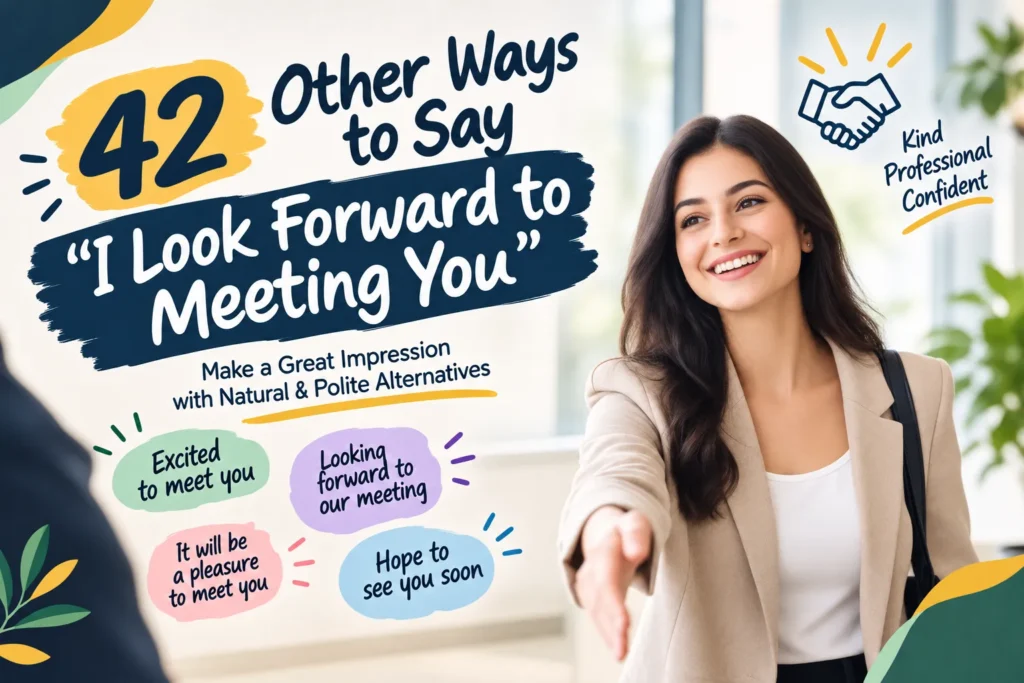
“I look forward to meeting you” is a polite and widely used way to show that you are expecting a future meeting with interest or enthusiasm. It works especially well in professional emails, interviews, appointments, networking messages, and formal introductions.
However, using the same expression repeatedly can make your writing feel predictable. Choosing a phrase that matches the situation can help you sound warmer, more professional, more enthusiastic, or more relaxed depending on who you are speaking to.
Below, you’ll find 42 useful alternatives to “I look forward to meeting you,” with explanations and examples so you can choose the right expression for emails, work conversations, interviews, events, and everyday messages.
When Should You Use These Alternatives?
Different situations call for different ways of expressing anticipation about meeting someone. Consider the relationship, purpose of the meeting, and level of formality before choosing an alternative.
- Professional emails: Use polished expressions when communicating with clients, managers, recruiters, or business contacts.
- Job interviews: Choose confident but respectful wording that shows interest without sounding overly casual.
- Networking: A warm and professional phrase can make your message feel more personable.
- Friends and acquaintances: Informal expressions are usually more natural than traditional business language.
- Appointments and scheduled meetings: Short, clear expressions often work best when the meeting details are already confirmed.
- First meetings: When meeting someone for the first time, choose wording that communicates genuine interest and a positive attitude.
Important: Avoid using an overly enthusiastic or casual phrase in a formal situation unless you already have a relaxed relationship with the person.
1. I’m Looking Forward to Meeting You
Meaning / Definition: This is a natural variation of “I look forward to meeting you” that expresses positive anticipation about a future meeting. It is extremely common in both professional and personal communication.
Usage: You can use it in emails, messages, interviews, appointments, and networking conversations. It is neutral in formality and works well in most situations.
💡 Tip: Use this when you want a familiar expression that sounds warm without being overly casual.
Examples:
- I’m looking forward to meeting you at the conference next week.
- I’m looking forward to meeting you and discussing the project.
- I’m looking forward to meeting you in person on Monday.
- I’m looking forward to meeting you during your visit.
2. I’m Excited to Meet You
Meaning / Definition: This phrase shows genuine enthusiasm about meeting someone. It sounds more energetic and personal than the traditional expression.
Usage: It is suitable for friendly conversations, networking, events, and situations where enthusiasm is appropriate. It is less formal than “I look forward to meeting you.”
💡 Tip: Use it when you want your excitement to be obvious rather than simply expressing polite anticipation.
Examples:
- I’m excited to meet you at the workshop tomorrow.
- I’m excited to meet you and hear about your experience.
- I’m excited to meet you in person after our online conversations.
- I’m excited to meet you at the event this weekend.
3. I’m Glad We’ll Have a Chance to Meet
Meaning / Definition: This expression emphasizes appreciation for the opportunity to meet. It sounds warm, sincere, and conversational.
Usage: It works well in professional and semi-formal situations, especially when someone has arranged a meeting with you. It has a friendly but respectful tone.
💡 Tip: Choose this phrase when you want to sound appreciative rather than simply enthusiastic.
Examples:
- I’m glad we’ll have a chance to meet during the conference.
- I’m glad we’ll have a chance to meet and talk about the partnership.
- I’m glad we’ll have a chance to meet in person next week.
- I’m glad we’ll have a chance to meet while you’re in town.
4. I’m Eager to Meet You
Meaning / Definition: “I’m eager to meet you” communicates strong interest and anticipation. It suggests that you are genuinely looking forward to the opportunity.
Usage: This phrase is appropriate for professional correspondence, networking, and formal introductions. It is slightly more enthusiastic than the standard expression.
💡 Tip: Use “eager” when you want to communicate strong interest while maintaining a professional tone.
Examples:
- I’m eager to meet you and learn more about your work.
- I’m eager to meet you at the upcoming conference.
- I’m eager to meet you and discuss the next steps.
- I’m eager to meet you in person next month.
5. I’m Pleased to Have the Opportunity to Meet You
Meaning / Definition: This formal expression communicates appreciation for the chance to meet someone. It is particularly appropriate when the meeting has professional or important significance.
Usage: Use it in formal emails, business correspondence, interviews, and official introductions. It has a clearly formal tone.
💡 Tip: This is a strong choice when you want to sound respectful and polished.
Examples:
- I’m pleased to have the opportunity to meet you next Tuesday.
- I’m pleased to have the opportunity to meet you and discuss the proposal.
- I’m pleased to have the opportunity to meet you during the conference.
- I’m pleased to have the opportunity to meet you in person.
6. I’m Delighted to Meet You
Meaning / Definition: “I’m delighted to meet you” expresses strong pleasure about meeting someone. It sounds warm, positive, and polished.
Usage: It can be used when meeting someone or when referring to an upcoming meeting, although it is more natural once the meeting has begun. The tone is polite and somewhat formal.
💡 Tip: For a future meeting, “I’m delighted that we’ll be meeting” can sound more precise.
Examples:
- I’m delighted that we’ll have the opportunity to meet.
- I’m delighted to meet you at the reception.
- I’m delighted that we’ll finally meet in person.
- I’m delighted to have the chance to meet you.
7. I’m Excited About Our Meeting
Meaning / Definition: This phrase focuses on the meeting itself rather than directly addressing the other person. It clearly communicates enthusiasm.
Usage: It works well in professional and casual messages when the relationship allows some warmth. It is moderately informal.
💡 Tip: Use this when you want to make your enthusiasm sound natural and conversational.
Examples:
- I’m excited about our meeting next Thursday.
- I’m excited about our meeting and the ideas we’ll discuss.
- I’m excited about our meeting at the conference.
- I’m excited about our meeting and getting to know the team.
8. I’m Looking Forward to Our Meeting
Meaning / Definition: This is a simple alternative that focuses on the scheduled meeting itself. It communicates positive anticipation without sounding overly enthusiastic.
Usage: It is excellent for professional emails, appointments, and business communication. The tone is neutral and professional.
💡 Tip: Use this when the meeting has already been arranged and you want a concise closing sentence.
Examples:
- I’m looking forward to our meeting on Friday.
- I’m looking forward to our meeting and discussing the proposal.
- I’m looking forward to our meeting next week.
- I’m looking forward to our meeting with the team.
9. I’m Looking Forward to Connecting
Meaning / Definition: “Connecting” suggests meeting, communicating, and building a relationship. It is especially common in professional and networking contexts.
Usage: Use it in emails, LinkedIn messages, networking conversations, and business communication. It is professional but friendly.
💡 Tip: This works especially well when the purpose of the meeting includes building a professional relationship.
Examples:
- I’m looking forward to connecting at the conference.
- I’m looking forward to connecting with you next week.
- I’m looking forward to connecting and exchanging ideas.
- I’m looking forward to connecting with your team.
10. I’m Looking Forward to Speaking With You
Meaning / Definition: This expression emphasizes the conversation rather than the physical meeting. It is useful when the meeting will involve a discussion.
Usage: It is commonly used in professional emails, interviews, calls, and appointments. The tone is polite and professional.
💡 Tip: Use this when the main purpose of the meeting is a conversation.
Examples:
- I’m looking forward to speaking with you on Monday.
- I’m looking forward to speaking with you about the position.
- I’m looking forward to speaking with you during our scheduled call.
- I’m looking forward to speaking with you about the project.
Want more natural ways to express pleasure after meeting someone? Explore other ways to say “It Was a Pleasure Meeting You” — 48 warm and professional alternatives for every first impression.
11. I Look Forward to Our Conversation
Meaning / Definition: This phrase expresses anticipation about an upcoming discussion. It sounds polished without repeating the word “meeting.”
Usage: It is particularly useful in professional emails and formal correspondence. Its tone is formal and respectful.
💡 Tip: Choose this when the conversation itself is more important than the physical meeting.
Examples:
- I look forward to our conversation next week.
- I look forward to our conversation about the new project.
- I look forward to our conversation and learning more about your goals.
- I look forward to our conversation on Thursday.
12. I’m Looking Forward to Seeing You
Meaning / Definition: This phrase expresses anticipation about seeing someone in the future. It is warmer and more personal than many formal alternatives.
Usage: It works well with colleagues, friends, acquaintances, and people you already know. The tone is friendly and conversational.
💡 Tip: Use this when you already have some familiarity with the person.
Examples:
- I’m looking forward to seeing you at the event.
- I’m looking forward to seeing you next weekend.
- I’m looking forward to seeing you when you visit.
- I’m looking forward to seeing you again soon.
13. It Will Be Great to Meet You
Meaning / Definition: This phrase expresses positive anticipation about meeting someone. It sounds relaxed and welcoming.
Usage: It is suitable for emails, networking, introductions, and casual professional communication. The tone is friendly rather than highly formal.
💡 Tip: Use this when you want your message to sound warm and approachable.
Examples:
- It will be great to meet you at the conference.
- It will be great to meet you in person next week.
- It will be great to meet you and discuss your ideas.
- It will be great to meet you during your visit.
14. It Will Be a Pleasure to Meet You
Meaning / Definition: This phrase communicates that meeting the person will be a positive experience. It has a polished and respectful tone.
Usage: It is appropriate for formal emails, business communication, and professional introductions. It is more formal than “It will be great to meet you.”
💡 Tip: Choose this expression when you want to show courtesy and respect.
Examples:
- It will be a pleasure to meet you next week.
- It will be a pleasure to meet you and discuss the opportunity.
- It will be a pleasure to meet you at the conference.
- It will be a pleasure to meet you in person.
15. I’m Happy We’ll Be Meeting Soon
Meaning / Definition: This phrase expresses positive feelings about an upcoming meeting. It sounds warm without being excessively enthusiastic.
Usage: It works well in friendly professional emails and personal communication. The tone is informal to neutral.
💡 Tip: This is useful when you want your message to sound genuine and conversational.
Examples:
- I’m happy we’ll be meeting soon to discuss everything.
- I’m happy we’ll be meeting soon in person.
- I’m happy we’ll be meeting soon at the office.
- I’m happy we’ll be meeting soon and catching up.
16. I’m Enthusiastic About Meeting You
Meaning / Definition: This expression directly communicates enthusiasm about an upcoming meeting. It sounds confident and positive.
Usage: It can work in professional situations, especially networking or collaborative opportunities. The tone is professional but strongly positive.
💡 Tip: Use it when genuine enthusiasm is an important part of your message.
Examples:
- I’m enthusiastic about meeting you and discussing the opportunity.
- I’m enthusiastic about meeting you at the upcoming event.
- I’m enthusiastic about meeting you and learning about your organization.
- I’m enthusiastic about meeting you next month.
17. I’m Excited for Our Meeting
Meaning / Definition: This phrase shows enthusiasm about a scheduled meeting. It is direct, modern, and conversational.
Usage: It is most natural in friendly workplaces, team communication, and casual professional messages. It is less formal than “I look forward to our meeting.”
💡 Tip: Use it when your relationship with the recipient allows a more energetic tone.
Examples:
- I’m excited for our meeting tomorrow.
- I’m excited for our meeting and the ideas we’ll share.
- I’m excited for our meeting next week.
- I’m excited for our meeting with the new team.
18. I’m Glad We’ll Be Meeting
Meaning / Definition: This expression communicates satisfaction about an upcoming meeting. It sounds sincere and approachable.
Usage: It can be used with colleagues, acquaintances, clients, and other professional contacts. The tone is warm and neutral.
💡 Tip: Choose this when you want to express appreciation without sounding overly formal.
Examples:
- I’m glad we’ll be meeting next week.
- I’m glad we’ll be meeting in person.
- I’m glad we’ll be meeting to discuss the project.
- I’m glad we’ll be meeting during the conference.
19. I’m Looking Forward to Getting to Know You
Meaning / Definition: This phrase focuses on developing a relationship with someone rather than simply attending a meeting. It sounds personal and welcoming.
Usage: It works particularly well for introductions, new colleagues, networking, and social situations. The tone is friendly and warm.
💡 Tip: Use it when the meeting is about building a new connection.
Examples:
- I’m looking forward to getting to know you and the team.
- I’m looking forward to getting to know you during the event.
- I’m looking forward to getting to know you better.
- I’m looking forward to getting to know you when you join us.
20. I’m Looking Forward to Meeting in Person
Meaning / Definition: This phrase emphasizes that the upcoming meeting will happen face-to-face. It is especially useful after communicating online.
Usage: It is common in professional emails, remote work, online networking, and long-distance relationships. The tone is neutral and friendly.
💡 Tip: Use this when you have already spoken virtually but have not met face-to-face.
Examples:
- I’m looking forward to meeting in person next month.
- After our video calls, I’m looking forward to meeting in person.
- I’m looking forward to meeting in person at the conference.
- I’m looking forward to meeting in person and discussing the project.
Need more professional closing phrases for your emails? Check out other ways to say “I Look Forward To” — 24 natural and professional alternatives for every email and correspondence.
21. It’ll Be Nice to Meet You
Meaning / Definition: This is a relaxed way to express positive anticipation about meeting someone. It sounds friendly and natural.
Usage: It is best suited to casual or semi-professional communication. The tone is informal and approachable.
💡 Tip: Avoid this wording in highly formal correspondence where a more polished expression is expected.
Examples:
- It’ll be nice to meet you at the workshop.
- It’ll be nice to meet you in person.
- It’ll be nice to meet you after hearing so much about your work.
- It’ll be nice to meet you next week.
22. I’m Really Looking Forward to Meeting You
Meaning / Definition: Adding “really” makes the original expression more enthusiastic. It shows stronger personal anticipation.
Usage: It works well in friendly professional messages and personal communication. The tone is warm and enthusiastic.
💡 Tip: Use “really” when you want to add warmth without completely changing the original expression.
Examples:
- I’m really looking forward to meeting you at the event.
- I’m really looking forward to meeting you next week.
- I’m really looking forward to meeting you in person.
- I’m really looking forward to meeting you and your team.
23. I’m Very Much Looking Forward to Meeting You
Meaning / Definition: This is a more emphatic version of the standard expression. It communicates strong anticipation while remaining polite.
Usage: It is appropriate for formal or professional correspondence when you want to sound particularly positive. The tone is formal and courteous.
💡 Tip: Use it sparingly because the added emphasis can sound excessive in very short or routine messages.
Examples:
- I’m very much looking forward to meeting you next Tuesday.
- I’m very much looking forward to meeting you at the conference.
- I’m very much looking forward to meeting you in person.
- I’m very much looking forward to meeting you and discussing the proposal.
24. I’m Honored to Have the Opportunity to Meet You
Meaning / Definition: This phrase expresses respect and appreciation for the opportunity to meet someone. It carries a stronger sense of formality and admiration.
Usage: It is most appropriate when meeting someone in a significant professional, academic, or ceremonial context. The tone is highly respectful.
💡 Tip: Use this only when the situation genuinely calls for a high level of respect.
Examples:
- I’m honored to have the opportunity to meet you.
- I’m honored to have the opportunity to meet you and discuss your work.
- I’m honored to have the opportunity to meet you during the conference.
- I’m honored to have the opportunity to meet you in person.
25. I’m Excited About the Chance to Meet You
Meaning / Definition: This phrase expresses enthusiasm about having an opportunity to meet someone. It sounds positive and genuine.
Usage: It works well in networking, professional introductions, and friendly correspondence. The tone is warm and moderately informal.
💡 Tip: Use it when you want to highlight the opportunity itself.
Examples:
- I’m excited about the chance to meet you next week.
- I’m excited about the chance to meet you at the event.
- I’m excited about the chance to meet you and hear your ideas.
- I’m excited about the chance to meet you in person.
26. I’m Anticipating Our Meeting
Meaning / Definition: This expression communicates that you are expecting the upcoming meeting with interest. It has a more formal and deliberate tone.
Usage: It can be used in professional correspondence, although it is less conversational than “I’m looking forward to our meeting.” The tone is formal.
💡 Tip: In everyday professional emails, “I’m looking forward to our meeting” usually sounds more natural.
Examples:
- I’m anticipating our meeting next week.
- I’m anticipating our meeting and the discussion that will follow.
- I’m anticipating our meeting with great interest.
- I’m anticipating our meeting on Monday.
27. I’m Keen to Meet You
Meaning / Definition: “Keen” means very interested or enthusiastic about something. This expression shows genuine interest in meeting someone.
Usage: It is particularly common in British English and can work in professional or casual contexts. The tone is friendly and moderately informal.
💡 Tip: Use this naturally when communicating with people who are familiar with British English.
Examples:
- I’m keen to meet you and discuss the project.
- I’m keen to meet you at the conference.
- I’m keen to meet you and learn more about your work.
- I’m keen to meet you when you visit the office.
28. I’m Excited to Finally Meet You
Meaning / Definition: This phrase is useful when you have been communicating with someone for some time but have not met them yet. “Finally” emphasizes that the meeting has been anticipated.
Usage: It works well for online friends, remote colleagues, networking contacts, and long-distance connections. The tone is friendly and enthusiastic.
💡 Tip: Use “finally” only when there has been some previous communication or delay before the meeting.
Examples:
- I’m excited to finally meet you at the conference.
- I’m excited to finally meet you in person.
- I’m excited to finally meet you after all our video calls.
- I’m excited to finally meet you this weekend.
29. I’m Looking Forward to Catching Up
Meaning / Definition: “Catching up” means spending time talking with someone you already know about what has happened since you last met. It is warmer and more casual than “meeting.”
Usage: Use it with friends, familiar colleagues, former classmates, and acquaintances. The tone is informal and friendly.
💡 Tip: Do not use “catching up” when you are meeting someone for the first time.
Examples:
- I’m looking forward to catching up over coffee.
- I’m looking forward to catching up with you this weekend.
- I’m looking forward to catching up after the conference.
- I’m looking forward to catching up and hearing your news.
30. I Can’t Wait to Meet You
Meaning / Definition: This phrase shows strong excitement and impatience in a positive sense. It is much more enthusiastic than the standard formal expression.
Usage: It is best for friends, family, social events, and warm personal messages. It is generally too casual for formal business correspondence.
💡 Tip: Save this expression for situations where strong enthusiasm feels natural.
Examples:
- I can’t wait to meet you this weekend.
- I can’t wait to meet you in person.
- I can’t wait to meet you at the party.
- I can’t wait to meet you and show you around.
31. It Will Be Great to See You
Meaning / Definition: This phrase communicates that you are happy about seeing someone in the future. It is warm and conversational.
Usage: It is best when you already know the person. The tone is casual to neutral.
💡 Tip: Use “see you” rather than “meet you” when the person is already familiar to you.
Examples:
- It will be great to see you at the reunion.
- It will be great to see you again next week.
- It will be great to see you at the office.
- It will be great to see you after such a long time.
32. I’m Looking Forward to Seeing You Again
Meaning / Definition: This phrase expresses anticipation about reconnecting with someone you have met before. It adds warmth and familiarity.
Usage: It works well in personal communication and friendly professional relationships. The tone is warm and polite.
💡 Tip: Use “again” only when you have already met the person before.
Examples:
- I’m looking forward to seeing you again soon.
- I’m looking forward to seeing you again at the conference.
- I’m looking forward to seeing you again next month.
- I’m looking forward to seeing you again after the holidays.
33. I’m Glad We’ll Get to Meet
Meaning / Definition: This expression shows appreciation for the opportunity to meet someone. It sounds relaxed and genuine.
Usage: It is suitable for casual professional messages, introductions, and personal conversations. The tone is friendly.
💡 Tip: This phrase works particularly well when the meeting has recently been arranged.
Examples:
- I’m glad we’ll get to meet next week.
- I’m glad we’ll get to meet in person.
- I’m glad we’ll get to meet at the event.
- I’m glad we’ll get to meet and talk about the project.
Looking for more ways to greet someone for the first time? Read our guide on other ways to say “Nice to Meet You” — 20 natural and polished alternatives for every first impression.
34. I’m Looking Forward to Meeting Everyone
Meaning / Definition: This phrase expresses anticipation about meeting a group rather than one individual. It is useful when joining a team or attending an event.
Usage: It is commonly used in workplace introductions, conferences, workshops, and group events. The tone is neutral and professional.
💡 Tip: Use “everyone” when you are addressing a group of people you have not met yet.
Examples:
- I’m looking forward to meeting everyone on Monday.
- I’m looking forward to meeting everyone at the workshop.
- I’m looking forward to meeting everyone and learning more about the team.
- I’m looking forward to meeting everyone in person.
35. I’m Excited to Meet Everyone
Meaning / Definition: This phrase communicates enthusiasm about meeting a group of people. It is more energetic than the traditional formal expression.
Usage: It works well when joining a new workplace, attending a social event, or participating in a team activity. The tone is friendly and enthusiastic.
💡 Tip: Use this when you genuinely want to show excitement about meeting the whole group.
Examples:
- I’m excited to meet everyone at the orientation.
- I’m excited to meet everyone on my first day.
- I’m excited to meet everyone at the conference.
- I’m excited to meet everyone and get started.
36. I’m Looking Forward to Our Time Together
Meaning / Definition: This phrase focuses on spending time with someone rather than simply attending a meeting. It has a warmer and more personal feeling.
Usage: It is suitable for social occasions, visits, events, and familiar professional relationships. The tone is warm and friendly.
💡 Tip: Use this when you expect to spend more than a few minutes meeting someone.
Examples:
- I’m looking forward to our time together during the weekend.
- I’m looking forward to our time together at the retreat.
- I’m looking forward to our time together and the conversations ahead.
- I’m looking forward to our time together in New York.
37. I’m Looking Forward to Meeting You in Person
Meaning / Definition: This expression specifically emphasizes a face-to-face meeting. It is especially useful when the relationship has started online or remotely.
Usage: It works well in professional emails, online networking, remote work, and virtual introductions. The tone is professional and friendly.
💡 Tip: This is one of the clearest choices when you have already communicated virtually.
Examples:
- I’m looking forward to meeting you in person next week.
- I’m looking forward to meeting you in person at the office.
- I’m looking forward to meeting you in person after our virtual meetings.
- I’m looking forward to meeting you in person at the conference.
38. I’m Looking Forward to Our Introduction
Meaning / Definition: This phrase expresses anticipation about being formally introduced to someone. It is particularly useful when the meeting is a first introduction.
Usage: It can work in professional or formal correspondence, especially before a scheduled introduction. The tone is polished and formal.
💡 Tip: Use this when the main purpose of the meeting is an introduction rather than an ongoing discussion.
Examples:
- I’m looking forward to our introduction next week.
- I’m looking forward to our introduction at the conference.
- I’m looking forward to our introduction and learning more about your work.
- I’m looking forward to our introduction on Monday.
39. I’m Looking Forward to Our Discussion
Meaning / Definition: This phrase focuses on the ideas or topics you expect to discuss. It is a professional alternative when the meeting has a clear purpose.
Usage: It is especially useful in business emails, interviews, consultations, and academic communication. The tone is formal and professional.
💡 Tip: Choose this when the substance of the meeting matters more than the meeting itself.
Examples:
- I’m looking forward to our discussion next Tuesday.
- I’m looking forward to our discussion about the proposal.
- I’m looking forward to our discussion and hearing your perspective.
- I’m looking forward to our discussion about the next steps.
40. I’m Looking Forward to Our Upcoming Meeting
Meaning / Definition: This expression clearly refers to a meeting that has already been scheduled. It sounds polished and professional.
Usage: It is commonly used in business emails, appointment confirmations, and workplace communication. The tone is formal and neutral.
💡 Tip: This is a useful closing phrase when the meeting details are already confirmed.
Examples:
- I’m looking forward to our upcoming meeting.
- I’m looking forward to our upcoming meeting on Thursday.
- I’m looking forward to our upcoming meeting and the discussion ahead.
- I’m looking forward to our upcoming meeting with the team.
41. I’m Looking Forward to Our Time to Talk
Meaning / Definition: This phrase communicates anticipation about having a dedicated conversation with someone. It sounds warmer than a standard business closing.
Usage: It works well in friendly professional messages, mentoring conversations, and personal communication. The tone is conversational and positive.
💡 Tip: Use this when the main purpose of the meeting is to have a meaningful conversation.
Examples:
- I’m looking forward to our time to talk next week.
- I’m looking forward to our time to talk about the project.
- I’m looking forward to our time to talk and exchange ideas.
- I’m looking forward to our time to talk in person.
42. I’m Looking Forward to Meeting You Soon
Meaning / Definition: This phrase adds “soon” to emphasize that the meeting is expected in the near future. It sounds friendly and positive.
Usage: It works in professional emails, personal messages, and casual conversations when the meeting is coming up soon. The tone is neutral to warm.
💡 Tip: Use “soon” only when the meeting is genuinely expected in the near future.
Examples:
- I’m looking forward to meeting you soon.
- I’m looking forward to meeting you soon at the office.
- I’m looking forward to meeting you soon and discussing the project.
- I’m looking forward to meeting you soon in person.
Polite Variations
Sometimes you want to sound courteous without making your message overly formal. These expressions are useful when writing to clients, colleagues, new contacts, interviewers, or people you do not know well.
- It will be a pleasure to meet you. — A polished choice for formal professional communication.
- I’m pleased to have the opportunity to meet you. — Shows respect and appreciation.
- I’m looking forward to connecting with you. — Professional and suitable for networking.
- I’m glad we’ll have a chance to meet. — Warm while remaining respectful.
- I’m looking forward to our conversation. — Useful when discussion is the main purpose.
- I’m looking forward to meeting you in person. — Ideal after communicating online.
Final Tips — How to Choose the Right Phrase
Choosing the right alternative depends less on finding a “better” phrase and more on matching the wording to your situation.
- For formal emails: Use phrases such as “It will be a pleasure to meet you” or “I’m pleased to have the opportunity to meet you.”
- For professional communication: “I’m looking forward to our meeting” and “I’m looking forward to connecting” are reliable choices.
- For interviews: “I’m looking forward to speaking with you” sounds professional and keeps the focus on the conversation.
- For networking: “I’m looking forward to connecting with you” works especially well because it suggests building a relationship.
- For friends: Try “I can’t wait to meet you,” “It’ll be great to see you,” or “I’m really looking forward to seeing you.”
- For first meetings: “I’m excited to finally meet you” or “It will be great to meet you” can sound welcoming.
- For online contacts: “I’m looking forward to meeting you in person” clearly explains that you are moving from virtual communication to a face-to-face meeting.
The best expression is the one that fits the relationship and situation. A formal client email may need a polished phrase, while a message to a friend can be much more relaxed. Paying attention to tone helps your English sound appropriate, confident, and natural rather than simply replacing one phrase with another.