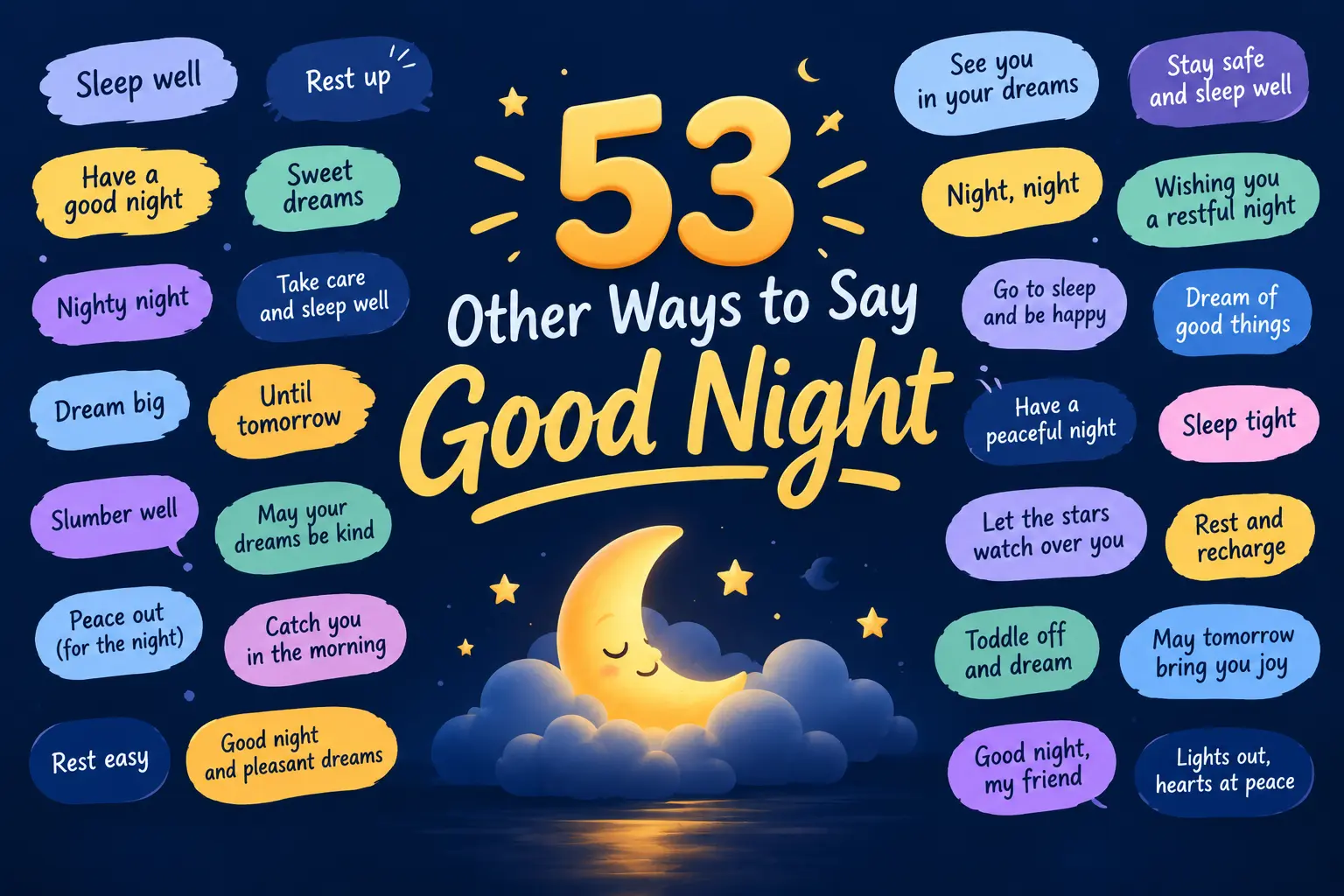

Saying “good night” is simple, but sometimes you want your message to sound warmer, sweeter, funnier, or more memorable. Whether you are ending a conversation, saying goodbye before bed, sending a thoughtful text, or wishing someone a peaceful night, the right expression can make a small message feel much more personal.
These 53 other ways to say good night give you plenty of natural alternatives for different situations. Students, professionals, ESL learners, friends, couples, family members, and anyone who wants to improve their everyday English can use these phrases to communicate naturally in 2026. Some are casual and playful, while others are sweet, polite, romantic, or more suitable for written messages.
When Should You Use These Alternatives?
The best alternative depends on who you are speaking to and the kind of relationship you have with that person.
- Casual conversations: Use relaxed expressions such as “Sleep well,” “Night!” or “Catch you tomorrow” with friends and people you know well.
- Professional situations: Choose polite phrases such as “Have a restful evening” or “Enjoy the rest of your evening” when speaking with colleagues or clients.
- Academic writing: A direct “Good night” is generally more natural in conversation than in formal academic writing; avoid overly emotional or romantic expressions in academic contexts.
- Emails and messages: “Have a good night” and “Wishing you a restful night” can work well when you want your message to sound warm but respectful.
- Social media posts: Creative expressions such as “Until tomorrow” or “Sleep tight” can make captions and casual posts feel more engaging.
- Public speaking: When ending an evening event, “Have a wonderful evening” or “Enjoy the rest of your night” sounds more natural than an intimate bedtime expression.
⚠️ Warning: Some good-night alternatives are strongly personal or romantic. Expressions such as “Sweet dreams, my love” or “Dream of me” should only be used when you have the appropriate relationship with the person. Similarly, phrases such as “Nighty-night” may sound childish or overly playful in professional situations.
53 Other Ways to Say “Good Night”
1. Sleep well
Meaning / Definition
“Sleep well” is a simple way to wish someone a comfortable and peaceful night of sleep. It carries the same basic purpose as “good night” but focuses more directly on resting.
Usage
This is casual and very natural in everyday conversations, texts, and messages. You can use it with friends, family members, coworkers you know well, or someone you care about.
💡 Tip
Use “Sleep well” when you want your goodbye to sound caring without being overly emotional.
Examples
- It’s getting late, so I’m heading to bed. Sleep well!
- You have an early meeting tomorrow, so sleep well tonight.
- Thanks for talking with me. Sleep well!
- I’ll see you in the morning—sleep well.
2. Sweet dreams
Meaning / Definition
“Sweet dreams” is a warm expression wishing someone pleasant dreams while they sleep. It often sounds more affectionate than simply saying “good night.”
Usage
This is casual and can be used with friends, family, children, or romantic partners. It is especially common in texts and bedtime conversations.
💡 Tip
Use it when you want to make your nighttime message sound warm and affectionate.
Examples
- Good night, everyone, and sweet dreams!
- You’ve had a long day. Get some rest and have sweet dreams.
- I’ll talk to you tomorrow. Sweet dreams!
- Sleep peacefully and have sweet dreams tonight.
3. Have a good night
Meaning / Definition
“Have a good night” is a natural alternative to “good night” that wishes someone an enjoyable or pleasant evening. It can also be used when someone is leaving an event or going home.
Usage
This is neutral and versatile, making it appropriate for casual, semi-formal, and many professional situations. It works equally well in conversation, texts, and workplace interactions.
💡 Tip
Choose this when you want a safe expression that fits almost any audience.
Examples
- Thanks for coming over. Have a good night!
- I’ll finish the report tomorrow. Have a good night.
- Enjoy the movie and have a good night.
- Thanks for your help today—have a good night!
4. Rest well
Meaning / Definition
“Rest well” expresses a wish that someone gets enough rest and relaxation. It sounds caring without necessarily referring specifically to sleep.
Usage
This is neutral to semi-formal and works well with friends, family, coworkers, and people recovering from a tiring day. It can be used in both spoken and written English.
💡 Tip
Use “Rest well” when the person has had a particularly busy or exhausting day.
Examples
- You’ve been working since early morning, so rest well tonight.
- Take care and rest well before tomorrow’s exam.
- You’ve done enough for today—rest well.
- I hope you get some quiet time tonight. Rest well.
5. Sleep tight
Meaning / Definition
“Sleep tight” is a traditional informal expression meaning to sleep well. It is friendly and playful rather than formal.
Usage
This phrase is casual and is common in conversations with friends, family, and children. It can also appear in affectionate texts.
💡 Tip
Because it has a playful feel, avoid using it in formal professional emails.
Examples
- It’s late now. Sleep tight!
- Put your phone away and sleep tight.
- Good night, everyone—sleep tight!
- See you tomorrow morning. Sleep tight tonight.
6. Night!
Meaning / Definition
“Night!” is a shortened, informal version of “good night.” It is quick, natural, and commonly used when ending a casual conversation.
Usage
This is very casual and works best with friends, family, classmates, or people you know well. It is particularly common in texts and online chats.
💡 Tip
Use “Night!” when you want a quick goodbye rather than a complete sentence.
Examples
- I’m exhausted. Night!
- Okay, I’ll message you tomorrow. Night!
- Thanks for hanging out. Night!
- I’m off to bed now—night!
7. Have a restful night
Meaning / Definition
“Have a restful night” expresses a wish that someone enjoys peaceful and refreshing rest. It sounds more thoughtful and polished than a simple “good night.”
Usage
This is semi-formal and can work in personal or professional communication. It is particularly appropriate when someone has had a stressful or tiring day.
💡 Tip
Use it when you want to sound caring while keeping the message respectful.
Examples
- You’ve had a stressful day, so have a restful night.
- Thank you for your time today. Have a restful night.
- Put the work aside for now and have a restful night.
- I hope you have a quiet and restful night.
8. Have a peaceful night
Meaning / Definition
“Have a peaceful night” wishes someone a calm and undisturbed evening or night. It emphasizes tranquility rather than simply ending the conversation.
Usage
This is neutral to semi-formal and can be used in personal messages, cards, and thoughtful conversations. It works especially well when someone needs a break from stress.
💡 Tip
Choose this phrase when you want your message to feel gentle and sincere.
Examples
- Take some time to relax and have a peaceful night.
- I hope everything settles down and you have a peaceful night.
- Thank you for listening today. Have a peaceful night.
- Put your worries aside for a while and have a peaceful night.
9. Rest easy
Meaning / Definition
“Rest easy” means to relax and sleep without worry. It can also reassure someone that there is no need for them to remain concerned.
Usage
This is casual to semi-formal and works in conversations and messages. It can sound especially comforting when someone has been worried about something.
💡 Tip
Use “Rest easy” when you want to combine a good-night wish with reassurance.
Examples
- Everything is taken care of now, so rest easy.
- You’ve done everything you can today. Rest easy tonight.
- Don’t worry about tomorrow just yet—rest easy.
- Get some rest and rest easy knowing the work is finished.
10. Sleep peacefully
Meaning / Definition
“Sleep peacefully” wishes someone a calm and undisturbed sleep. It sounds gentle and caring.
Usage
This is neutral to semi-formal and is most natural in personal messages, cards, and thoughtful conversations. It can sound more poetic than ordinary everyday expressions.
💡 Tip
Use it when you want your message to feel calm and sincere.
Examples
- I hope you sleep peacefully tonight.
- Turn off your phone and sleep peacefully.
- You deserve a quiet evening, so sleep peacefully.
- Take care of yourself and sleep peacefully tonight.
11. Enjoy your evening
Meaning / Definition
“Enjoy your evening” wishes someone a pleasant remainder of their evening. It does not necessarily mean the person is going directly to bed.
Usage
This is neutral and works especially well in professional and social situations. It is useful when saying goodbye earlier in the evening.
💡 Tip
Use this instead of “good night” when the person is still likely to be awake for several hours.
Examples
- Thanks for meeting with me. Enjoy your evening!
- I’ll send the documents tomorrow. Enjoy your evening.
- Have fun at the restaurant and enjoy your evening.
- I’ll let you get back to your plans. Enjoy your evening!
12. Have a lovely evening
Meaning / Definition
“Have a lovely evening” is a warm way to wish someone an enjoyable evening. It sounds slightly more polished than “have a good night.”
Usage
This is semi-formal and can be used with friends, acquaintances, customers, colleagues, or guests. It is particularly natural when ending an interaction before bedtime.
💡 Tip
Use “lovely” when you want your farewell to sound warm and gracious.
Examples
- Thank you for visiting. Have a lovely evening!
- It was wonderful speaking with you. Have a lovely evening.
- Enjoy the dinner and have a lovely evening.
- I’ll see you at the office tomorrow. Have a lovely evening!
13. Until tomorrow
Meaning / Definition
“Until tomorrow” means that you expect to see or speak to someone again the next day. It can naturally function as a nighttime farewell.
Usage
This is neutral and works in casual as well as semi-formal situations. It is useful when you already know that you will reconnect tomorrow.
💡 Tip
Use it when the next meeting or conversation is already planned.
Examples
- I have an early start tomorrow, so until tomorrow!
- We’ll continue the discussion in the morning. Until tomorrow.
- Thanks for today. Until tomorrow!
- I’ll see you at breakfast—until tomorrow.
14. See you tomorrow
Meaning / Definition
“See you tomorrow” is a friendly farewell used when you expect to meet the person the following day. It can naturally replace “good night” when the next meeting is certain.
Usage
This is casual to neutral and is common among friends, classmates, family members, and coworkers. It is appropriate in both speech and messages.
💡 Tip
Use it when the important part of your goodbye is the next time you will meet.
Examples
- I’m going home now. See you tomorrow!
- That’s enough studying for tonight. See you tomorrow.
- Good work today—see you tomorrow morning.
- I’ll finish this tomorrow. See you tomorrow!
15. Catch you tomorrow
Meaning / Definition
“Catch you tomorrow” is an informal way to say that you expect to see or speak with someone the next day. It has a relaxed, friendly tone.
Usage
This is casual and is best for friends, classmates, and familiar coworkers. It is more conversational than “see you tomorrow.”
💡 Tip
Use it when chatting with someone you already have a comfortable relationship with.
Examples
- I’m heading home now. Catch you tomorrow!
- We can finish the project in the morning. Catch you tomorrow.
- Have a good one tonight—catch you tomorrow!
- I’m logging off now. Catch you tomorrow.
16. Take care tonight
Meaning / Definition
“Take care tonight” expresses concern for someone’s well-being as they end their day. It is warmer than a simple farewell.
Usage
This is casual to semi-formal and works well in personal messages and everyday conversations. It is useful when you want to show care without sounding romantic.
💡 Tip
Use it when you want your goodbye to feel personal but not overly emotional.
Examples
- You’ve had a busy day, so take care tonight.
- Thanks for checking in. Take care tonight!
- Drive safely and take care tonight.
- Get some rest and take care tonight.
17. Sleep soundly
Meaning / Definition
“Sleep soundly” means to sleep deeply and peacefully. It gives a gentle, comforting quality to a nighttime farewell.
Usage
This is neutral to semi-formal and is most natural in thoughtful personal messages. It can also appear in cards or creative writing.
💡 Tip
Use it when you want something softer and more expressive than “sleep well.”
Examples
- I hope you sleep soundly after such a long day.
- Finish your tea, relax, and sleep soundly tonight.
- You deserve a quiet evening—sleep soundly.
- Good luck tomorrow, and I hope you sleep soundly tonight.
18. Get some rest
Meaning / Definition
“Get some rest” encourages someone to stop working or worrying and spend time recovering. It does not necessarily mean going immediately to sleep.
Usage
This is casual and common in everyday conversations. It is especially useful when someone is tired, sick, busy, or preparing for an important day.
💡 Tip
Use it when you are concerned about someone’s energy or well-being.
Examples
- You’ve been studying all day. Get some rest.
- The deadline can wait until tomorrow—get some rest.
- You look exhausted, so get some rest tonight.
- Good night, and make sure you get some rest.
19. Sleep peacefully tonight
Meaning / Definition
“Sleep peacefully tonight” is a gentle wish for a calm night’s sleep. It adds a little more warmth and specificity than “sleep peacefully.”
Usage
This is neutral to semi-formal and works best in caring personal messages. It is also suitable for thoughtful notes.
💡 Tip
Use it when you want your message to feel reassuring and calm.
Examples
- You’ve done everything you can today, so sleep peacefully tonight.
- I hope you can forget about work and sleep peacefully tonight.
- Take a deep breath and sleep peacefully tonight.
- You deserve some quiet time—sleep peacefully tonight.
20. Dream sweetly
Meaning / Definition
“Dream sweetly” is a creative variation of “sweet dreams.” It wishes someone pleasant and happy dreams.
Usage
This is informal, affectionate, and somewhat poetic. It is most suitable for close relationships, children, romantic messages, or creative writing.
💡 Tip
Use it when you deliberately want your message to sound cute or poetic.
Examples
- Sleep well, little one, and dream sweetly tonight.
- I hope you have a relaxing night and dream sweetly.
- Turn off the lights, get comfortable, and dream sweetly.
- Good night, and dream sweetly until morning.
21. Sleep like a baby
Meaning / Definition
“Sleep like a baby” is an idiom meaning to sleep very deeply and peacefully. It is often used as a playful nighttime wish.
Usage
This is casual and informal. It works best with friends, family, and people you know well.
💡 Tip
Remember that it describes deep, peaceful sleep rather than literally sleeping like an infant.
Examples
- You’ve had such a long day—sleep like a baby tonight!
- Put your worries aside and sleep like a baby.
- I hope you sleep like a baby after that workout.
- Get comfortable and sleep like a baby tonight.
22. Have sweet dreams
Meaning / Definition
“Have sweet dreams” is another warm way to wish someone pleasant dreams. It sounds friendly, affectionate, and positive.
Usage
This is casual and common in texts, conversations, and bedtime messages. It can be used with children, friends, family, or romantic partners.
💡 Tip
Use it when you want to make a simple good-night message sound more affectionate.
Examples
- Good night, and have sweet dreams!
- I’ll talk to you in the morning. Have sweet dreams.
- Get comfortable and have sweet dreams tonight.
- Sleep well and have sweet dreams.
23. Have a relaxing night
Meaning / Definition
“Have a relaxing night” wishes someone a calm evening without stress or pressure. It emphasizes unwinding rather than sleep itself.
Usage
This is neutral and works well with friends, coworkers, family members, and acquaintances. It is useful after a stressful workday or busy schedule.
💡 Tip
Use it when someone needs to switch off rather than simply go to bed.
Examples
- You’ve worked hard today, so have a relaxing night.
- Forget about emails for a while and have a relaxing night.
- Enjoy your dinner and have a relaxing night.
- I hope you get some quiet time and have a relaxing night.
24. Have a peaceful evening
Meaning / Definition
“Have a peaceful evening” wishes someone a calm and pleasant remainder of the day. It is more about the evening than sleep.
Usage
This is neutral to semi-formal and can be used in professional or personal settings. It is particularly useful when saying goodbye before the person goes to bed.
💡 Tip
Choose this phrase when “good night” would be premature because the evening is not over yet.
Examples
- Thank you for your time. Have a peaceful evening.
- I’ll let you get back to your family. Have a peaceful evening.
- Turn off your laptop and have a peaceful evening.
- I hope you have a peaceful evening after such a busy day.
25. Have a cozy night
Meaning / Definition
“Have a cozy night” wishes someone a warm, comfortable, and relaxing evening. It has a friendly and comforting tone.
Usage
This is casual and works especially well in texts and social media messages. It is useful when someone is staying home and relaxing.
💡 Tip
Pair it with references to blankets, movies, tea, or a quiet evening for an even more natural tone.
Examples
- Put on your favorite movie and have a cozy night!
- Grab a blanket and have a cozy night at home.
- I’m staying in tonight—hope you have a cozy night too.
- Enjoy your tea and have a cozy night.
26. Have a lovely night
Meaning / Definition
“Have a lovely night” is a warm alternative that wishes someone an enjoyable and pleasant night. It sounds slightly more affectionate than “have a good night.”
Usage
This is neutral to semi-formal and can work in personal, social, and customer-facing situations. It is suitable for both speech and writing.
💡 Tip
Use “lovely” when you want your farewell to sound especially warm.
Examples
- Thanks for dinner. Have a lovely night!
- It was great catching up with you. Have a lovely night.
- Enjoy the rest of your evening and have a lovely night.
- Take care, and have a lovely night.
27. Wishing you a good night
Meaning / Definition
“Wishing you a good night” expresses a deliberate hope that someone has a pleasant and restful night. It sounds slightly more thoughtful than simply saying “good night.”
Usage
This is semi-formal and works well in written messages, cards, and polite conversations. It is suitable for people you know without being overly personal.
💡 Tip
This is useful when you want a polished written alternative.
Examples
- Thank you for your help today. Wishing you a good night.
- After such a busy day, I’m wishing you a good night.
- Take care and wishing you a good night.
- Wishing you a good night and a fresh start tomorrow.
28. Wishing you a restful evening
Meaning / Definition
“Wishing you a restful evening” expresses a hope that someone spends the remainder of their day relaxing. It sounds thoughtful and polished.
Usage
This is semi-formal and works particularly well in professional messages or polite written communication. It is also appropriate when someone has had a demanding day.
💡 Tip
Use this phrase when you want to sound considerate without becoming overly personal.
Examples
- Thank you for attending the meeting. Wishing you a restful evening.
- I appreciate your time today and wish you a restful evening.
- You’ve accomplished a lot today, so I’m wishing you a restful evening.
- Enjoy some time away from work, and have a restful evening.
29. Enjoy the rest of your night
Meaning / Definition
“Enjoy the rest of your night” wishes someone a pleasant remainder of the evening. It does not necessarily imply that they are about to sleep.
Usage
This is casual to neutral and is common in conversations, texts, and online chats. It is useful when saying goodbye while the other person is still going to be awake.
💡 Tip
Use this when you are leaving a conversation earlier in the evening.
Examples
- I have to go now, but enjoy the rest of your night!
- Thanks for chatting with me. Enjoy the rest of your night.
- I’ll let you get back to your plans—enjoy the rest of your night.
- Have fun at the party and enjoy the rest of your night!
30. Have a relaxing evening
Meaning / Definition
“Have a relaxing evening” wishes someone a calm and stress-free remainder of their day. It emphasizes relaxation rather than sleep.
Usage
This is neutral and works in personal as well as professional conversations. It is a particularly useful alternative when you are saying goodbye before bedtime.
💡 Tip
Choose this phrase when you want to encourage someone to disconnect from work or responsibilities.
Examples
- Thanks for the meeting. Have a relaxing evening.
- You’ve worked enough for today—have a relaxing evening.
- Enjoy your dinner and have a relaxing evening.
- I’ll send the rest tomorrow. Have a relaxing evening!
31. Rest up
Meaning / Definition
“Rest up” means to get enough rest so that you are ready for something later. It often carries a supportive or encouraging tone.
Usage
This is casual and works well with friends, teammates, classmates, and family. It is especially useful before a busy or important day.
💡 Tip
Use “rest up” when tomorrow’s activity is one reason the person should get some sleep.
Examples
- You have a big game tomorrow, so rest up!
- Rest up tonight because we have an early start.
- You’ve been studying hard—rest up before the exam.
- Get some food, relax, and rest up for tomorrow.
32. Recharge for tomorrow
Meaning / Definition
“Recharge for tomorrow” encourages someone to rest and regain energy before the next day. It uses the idea of a battery being recharged as a metaphor for sleep and relaxation.
Usage
This is casual and modern, making it natural in conversations and text messages. It is especially useful for busy students, professionals, athletes, and friends.
💡 Tip
Use it when someone has an important or demanding day ahead.
Examples
- You’ve done enough work today—recharge for tomorrow.
- Get some sleep and recharge for tomorrow’s presentation.
- The race starts early, so recharge for tomorrow!
- Close the laptop and recharge for tomorrow.
33. Time to call it a night
Meaning / Definition
“Time to call it a night” means that it is time to stop an activity and go home or go to bed. It is a common idiomatic expression.
Usage
This is casual and natural in spoken English. It works well when ending a party, conversation, study session, or workday.
💡 Tip
Use it when you are announcing that you are personally ready to finish for the night.
Examples
- It’s almost midnight. Time to call it a night.
- We’ve finished the assignment, so it’s time to call it a night.
- I’m getting tired—it’s time to call it a night.
- We’ve been talking for hours. Time to call it a night!
34. I’m off to bed
Meaning / Definition
“I’m off to bed” means that you are leaving the conversation or activity because you are going to sleep. It is a natural way to announce bedtime.
Usage
This is casual and common in everyday spoken English and text messages. It is normally used about yourself rather than as a wish for someone else.
💡 Tip
Use it when you want to explain why you are ending a conversation.
Examples
- I’m exhausted, so I’m off to bed.
- I have an early class tomorrow—I’m off to bed.
- I’ll finish this tomorrow because I’m off to bed.
- Thanks for the chat. I’m off to bed now!
35. I’m calling it a night
Meaning / Definition
“I’m calling it a night” means that you have decided to stop working, socializing, or doing an activity for the evening. It often implies that you are going home or going to bed.
Usage
This is casual and very natural in spoken English. It works well after work, studying, parties, gaming, or long conversations.
💡 Tip
Use it to end an activity naturally rather than simply announcing bedtime.
Examples
- I’ve finished enough work for today. I’m calling it a night.
- We’ve been gaming for four hours, so I’m calling it a night.
- I’m getting tired—I’m calling it a night.
- Thanks for hanging out. I’m calling it a night.
36. I’m heading to bed
Meaning / Definition
“I’m heading to bed” means that you are about to go to bed. It is a natural conversational alternative to saying “good night.”
Usage
This is casual and common in everyday speech, texts, and online conversations. It is normally used when talking about your own bedtime.
💡 Tip
Follow it with “Good night” or “Sleep well” when you want to make the farewell warmer.
Examples
- I’m heading to bed because I have work early tomorrow.
- I’ve finished my reading, so I’m heading to bed.
- It’s getting late—I’m heading to bed now.
- I’m heading to bed. Talk to you tomorrow!
37. See you in the morning
Meaning / Definition
“See you in the morning” is a nighttime farewell used when you expect to meet someone the next morning. It combines a goodbye with a clear future meeting point.
Usage
This is casual to neutral and works well with family members, roommates, coworkers, and people staying in the same place. It is most natural when the next meeting is certain.
💡 Tip
Use it when you know you will see the person soon rather than simply saying “good night.”
Examples
- I’m going to bed now. See you in the morning.
- Everything is ready for tomorrow. See you in the morning!
- Good night, everyone. See you in the morning.
- Set your alarm and I’ll see you in the morning.
38. Until morning
Meaning / Definition
“Until morning” is a slightly poetic way of saying goodbye until the next morning. It implies that the next interaction will happen after the night has passed.
Usage
This is informal to literary and is more common in creative or affectionate messages than everyday workplace conversations. It can sound gentle and atmospheric.
💡 Tip
Use it when you want your nighttime farewell to have a poetic quality.
Examples
- The day is over, so rest now until morning.
- Put your worries aside and relax until morning.
- I’ll be thinking of you until morning.
- Close your eyes and let the day fade away until morning.
39. Until we meet again
Meaning / Definition
“Until we meet again” is a warm farewell expressing the hope that two people will see each other again. It does not specifically mean bedtime but can work as a nighttime goodbye.
Usage
This is semi-formal, poetic, or sentimental depending on context. It works best when someone is leaving for an uncertain period rather than simply going to sleep.
💡 Tip
Use it when the separation feels more significant than an ordinary end-of-day goodbye.
Examples
- Thank you for a wonderful evening. Until we meet again.
- Take care of yourself, and until we meet again.
- It was wonderful seeing you after so long. Until we meet again.
- Have a peaceful night, and until we meet again.
40. May you sleep peacefully
Meaning / Definition
“May you sleep peacefully” expresses a sincere wish for calm and restful sleep. It has a gentle and somewhat poetic tone.
Usage
This is semi-formal and is more natural in thoughtful messages, cards, or personal writing than ordinary casual conversation. It can sound especially comforting.
💡 Tip
Use it when you want your good-night message to feel heartfelt.
Examples
- You’ve had a difficult day. May you sleep peacefully tonight.
- Put everything else aside and may you sleep peacefully.
- Take care of yourself, and may you sleep peacefully.
- I hope tomorrow brings a fresh start. May you sleep peacefully tonight.
41. Sleep tight and don’t let the bedbugs bite
Meaning / Definition
This is a traditional playful rhyme that means “sleep well.” The second part is not meant literally and is generally used for humor or affection.
Usage
This is very informal and playful, often used with children, family members, or close friends. It is not suitable for formal or professional communication.
💡 Tip
Use the full expression only when a playful tone fits your relationship with the listener.
Examples
- It’s bedtime, kids—sleep tight and don’t let the bedbugs bite!
- I’m off to bed. Sleep tight and don’t let the bedbugs bite!
- Sweet dreams tonight, and sleep tight and don’t let the bedbugs bite.
- Time for sleep—sleep tight and don’t let the bedbugs bite!
42. Dream big
Meaning / Definition
“Dream big” encourages someone to have ambitious hopes and goals. It can also be used playfully as a nighttime farewell because of the connection between dreams and sleep.
Usage
This is casual and motivational. It works particularly well in messages to students, friends, children, or someone pursuing a major goal.
💡 Tip
Use it when you want your good-night message to include a little motivation.
Examples
- Get some rest and dream big tonight.
- Tomorrow is another chance to chase your goals—dream big.
- Sleep well and keep dreaming big.
- Good night, and remember to dream big!
43. Sleep well, my friend
Meaning / Definition
“Sleep well, my friend” combines a good-night wish with a direct expression of friendship. It sounds warmer than a simple “sleep well.”
Usage
This is casual and best suited to close friends or people with whom you have a friendly relationship. It works naturally in texts and personal conversations.
💡 Tip
Use it when you want to emphasize friendship and warmth.
Examples
- Thanks for being there today. Sleep well, my friend.
- You’ve done enough for one day. Sleep well, my friend.
- I’ll see you tomorrow. Sleep well, my friend!
- Take care tonight and sleep well, my friend.
44. Good night, take care
Meaning / Definition
“Good night, take care” combines a nighttime farewell with a caring reminder to look after oneself. It is simple and sincere.
Usage
This is casual to neutral and works well in conversations, texts, and phone calls. It can be used with friends, family, coworkers, and acquaintances.
💡 Tip
Use it when you want a short message that feels slightly warmer than “good night” alone.
Examples
- I’m going to bed now. Good night, take care.
- Thanks for talking with me. Good night, take care!
- Drive home safely. Good night, take care.
- I’ll talk to you tomorrow. Good night, take care.
45. Have a beautiful night
Meaning / Definition
“Have a beautiful night” is an affectionate way to wish someone a particularly pleasant evening or night. It has a warm and slightly poetic quality.
Usage
This is casual to semi-formal and is more natural in personal messages than professional communication. It can work well in cards, texts, and social media posts.
💡 Tip
Use “beautiful” when you want a more expressive and positive tone.
Examples
- Thank you for such a wonderful evening. Have a beautiful night.
- Relax, enjoy your favorite music, and have a beautiful night.
- I hope tonight gives you some peace. Have a beautiful night.
- Take care and have a beautiful night.
46. Sleep peacefully, my friend
Meaning / Definition
“Sleep peacefully, my friend” wishes someone calm rest while adding a warm reference to friendship. It sounds thoughtful and caring.
Usage
This is casual and personal. It is best suited to close friends and supportive messages rather than workplace communication.
💡 Tip
Use it when you want your farewell to sound heartfelt without being romantic.
Examples
- You’ve been through a lot today. Sleep peacefully, my friend.
- Leave today behind and sleep peacefully, my friend.
- I’ll check in tomorrow. Sleep peacefully, my friend.
- Take some time for yourself and sleep peacefully, my friend.
47. Good night, sleep well
Meaning / Definition
“Good night, sleep well” combines the traditional farewell with a wish for comfortable sleep. It is slightly more caring than “good night” alone.
Usage
This is casual and very versatile. It works with friends, family, classmates, romantic partners, and other people you know personally.
💡 Tip
This is one of the safest natural alternatives when you want warmth without sounding overly creative.
Examples
- I’m going to bed now. Good night, sleep well.
- You have a big day tomorrow. Good night, sleep well!
- Thanks for the conversation tonight. Good night, sleep well.
- Take care until tomorrow. Good night, sleep well.
48. Rest up for tomorrow
Meaning / Definition
“Rest up for tomorrow” encourages someone to get enough rest before the following day’s activities. It connects sleep with preparation for what comes next.
Usage
This is casual and works well with students, athletes, coworkers, friends, and family members. It is particularly useful before an important day.
💡 Tip
Use this when tomorrow’s schedule gives you a clear reason to encourage rest.
Examples
- Your exam is at eight, so rest up for tomorrow.
- We have a long drive ahead, so rest up for tomorrow.
- You’ve got a big presentation, so rest up for tomorrow!
- Finish your preparations and rest up for tomorrow.
49. Recharge and relax
Meaning / Definition
“Recharge and relax” encourages someone to step away from stress and regain their energy. It treats nighttime as an opportunity to recover.
Usage
This is casual and modern, making it natural in messages and conversations. It works well for busy friends, coworkers, students, and family members.
💡 Tip
Use it when someone has had a particularly demanding day.
Examples
- You’ve worked hard today, so recharge and relax tonight.
- Close your laptop, recharge, and relax.
- Forget about work for a few hours and recharge and relax.
- Tomorrow will be busy, so recharge and relax tonight.
50. Let the day go
Meaning / Definition
“Let the day go” is a reflective way of encouraging someone to stop thinking about the day’s worries. It suggests mentally leaving unfinished problems until tomorrow.
Usage
This is informal to poetic and works best in personal, supportive messages. It is not a conventional professional farewell.
💡 Tip
Use it when someone has had a stressful day and needs emotional encouragement to unwind.
Examples
- You did your best today, so let the day go.
- Nothing else needs to be solved tonight—let the day go.
- Take a deep breath and let the day go.
- Tomorrow is another day; for now, let the day go.
51. Leave today behind
Meaning / Definition
“Leave today behind” encourages someone to stop dwelling on the day’s events and look forward to tomorrow. It creates a reflective and reassuring tone.
Usage
This is casual to semi-formal and works best in thoughtful personal conversations or messages. It is especially appropriate after a difficult or stressful day.
💡 Tip
Use it when you want your good-night message to feel encouraging rather than routine.
Examples
- Whatever happened today, leave today behind and rest.
- You learned from the experience, so leave today behind.
- Take a breath, leave today behind, and prepare for tomorrow.
- It’s time to leave today behind and give yourself some peace.
52. Tomorrow is a new day
Meaning / Definition
“Tomorrow is a new day” reminds someone that a new opportunity will come after the night. It offers hope and perspective rather than simply saying goodbye.
Usage
This is neutral and can be used in personal conversations, supportive messages, and motivational writing. It is particularly appropriate after a disappointing or stressful day.
💡 Tip
Use it when someone needs reassurance that today’s problems do not have to define tomorrow.
Examples
- Don’t worry about the mistake tonight—tomorrow is a new day.
- Get some rest and remember that tomorrow is a new day.
- Today was difficult, but tomorrow is a new day.
- Put the past few hours behind you. Tomorrow is a new day.
53. Good night, see you tomorrow
Meaning / Definition
“Good night, see you tomorrow” combines a traditional nighttime farewell with a clear promise or expectation of seeing the person the next day. It sounds friendly and complete.
Usage
This is casual to neutral and works well with friends, family, classmates, roommates, and coworkers. It is particularly natural when you know you will meet again the following day.
💡 Tip
Use this when you want to end the conversation warmly while making the next meeting clear.
Examples
- I’m heading home now. Good night, see you tomorrow!
- Everything is ready for the meeting. Good night, see you tomorrow.
- Thanks for helping me study. Good night, see you tomorrow!
- I’m off to bed. Good night, see you tomorrow morning.
Bonus Section — Sweet & Cute Messages
If you are texting someone you care about, a slightly warmer phrase can make a simple bedtime message feel more personal. These ready-to-use options are suitable for close friends, family members, children, or romantic partners depending on the wording.
- Sweet dreams and sleep well! — A simple, affectionate message that works well for someone close to you.
- Rest up and wake up smiling! — A cheerful way to end the day on a positive note.
- Sleep peacefully and have beautiful dreams. — A gentle choice when you want your message to sound caring.
- Good night, sunshine. — A cute and affectionate expression best reserved for someone with whom you have a close relationship.
- Close your eyes and let the day fade away. — A calming, slightly poetic message for someone who has had a stressful day.
- Sweet dreams until morning! — A warm and playful bedtime farewell that works particularly well in texts.
Final Tips — How to Choose the Right Phrase
The most natural way to replace “good night” is to choose an expression that matches the relationship, setting, and feeling you want to communicate.
- Consider the setting: Use relaxed expressions such as “Night!” with f