
Have you ever written “I look forward to hearing from you” so many times that it starts to feel like every email on Earth was written by the same person? The phrase is perfectly correct, but English gives you plenty of other ways to express anticipation, interest, or polite expectation without repeating the same line.
Knowing these alternatives helps you sound more natural and precise. Some work well in professional emails, while others fit friendly conversations, academic settings, or quick messages. ESL learners, students, professionals, and even native speakers can benefit from knowing when a phrase sounds warm, formal, enthusiastic, or simply too strong for the situation.
Direct Answer
Instead of “I look forward to,” you can say “I’m eager to,” “I’m excited to,” “I’m keen to,” “I anticipate,” “I can’t wait to,” or “I’m looking forward to,” depending on the situation. The right choice depends on your relationship with the reader, the setting, and how formal or enthusiastic you want to sound.
When Should You Use These Alternatives?
The best expression changes with the situation, because telling your boss “I can’t wait to see you” carries a slightly different social temperature than telling your friend the same thing.
- Casual conversations: Use relaxed expressions such as “I can’t wait to,” “I’m excited to,” or “I’m really looking forward to.”
- Professional situations: Choose “I’m eager to,” “I anticipate,” “I’m pleased to,” or “I look forward to” when you need a polished tone.
- Academic writing: “I anticipate,” “I hope to,” and “I am interested in” can work when discussing future plans or expected outcomes.
- Emails and messages: “I’m looking forward to hearing from you” remains natural, while “I’d be happy to hear from you” can sound less formulaic.
- Social media: Friendly phrases such as “Can’t wait to,” “So excited for,” and “Really looking forward to” usually feel more natural.
- Public speaking: “I’m delighted to,” “I’m eager to,” or “I’m excited about” can communicate enthusiasm without sounding like an email template escaped into a microphone.
Warning: Not every alternative is a true grammatical replacement. “I anticipate” is formal and can sound distant in a friendly chat, while “I can’t wait to” is highly enthusiastic and may be inappropriate in a serious business email. Also, remember the grammar after “look forward to”: the word “to” is a preposition, so it is normally followed by a noun or an -ing form, as in “I look forward to meeting you,” not “I look forward to meet you.”
24 Other Ways to Say “I Look Forward To”
The expressions below include direct alternatives as well as context-specific phrases that communicate anticipation, interest, or polite expectation. They range from casual everyday English to formal workplace language, so the goal is not simply to replace one phrase mechanically.
1. I’m Looking Forward to
Meaning / Definition
“I’m looking forward to” means you feel positive about something that will happen in the future. It is essentially the present, conversational form of “I look forward to.”
Usage
This phrase works in casual, semi-formal, and professional situations. It often sounds warmer and more personal than the standard “I look forward to” used at the end of formal emails.
💡 Tip
Follow “looking forward to” with a noun or an -ing verb: “I’m looking forward to the trip” or “I’m looking forward to meeting you.” Avoid “looking forward to meet you.”
Examples
- “I’m looking forward to catching up this weekend!”
- “We’re looking forward to welcoming you to the team.”
- “I’m looking forward to seeing what you think of the proposal.”
- “The students are looking forward to the school trip next month.”
2. I’m Eager to
Meaning / Definition
“I’m eager to” shows that you are very interested and ready to do something. It usually communicates stronger enthusiasm than the neutral “I look forward to.”
Usage
It is semi-formal and works especially well in professional, academic, and application-related writing. It can sound enthusiastic without becoming overly casual.
💡 Tip
Use “eager to” when you want to show motivation, not simply polite anticipation. “I’m eager to learn” sounds more purposeful than “I’m looking forward to learning.”
Examples
- “I’m eager to hear your thoughts on the new design.”
- “After completing the course, she was eager to apply her new skills.”
- “We’re eager to begin working with your organization.”
- “He was eager to join the research project and contribute.”
3. I’m Excited to
Meaning / Definition
“I’m excited to” expresses strong positive feelings about something that is going to happen. It is more energetic and emotional than “I look forward to.”
Usage
This is usually casual or semi-formal, although it can appear in friendly professional communication. It works particularly well when genuine enthusiasm is appropriate.
💡 Tip
Reserve it for situations where you really want to communicate excitement. Using “excited” for every minor workplace task can make your writing sound exaggerated.
Examples
- “I’m excited to finally meet everyone in person.”
- “We’re excited to announce our new workshop.”
- “I’m excited to start my first semester at university.”
- “She texted me, ‘I’m so excited to see you tomorrow!’”
4. I’m Keen to
Meaning / Definition
“I’m keen to” means that you are interested in doing something and would like it to happen. It is especially common in British English and is also widely understood internationally.
Usage
The phrase is semi-formal and useful in conversations, emails, and workplace communication. It can sound natural and confident without being excessively enthusiastic.
💡 Tip
“Keen to” is particularly useful when you want to express willingness rather than emotional excitement. “I’m keen to discuss the idea” sounds interested but controlled.
Examples
- “I’m keen to hear how the interview went.”
- “Our team is keen to explore the partnership.”
- “I’m keen to take another class with Professor Ahmed.”
- “She’s keen to try the new café everyone is talking about.”
5. I Anticipate
Meaning / Definition
“I anticipate” means you expect or look ahead to something happening. It is more formal and can suggest that you have considered a future event carefully.
Usage
Use it mainly in formal, professional, academic, or business writing. It is not usually the most natural choice for a friendly text message.
💡 Tip
“Anticipate” can sometimes mean “expect,” not necessarily “feel excited about.” Therefore, it is useful when you want to sound measured rather than emotional.
Examples
- “We anticipate receiving the final report by Friday.”
- “I anticipate further discussion during next week’s meeting.”
- “The university anticipates a high number of applications this year.”
- “I anticipate that the project will enter its final stage in June.”
6. I Can’t Wait to
Meaning / Definition
“I can’t wait to” expresses very strong excitement or impatience for something positive to happen. It is an informal expression rather than a literal statement about waiting.
Usage
It is best for casual conversations, texts, social media, and friendly messages. It can sound too informal or emotionally strong in formal business correspondence.
💡 Tip
Do not interpret “can’t wait” literally. “I can’t wait to see you” normally means “I’m very excited to see you,” not that you physically cannot remain patient.
Examples
- “I can’t wait to see the photos from your trip.”
- “We can’t wait to have you over for dinner.”
- “I can’t wait to find out who won the competition.”
- “She posted, ‘Can’t wait to share the big news!’”
7. I’m Anticipating
Meaning / Definition
“I’m anticipating” means you are expecting something or thinking ahead to its arrival. It is a little more formal and deliberate than “I’m looking forward to.”
Usage
It fits professional and academic contexts, particularly when discussing an expected event, result, or development. In everyday conversation, it can sound somewhat formal.
💡 Tip
Use this phrase when the focus is on expectation rather than excitement. For emotional enthusiasm, “I’m excited about” will usually sound more natural.
Examples
- “I’m anticipating a busy week after the product launch.”
- “The team is anticipating questions from the board.”
- “I’m anticipating some delays because of the weather.”
- “Researchers are anticipating further changes in the market.”
8. I’m Hopeful About
Meaning / Definition
“I’m hopeful about” expresses a positive belief that something will happen or develop well. It is not a direct replacement for “I look forward to” because it emphasizes optimism rather than anticipation.
Usage
This phrase works in casual, semi-formal, and professional situations when the future result is uncertain. It is useful when you want to communicate positive expectations without sounding certain.
💡 Tip
Use “hopeful” when the outcome is not guaranteed. Saying “I’m hopeful about the interview” communicates optimism, while “I’m excited about the interview” focuses more on your feelings.
Examples
- “I’m hopeful about getting a positive response from the university.”
- “She’s hopeful about the new treatment plan.”
- “We’re hopeful about reaching an agreement soon.”
- “I’m feeling hopeful about how this project is developing.”
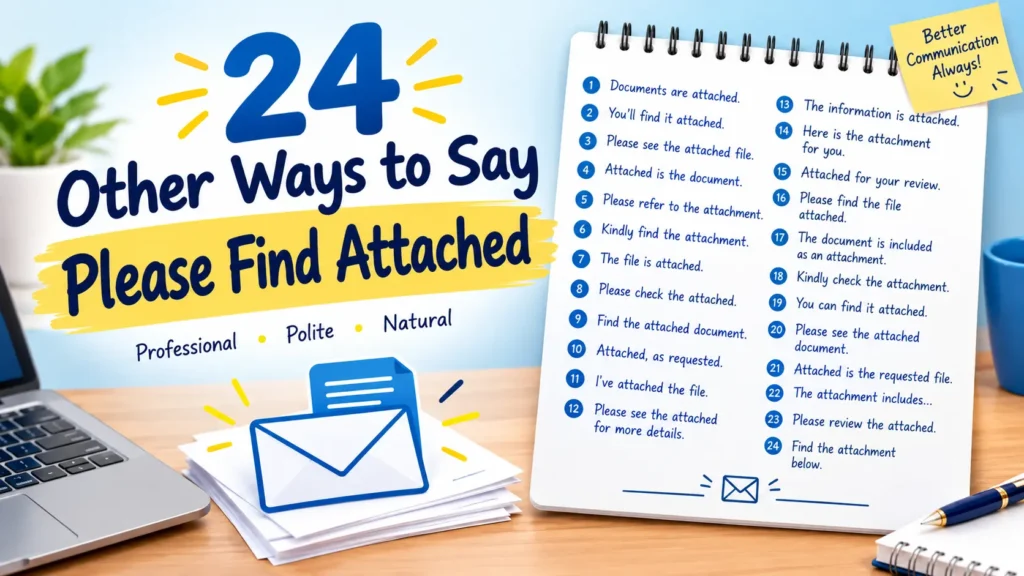
Want more professional email phrases? Explore other ways to say “Please Find Attached” — 24 natural and polished alternatives for professional emails.
9. I’m Excited About
Meaning / Definition
“I’m excited about” means you feel enthusiastic about a future event, idea, opportunity, or situation. Unlike “I’m excited to,” it is normally followed by a noun or noun phrase.
Usage
It is casual to semi-formal and works well in spoken English and friendly professional communication. Use it when the thing itself is the focus of your enthusiasm.
💡 Tip
Remember the difference between “excited to” and “excited about”: “I’m excited to start” uses a verb, while “I’m excited about the new job” uses a noun phrase.
Examples
- “I’m really excited about the concert next Saturday.”
- “Our department is excited about the upcoming changes.”
- “She’s excited about her new role at the company.”
- “The kids are excited about their first camping trip.”
10. I’m Happy to
Meaning / Definition
“I’m happy to” communicates willingness or pleasure about doing something. It is not always a direct substitute for “I look forward to,” because it can focus on readiness rather than anticipation.
Usage
This expression is common in professional and everyday communication and ranges from casual to semi-formal. It is especially useful when responding to a request or offering future assistance.
💡 Tip
“I’m happy to” often sounds cooperative rather than excited. That makes it a good choice when enthusiasm would feel excessive.
Examples
- “I’m happy to discuss the details during tomorrow’s call.”
- “I’m happy to help you review the assignment.”
- “We’re happy to answer any questions before the event.”
- “I’m happy to meet whenever your schedule allows.”
11. I’d Be Delighted to
Meaning / Definition
“I’d be delighted to” expresses strong pleasure about doing something. It is warmer and more enthusiastic than simply saying “I’d be happy to.”
Usage
This phrase is formal or semi-formal and works well with clients, guests, colleagues, and professional contacts. It can sound overly polished in a casual text between close friends.
💡 Tip
“Delighted” is strongest when the situation genuinely deserves warmth. Using it for something trivial can make the sentence sound theatrical.
Examples
- “I’d be delighted to discuss the proposal with your team.”
- “We’d be delighted to welcome you to our annual conference.”
- “I’d be delighted to recommend a few books for your course.”
- “She replied, ‘I’d be delighted to attend the ceremony.’”
12. I’m Pleased to
Meaning / Definition
“I’m pleased to” communicates satisfaction or positive feelings about something. It often introduces an announcement, response, or professional action rather than future anticipation.
Usage
It is formal and especially common in business, official announcements, and professional correspondence. It is not a universal replacement for “I look forward to.”
💡 Tip
Use “pleased to” for good news or a positive professional response, such as “I’m pleased to confirm,” rather than for every future event.
Examples
- “I’m pleased to confirm your registration for the conference.”
- “We’re pleased to welcome three new members to the department.”
- “I’m pleased to share the final version of the report.”
- “The principal was pleased to announce the scholarship recipients.”
13. I Hope to
Meaning / Definition
“I hope to” expresses a desire or intention to do something in the future. Unlike “I look forward to,” it does not necessarily suggest that the event is already arranged.
Usage
It works in casual, semi-formal, and formal English. It is particularly useful when discussing personal goals, plans, or possibilities.
💡 Tip
Choose “hope to” when the future action is uncertain or depends on circumstances. It is softer than stating that something definitely will happen.
Examples
- “I hope to visit Japan after I graduate.”
- “I hope to hear from you once you’ve reviewed the documents.”
- “She hopes to become a teacher after completing her degree.”
- “We hope to expand the program to other schools next year.”
14. I’m Interested in
Meaning / Definition
“I’m interested in” shows that something has your attention or that you want to explore it further. It is not a direct replacement for “I look forward to” because it expresses interest rather than anticipation.
Usage
It works in professional, academic, and everyday settings. Use it when discussing opportunities, topics, activities, or possible future involvement.
💡 Tip
This phrase is useful when you want to sound interested without promising enthusiasm. It can also introduce a noun or an -ing form: “I’m interested in the position” or “I’m interested in learning more.”
Examples
- “I’m interested in learning more about the internship.”
- “Our class is interested in visiting the science museum.”
- “I’m interested in hearing your experience with the software.”
- “She told the recruiter she was interested in the position.”
15. I’m Enthusiastic About
Meaning / Definition
“I’m enthusiastic about” communicates strong, positive interest in something. It is more energetic than “I’m interested in” but usually less conversational than “I’m excited about.”
Usage
The phrase is semi-formal and works well in interviews, professional writing, applications, and discussions. It is also natural when talking about hobbies or projects you genuinely care about.
💡 Tip
Because “enthusiastic” is a strong word, support it with a specific reason when writing professionally. This makes your enthusiasm sound genuine instead of decorative.
Examples
- “I’m enthusiastic about contributing to the company’s education project.”
- “She’s enthusiastic about environmental research.”
- “Our students are enthusiastic about creating their own short films.”
- “I’m enthusiastic about the chance to work with such a diverse team.”
16. I’m Excited for
Meaning / Definition
“I’m excited for” expresses enthusiasm about an upcoming event, experience, or occasion. It is especially common in conversational English, particularly in American English.
Usage
It is casual to semi-formal and is common in speech, texts, and social media. In formal writing, “I’m excited about” or “I look forward to” may sound more polished.
💡 Tip
“I’m excited for the weekend” is natural in conversation, but some formal writing styles prefer “I’m excited about the weekend” or “I’m looking forward to the weekend.”
Examples
- “I’m so excited for the holiday break.”
- “Are you excited for graduation?”
- “The whole team is excited for the product launch.”
- “I’m excited for our family reunion next month.”
Looking for more positive phrases? Check out other ways to say “Look Forward To” — natural and professional alternatives for every email and conversation.
17. I Await
Meaning / Definition
“I await” means that you expect something to arrive or happen. It is a formal expression and often sounds more distant than “I look forward to.”
Usage
Use it mainly in formal correspondence, official writing, and situations where something is expected. It is uncommon in relaxed conversation.
💡 Tip
“I await your response” is grammatically correct, but it can sound stiff. In many modern workplace emails, “I look forward to hearing from you” feels friendlier.
Examples
- “I await your confirmation before proceeding.”
- “The committee now awaits the final report.”
- “We await further instructions from the administration.”
- “The publisher awaits the author’s revised manuscript.”
18. I’m Counting Down to
Meaning / Definition
“I’m counting down to” means you are eagerly waiting for a specific future event. It creates a stronger sense of excitement than the standard “I look forward to.”
Usage
This is casual and expressive, making it ideal for conversations, social media, and messages to friends. It is generally too informal for serious professional correspondence.
💡 Tip
Use it when the event has a clear date or deadline. “I’m counting down to Friday” sounds natural because Friday gives the listener a specific target.
Examples
- “I’m counting down to my vacation!”
- “We’re counting down to the wedding next month.”
- “The students are counting down to the final day of school.”
- “Only ten days left. I’m officially counting down to the concert.”
19. I’m Anticipating the Opportunity to
Meaning / Definition
“I’m anticipating the opportunity to” expresses formal expectation about a future chance to do something. It is more formal and deliberate than ordinary conversational alternatives.
Usage
It suits professional correspondence, applications, proposals, and formal introductions. It can sound unnecessarily elaborate in everyday conversation.
💡 Tip
Because this expression is long, use it when the opportunity itself matters. If the sentence becomes crowded, “I’m eager to” will usually communicate the same basic idea more naturally.
Examples
- “I’m anticipating the opportunity to present our findings to the committee.”
- “We’re anticipating the opportunity to collaborate with your research team.”
- “She is anticipating the opportunity to discuss her proposal.”
- “I’m anticipating the opportunity to meet the visiting faculty members.”
20. I’m Eagerly Awaiting
Meaning / Definition
“I’m eagerly awaiting” means you are waiting for something with strong interest or excitement. It combines formal “awaiting” with the stronger emotion of “eagerly.”
Usage
This is formal and works best in professional, academic, or written contexts. It is less natural in everyday speech, where “I’m really looking forward to” is usually easier.
💡 Tip
Do not overuse this phrase in business emails. “Eagerly awaiting your response” can sound intense if the recipient has only had a short time to reply.
Examples
- “I’m eagerly awaiting the results of the scholarship application.”
- “The research team is eagerly awaiting the laboratory findings.”
- “We’re eagerly awaiting your final approval.”
- “Fans are eagerly awaiting the author’s next novel.”
21. I’m Looking Ahead to
Meaning / Definition
“I’m looking ahead to” means you are thinking positively or practically about a future period or event. It is not a direct replacement in every sentence because it emphasizes planning for the future.
Usage
It is semi-formal and works in conversations, workplace discussions, and planning contexts. It is especially useful when talking about what comes after the present situation.
💡 Tip
Use this expression when the future involves planning or preparation. “Looking ahead to next year” sounds more strategic than simply saying you are excited about next year.
Examples
- “We’re looking ahead to next semester and planning new courses.”
- “I’m looking ahead to the next stage of my career.”
- “The team is looking ahead to the holiday season.”
- “As we look ahead to the next quarter, we need to review our goals.”
22. I’m Very Much Looking Forward to
Meaning / Definition
“I’m very much looking forward to” adds extra emphasis to the standard expression. It shows sincere anticipation while keeping a polite and professional tone.
Usage
It is semi-formal and particularly useful in professional emails, invitations, and correspondence where you want warmth without sounding casual. It can also work in personal writing when the event is genuinely important.
💡 Tip
“Very much” is best used sparingly. Adding it to every email makes the phrase lose the emphasis you intended.
Examples
- “I’m very much looking forward to meeting you at the conference.”
- “We’re very much looking forward to working together.”
- “I’m very much looking forward to your presentation next week.”
- “She wrote to say that she was very much looking forward to the reunion.”
23. I’m Excited About the Prospect of
Meaning / Definition
“I’m excited about the prospect of” means you feel enthusiastic about the possibility of something happening. It is not a simple substitute for “I look forward to” because it emphasizes possibility.
Usage
This phrase is semi-formal and useful in interviews, career discussions, business communication, and thoughtful conversations. It is less suitable for quick texts because it is relatively long.
💡 Tip
Use “prospect of” when the future event is an opportunity or possibility rather than something already confirmed. It is particularly effective when discussing potential changes or opportunities.
Examples
- “I’m excited about the prospect of joining your research team.”
- “She’s excited about the prospect of studying abroad.”
- “The company is excited about the prospect of entering new markets.”
- “I’m excited about the prospect of turning this idea into a real project.”
Want to encourage someone after their effort? Read our guide on other ways to say “Good Job” — 28 natural and motivating alternatives for professional and personal messages.
24. I’m Happy to Anticipate
Meaning / Definition
“I’m happy to anticipate” can express a positive willingness to expect or prepare for something, but it is not a common direct replacement for “I look forward to.” In modern everyday English, it is usually more natural to choose a clearer phrase such as “I’m happy to” or “I’m looking forward to.”
Usage
This expression should be used carefully because native speakers generally prefer more straightforward alternatives. It may appear in specialized or formal contexts where anticipation is being discussed deliberately.
💡 Tip
Do not force a complicated phrase simply to avoid repetition. Clear English is usually better than a thesaurus having a small nervous breakdown.
Examples
- “We’re happy to anticipate the next phase of the project with careful planning.”
- “The committee is prepared to anticipate changes in demand.”
- “She was happy to anticipate the needs of the visiting group.”
- “The team worked together to anticipate challenges before the event.”
How to Use “I Look Forward To” Based on the Relationship
The most natural expression depends heavily on who you are speaking to and how much distance or familiarity exists between you.
With Friends
With friends, relaxed phrases such as “I can’t wait to,” “I’m excited for,” and “I’m really looking forward to” sound more natural than formal expressions such as “I anticipate.”
Example: “I can’t wait for us to finally try that new restaurant.”
With Family
Family conversations usually allow warm and informal expressions. “I’m excited to,” “I can’t wait to,” and “I’m looking forward to” all work well depending on how enthusiastic you want to sound.
Example: “I’m really looking forward to having everyone over for dinner.”
With Classmates
With classmates, semi-casual language usually feels comfortable. “I’m looking forward to,” “I’m excited about,” and “I’m keen to” can work depending on your relationship.
Example: “I’m looking forward to working with you on the presentation.”
With Coworkers
For coworkers, match the expression to the relationship and the workplace culture. “I’m looking forward to,” “I’m eager to,” and “I’m happy to” are useful choices when you want to stay friendly but professional.
Example: “I’m eager to hear how the client responds to our proposal.”
With a Teacher or Professor
When speaking to a teacher or professor, polite semi-formal language is generally safest. “I’m looking forward to,” “I’m interested in,” and “I hope to” can communicate respect without sounding excessively stiff.
Example: “I’m looking forward to discussing the research topic during office hours.”
With a Manager or Boss
Professional expressions should be clear and measured. “I’m eager to,” “I look forward to,” and “I’m happy to” are often appropriate depending on whether you are expressing enthusiasm, anticipation, or willingness.
Example: “I’m happy to discuss the revised timeline whenever you’re available.”
With a Client or Customer
Clients usually expect polished language without unnecessary emotional intensity. “I look forward to,” “I’m pleased to,” and “I’d be delighted to” can fit different professional situations.
Example: “I’d be delighted to walk you through the final proposal on Thursday.”
With Someone You Just Met
When you have just met someone, friendly but neutral language is usually better than very intense expressions. “I’m looking forward to,” “I’m pleased to,” or “I hope to” can work depending on the situation.
Example: “I hope to see you again at the next networking event.”
Bonus Section
Short Text Message Versions
Text messages rarely need the polished language of a formal email. Shorter expressions usually feel more genuine, especially when you are talking to friends, classmates, or people you know well.
- “Can’t wait to see you!”
- “Really excited for tomorrow!”
- “Looking forward to it!”
- “So ready for the weekend!”
- “Counting down already!”
- “Can’t wait to hear how it goes!”
Frequently Asked Questions
Is “I look forward to” formal or casual?
“I look forward to” is generally polite and semi-formal to formal. It is especially common in professional emails, but it can also be used in personal communication. The tone depends partly on what follows and the relationship between the speakers.
Is “I’m looking forward to” different from “I look forward to”?
The basic meaning is almost the same, but “I’m looking forward to” often feels more conversational and personal. “I look forward to” is especially common in professional email endings, while “I’m looking forward to” fits both speech and writing.
What can I say instead of “I look forward to” in a professional email?
You can use “I’m eager to,” “I’d be delighted to,” “I’m pleased to,” or “I anticipate,” depending on what you actually mean. For a simple polite closing, “I look forward to hearing from you” remains completely natural and does not need to be replaced just for the sake of variety.
Is “I look forward to meet you” grammatically correct?
No. The correct form is “I look forward to meeting you.” In this construction, “to” functions as a preposition, so it is followed by a noun or gerund form such as “meeting,” “hearing,” or “working.”
What is a natural way to say “I look forward to” in a text?
For casual texting, “Can’t wait to,” “I’m excited to,” “Really looking forward to,” and “Counting down to” are natural choices. The best one depends on how enthusiastic you want to sound.
What is the difference between “I anticipate” and “I look forward to”?
“I anticipate” often focuses on expecting something to happen, while “I look forward to” usually carries a more positive feeling about the future event. For example, you might anticipate a busy week without necessarily being excited about it.
Which alternative sounds most natural in everyday spoken English?
“I’m looking forward to,” “I’m excited to,” and “I can’t wait to” are common in everyday speech. “I anticipate” and “I await” are more formal and may sound unusual in a relaxed conversation.
Final Tips — How to Choose the Right Phrase
A good alternative is not simply the phrase that looks different on the page; it should match what you actually mean and how you normally speak.
- Consider the setting: Use “I can’t wait to” with friends and “I look forward to” in a formal email when the situation calls for a polite tone.
- Know your audience: Think about your relationship with the reader before choosing a highly enthusiastic or highly formal expression.
- Match the formality: “I await your response” is considerably more formal than “I can’t wait to hear from you.”
- Spoken vs written English: Expressions such as “I’m excited for” are common in conversation, while “I anticipate” appears more often in formal writing.
- Cultural awareness: “Keen to” is especially common in British English, while “excited for” is widely heard in American conversational English. Both are understood in many international settings.
- Emotional tone: Choose “I’m hopeful” when the outcome is uncertain, “I’m eager” when you want to show motivation, and “I’m excited” when you genuinely feel enthusiastic.
- Build your vocabulary naturally: Learn alternatives in complete sentences rather than memorizing isolated synonyms. That makes it easier to remember which expression belongs in which situation.
You do not need to eliminate “I look forward to” from your English. It is correct, useful, and still one of the safest choices for professional communication. The real skill is knowing when another expression better captures your level of excitement, expectation, politeness, or uncertainty.
For related expressions, you can also explore other ways to say “How are you?”, professional English greetings, polite ways to start a conversation, casual English expressions, and common English phrases for beginners.