
Saying “thank you very much” is one of the easiest ways to show appreciation, but using the same phrase repeatedly can sometimes feel predictable. Fortunately, English has many natural alternatives that can help you express gratitude in a more personal, polite, professional, or heartfelt way.
Whether you’re thanking a friend for helping you, responding to a thoughtful gift, appreciating someone’s professional support, or writing a formal email, choosing the right expression can make your gratitude sound more genuine. The best alternative depends on your relationship with the person and the situation.
When Should You Use These Alternatives?
- Professional situations: Choose polished expressions such as “I sincerely appreciate it” or “I greatly appreciate your help” when communicating with colleagues, clients, managers, or business contacts.
- Casual conversations: Expressions such as “Thanks a lot,” “I really appreciate it,” and “You’re the best” work naturally with friends and people you know well.
- Heartfelt moments: Use phrases such as “I’m truly grateful” or “I can’t thank you enough” when you want to communicate deeper appreciation.
- Emails and messages: A warm phrase can make your message sound more personal without becoming overly formal.
- After receiving help: Mentioning exactly what you appreciate can make your gratitude more meaningful.
- Special occasions: More expressive alternatives can work well when someone has done something especially thoughtful or generous.
⚠️ Warning: Not every alternative has exactly the same level of formality. A phrase like “You’re a lifesaver” is friendly and informal, while “I sincerely appreciate your assistance” is much more appropriate for professional communication.
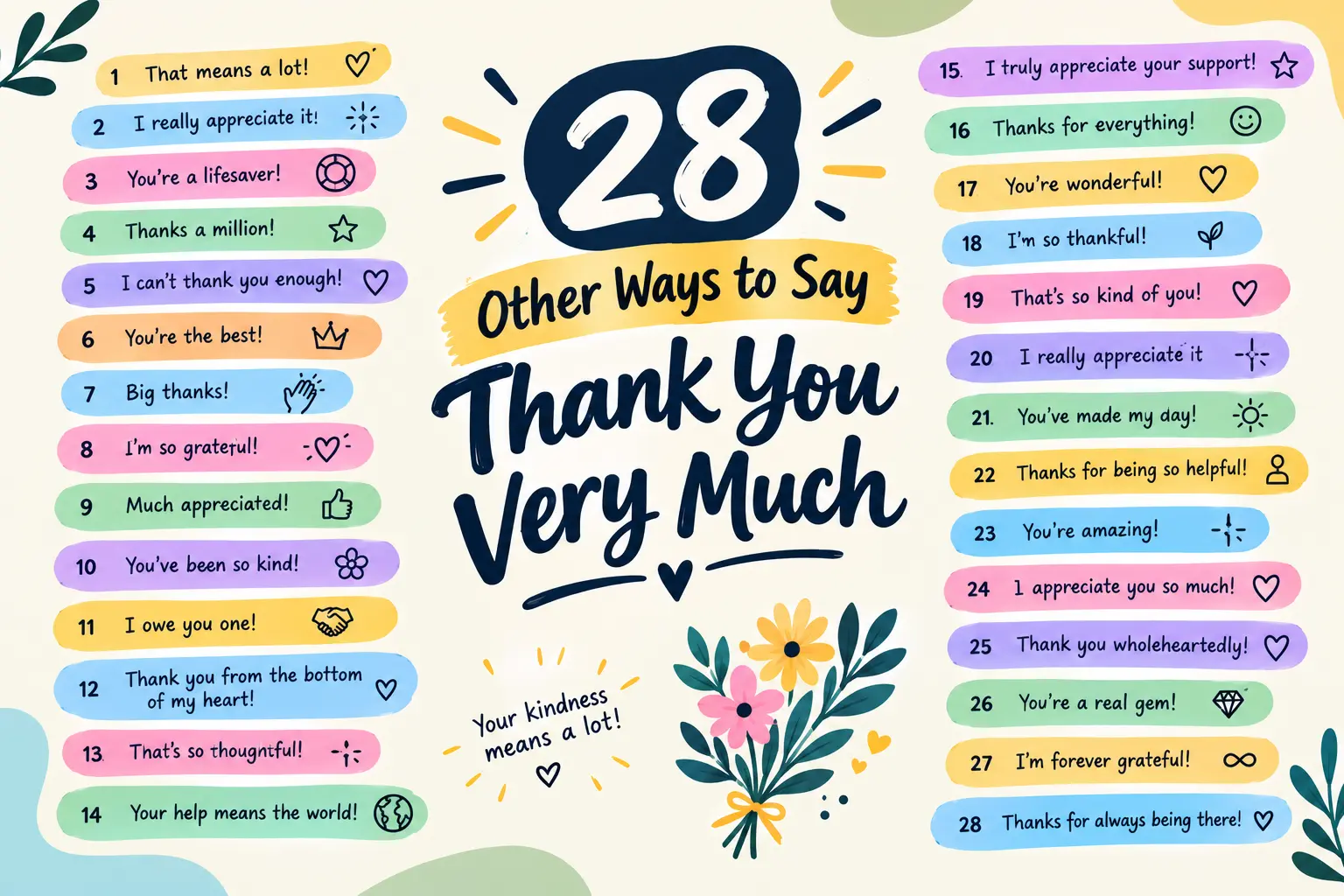
28 Other Ways to Say “Thank You Very Much”
1. Thank You So Much
Meaning / Definition: “Thank you so much” is a warm and enthusiastic way to express strong appreciation.
Usage: It works well in both casual conversations and many everyday professional situations.
💡 Tip: This is one of the easiest alternatives because it sounds natural without being overly formal.
Examples:
- Thank you so much for helping me with my project.
- Thank you so much for the thoughtful gift.
- Thank you so much for your time today.
- Thank you so much for understanding.
2. Thanks a Lot
Meaning / Definition: “Thanks a lot” is a common informal way to express gratitude.
Usage: It is especially suitable for conversations, texts, and friendly messages.
💡 Tip: Use your tone carefully because “thanks a lot” can occasionally sound sarcastic depending on the situation.
Examples:
- Thanks a lot for picking me up.
- Thanks a lot for your help.
- Thanks a lot for sending me the information.
- Thanks a lot for being there for me.
3. I Really Appreciate It
Meaning / Definition: This phrase expresses genuine appreciation for something someone has done.
Usage: It works particularly well when someone has provided help, support, time, or a favor.
💡 Tip: Adding the specific thing you appreciate makes the sentence feel more sincere.
Examples:
- I really appreciate it, thank you.
- I really appreciate it when you help me.
- I really appreciate your support.
- I really appreciate you taking the time to explain this.
4. I Truly Appreciate It
Meaning / Definition: “I truly appreciate it” emphasizes sincere and genuine gratitude.
Usage: It can be used in both personal and professional situations.
💡 Tip: Use “truly” when you want your gratitude to sound especially heartfelt.
Examples:
- I truly appreciate everything you’ve done for me.
- I truly appreciate your kindness.
- I truly appreciate your patience.
- I truly appreciate your support during this process.
5. I Sincerely Appreciate It
Meaning / Definition: This phrase expresses sincere and serious gratitude.
Usage: It is particularly appropriate for formal emails, professional communication, and meaningful situations.
💡 Tip: “Sincerely” gives the expression a more polished and formal tone.
Examples:
- I sincerely appreciate your assistance.
- I sincerely appreciate your time and effort.
- I sincerely appreciate your consideration.
- I sincerely appreciate everything you’ve done.
6. I Greatly Appreciate It
Meaning / Definition: “I greatly appreciate it” means that you value someone’s help or action very much.
Usage: It is common in professional and polite communication.
💡 Tip: This is a strong replacement for “thank you very much” in formal emails.
Examples:
- I greatly appreciate your help.
- I greatly appreciate your quick response.
- I greatly appreciate your assistance with this matter.
- I greatly appreciate your continued support.
7. I’m Very Grateful
Meaning / Definition: “I’m very grateful” directly communicates a strong feeling of thankfulness.
Usage: It works well when you want to sound sincere and personal.
💡 Tip: Use it when someone’s action has had a meaningful impact on you.
Examples:
- I’m very grateful for everything you’ve done.
- I’m very grateful for your support.
- I’m very grateful that you were there for me.
- I’m very grateful for your kindness.
8. I’m Truly Grateful
Meaning / Definition: This phrase expresses deep and sincere appreciation.
Usage: It is useful in heartfelt personal conversations as well as thoughtful written messages.
💡 Tip: “Truly grateful” sounds warmer and more emotional than a simple “thanks.”
Examples:
- I’m truly grateful for your kindness.
- I’m truly grateful that you helped me.
- I’m truly grateful for this opportunity.
- I’m truly grateful for everything you’ve taught me.
9. I Can’t Thank You Enough
Meaning / Definition: This expression means that the speaker feels their gratitude is too great to be fully expressed with words.
Usage: It is commonly used when someone has provided significant help or support.
💡 Tip: This phrase is especially effective when you want to emphasize how much someone’s actions meant to you.
Examples:
- I can’t thank you enough for helping me through this.
- I can’t thank you enough for your support.
- I can’t thank you enough for everything you’ve done.
- I can’t thank you enough for giving me this opportunity.
10. Many Thanks
Meaning / Definition: “Many thanks” is a concise and polite way to express appreciation.
Usage: It is particularly common in emails and written communication.
💡 Tip: This phrase is brief, professional, and easy to use at the end of a message.
Examples:
- Many thanks for your quick response.
- Many thanks for sending the documents.
- Many thanks for your assistance.
- Many thanks for your continued support.
11. Much Appreciated
Meaning / Definition: “Much appreciated” means that someone’s help, effort, or action is highly valued.
Usage: It is common in professional messages and informal workplace communication.
💡 Tip: Use it when you want to keep your thank-you short and direct.
Examples:
- Your help is much appreciated.
- Your quick response is much appreciated.
- Any assistance would be much appreciated.
- Your support is very much appreciated.
12. I Appreciate Your Help
Meaning / Definition: This phrase specifically thanks someone for assisting you.
Usage: It is suitable for professional emails, conversations, and everyday situations.
💡 Tip: Replace “help” with the exact thing the person did for a more personalized message.
Examples:
- I appreciate your help with the report.
- I appreciate your help during the meeting.
- I appreciate your help with this problem.
- I appreciate your help in getting everything organized.
13. I Appreciate Your Support
Meaning / Definition: This expression thanks someone for providing emotional, professional, or practical support.
Usage: It works well in both personal and professional relationships.
💡 Tip: This is especially useful when someone has supported you over a period of time.
Examples:
- I appreciate your support during this difficult time.
- I appreciate your support throughout the project.
- I appreciate your support and encouragement.
- I really appreciate your continued support.
14. I’m So Thankful
Meaning / Definition: “I’m so thankful” expresses warm and genuine gratitude.
Usage: It is most natural in personal conversations and heartfelt messages.
💡 Tip: Use it when you want to emphasize your feelings rather than simply acknowledge a favor.
Examples:
- I’m so thankful for your friendship.
- I’m so thankful you were there for me.
- I’m so thankful for this opportunity.
- I’m so thankful for everything you’ve done.
15. I’m Indebted to You
Meaning / Definition: “I’m indebted to you” means that you feel you owe someone a great deal because of their help.
Usage: It is more formal and can sound especially strong or heartfelt.
💡 Tip: Use it when someone’s assistance was particularly significant.
Examples:
- I’m indebted to you for your guidance.
- I’m truly indebted to you for your help.
- After everything you’ve done, I’m indebted to you.
- I’m indebted to you for giving me this opportunity.
16. You’re a Lifesaver
Meaning / Definition: “You’re a lifesaver” is an informal expression used when someone’s help solves a difficult or urgent problem.
Usage: It is common in friendly conversations and casual messages.
💡 Tip: Use it when someone’s help came at exactly the right time.
Examples:
- You’re a lifesaver for helping me finish this.
- Thanks for bringing my charger—you’re a lifesaver!
- You found my lost file? You’re a lifesaver!
- You’re a lifesaver for giving me a ride home.
17. You’re the Best
Meaning / Definition: “You’re the best” is a warm and casual way to show appreciation.
Usage: It is especially common among friends, family members, and close colleagues.
💡 Tip: Pair it with a specific reason to make it more meaningful.
Examples:
- You’re the best for helping me with this.
- You brought coffee? You’re the best!
- You’re the best for remembering my birthday.
- Thanks for everything—you’re the best.
18. I Owe You One
Meaning / Definition: “I owe you one” means you appreciate someone’s favor and suggest that you will return the favor in the future.
Usage: It is informal and commonly used between friends or colleagues.
💡 Tip: This phrase is best for favors rather than serious acts of kindness.
Examples:
- Thanks for covering my shift. I owe you one.
- You helped me fix my computer—I owe you one.
- Thanks for the ride. I owe you one!
- You saved me today. I owe you one.
19. I’m So Thankful for You
Meaning / Definition: This phrase expresses appreciation for a person rather than for one specific action.
Usage: It is warm, personal, and especially appropriate for close relationships.
💡 Tip: Use this when someone’s presence or ongoing support means a lot to you.
Examples:
- I’m so thankful for you and your friendship.
- I’m so thankful for you being there.
- I’m so thankful for you every day.
- I’m so thankful for you and everything you do.
20. I’m Grateful for Your Kindness
Meaning / Definition: This expression specifically recognizes someone’s kind or thoughtful behavior.
Usage: It works well in personal notes, messages, and heartfelt conversations.
💡 Tip: It sounds especially thoughtful when someone has gone out of their way to help you.
Examples:
- I’m grateful for your kindness.
- I’m grateful for your kindness and patience.
- I’m truly grateful for your kindness.
- I’m grateful for your kindness during such a difficult time.
21. Please Accept My Thanks
Meaning / Definition: “Please accept my thanks” is a formal way to express appreciation.
Usage: It is appropriate for formal letters, professional correspondence, and official communication.
💡 Tip: Choose this phrase when you want your gratitude to sound polished and respectful.
Examples:
- Please accept my thanks for your assistance.
- Please accept my sincere thanks.
- Please accept my thanks for your valuable contribution.
- Please accept my thanks for your time and consideration.
22. I’m Deeply Grateful
Meaning / Definition: “I’m deeply grateful” communicates strong and heartfelt appreciation.
Usage: It is particularly effective when someone has made a significant difference in your life.
💡 Tip: This phrase is more emotional than an ordinary “thank you.”
Examples:
- I’m deeply grateful for your support.
- I’m deeply grateful for everything you’ve done.
- I’m deeply grateful for this opportunity.
- I’m deeply grateful for your generosity.
23. I’m Eternally Grateful
Meaning / Definition: “I’m eternally grateful” means you expect to remain extremely thankful for someone’s help or kindness for a very long time.
Usage: It is highly expressive and usually reserved for meaningful situations.
💡 Tip: Because it is strong, use it when the situation genuinely deserves deep appreciation.
Examples:
- I’m eternally grateful for your support.
- I’ll be eternally grateful for what you did.
- I’m eternally grateful that you believed in me.
- We are eternally grateful for your generosity.
24. I Cannot Express How Grateful I Am
Meaning / Definition: This phrase emphasizes that your gratitude is so strong that ordinary words do not seem sufficient.
Usage: It is best for emotional, heartfelt, or significant situations.
💡 Tip: Use it sparingly because its emotional intensity makes it more suitable for important moments.
Examples:
- I cannot express how grateful I am for your help.
- I cannot express how grateful I am to have you in my life.
- I cannot express how grateful I am for this opportunity.
- I cannot express how grateful I am for everything you have done.
25. Thank You From the Bottom of My Heart
Meaning / Definition: This phrase expresses very deep and sincere gratitude.
Usage: It is usually used in emotional or personal situations.
💡 Tip: It is particularly suitable for heartfelt messages, letters, and special occasions.
Examples:
- Thank you from the bottom of my heart for being there.
- Thank you from the bottom of my heart for your kindness.
- Thank you from the bottom of my heart for everything.
- I want to thank you from the bottom of my heart.
26. I’m So Appreciative
Meaning / Definition: “I’m so appreciative” expresses strong recognition of someone’s kindness, help, or effort.
Usage: It is useful in both personal and professional contexts.
💡 Tip: Follow it with “of” and the specific thing you value.
Examples:
- I’m so appreciative of your help.
- I’m so appreciative of your kindness.
- I’m so appreciative of everything you’ve done.
- I’m so appreciative of your patience and understanding.
27. Your Kindness Means a Lot to Me
Meaning / Definition: This phrase tells someone that their kind action has significant personal meaning.
Usage: It is warm and sincere, making it ideal for thoughtful personal messages.
💡 Tip: Use this when you want to show that the person’s action affected you emotionally.
Examples:
- Your kindness means a lot to me.
- Your kindness means more to me than you know.
- Thank you—your kindness means a lot to me.
- Your kindness during this time means a lot to me.
28. I’m Truly Thankful for Everything
Meaning / Definition: This expression communicates broad and sincere appreciation for everything someone has done.
Usage: It works particularly well in personal messages, farewell notes, and meaningful conversations.
💡 Tip: Use it when you want to thank someone for several things rather than one specific favor.
Examples:
- I’m truly thankful for everything you’ve done.
- I’m truly thankful for everything you’ve taught me.
- I’m truly thankful for everything you’ve given me.
- I’m truly thankful for everything and all your support.
Bonus: Short Ways to Say Thank You Very Much
Sometimes you don’t need a long expression to show appreciation. Short phrases can feel natural and sincere when the situation is simple.
- Thanks so much!
- Much appreciated!
- Many thanks!
- Really appreciate it!
- I appreciate it!
- Thanks a million!
- You’re amazing!
- You’re the best!
These expressions work especially well in texts, quick replies, social media messages, and casual conversations.
Professional Ways to Say Thank You Very Much
When writing a professional email or communicating with a client, manager, teacher, or colleague, choose language that is appreciative without sounding overly casual.
Good options include:
- I sincerely appreciate your assistance.
- I greatly appreciate your support.
- I truly appreciate your time and effort.
- Many thanks for your assistance.
- Please accept my sincere thanks.
- Your support is greatly appreciated.
- I am very grateful for your consideration.
- Thank you for your valuable assistance.
For example, instead of writing “Thank you very much for helping me with this,” you could write, “I greatly appreciate your assistance with this matter.” The second version sounds more polished and professional.
Final Tips for Choosing Another Way to Say Thank You Very Much
- Match the situation: Choose casual expressions with friends and more polished phrases at work.
- Consider your relationship: The closer you are to someone, the more personal your gratitude can sound.
- Be specific: Saying what you appreciate often makes your thank-you more meaningful.
- Don’t overdo emotional phrases: Expressions like “I’m eternally grateful” are powerful, so save them for situations that genuinely deserve them.
- Use simple language when appropriate: You don’t always need a complicated phrase to sound sincere.
- Pay attention to tone: “You’re a lifesaver” sounds friendly, while “Please accept my thanks” sounds formal.
- Make gratitude personal: A short, genuine message can often be more effective than a long, overly formal one.
There are many natural ways to say “thank you very much,” and each one can communicate a slightly different feeling. Whether you want to sound professional, warm, casual, heartfelt, or creative, choosing the right expression can make your gratitude feel more genuine and appropriate for the situation.