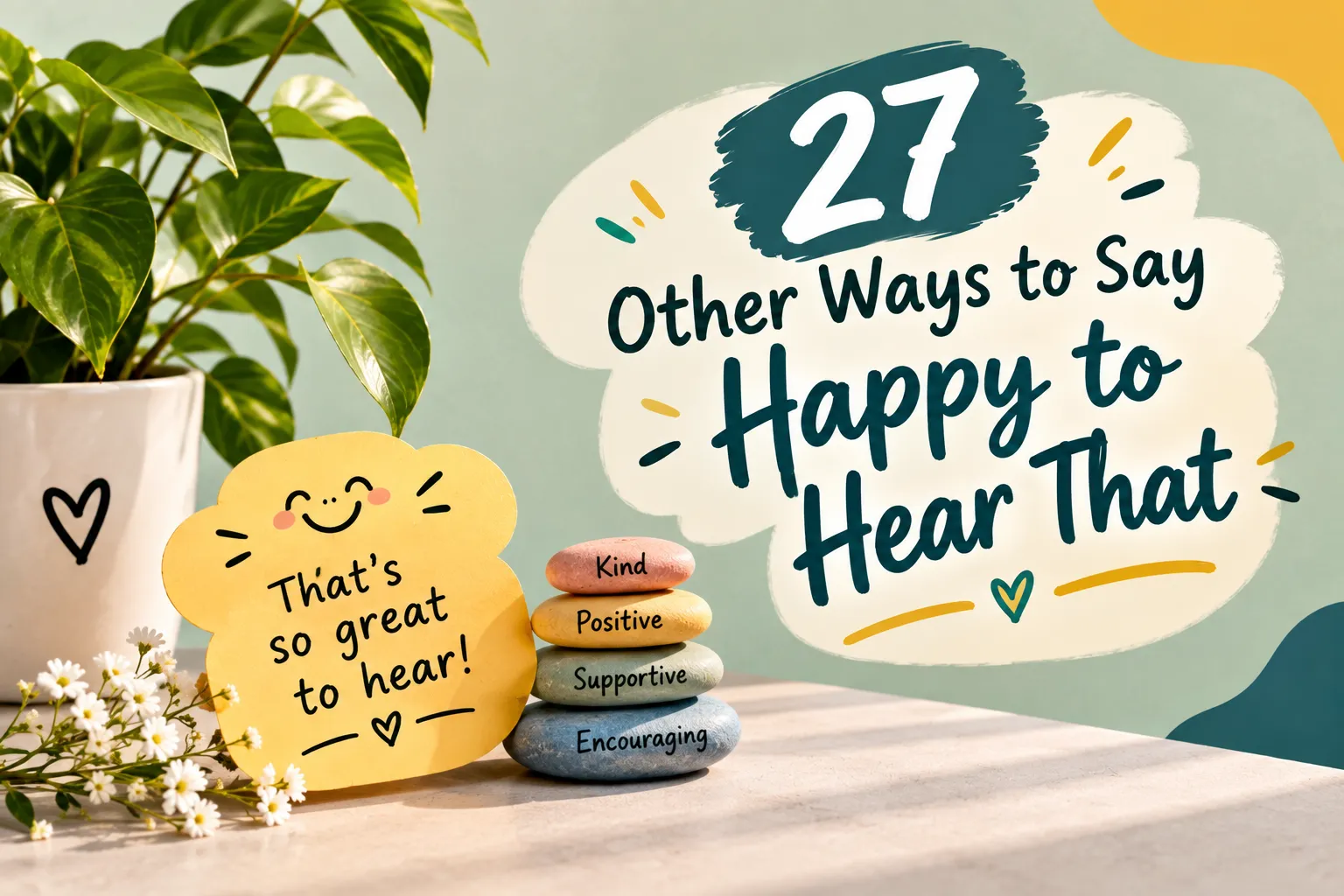

Sometimes, “happy to hear that” is the perfect response when someone shares good news, a positive update, or something that makes you feel relieved. However, using the same phrase repeatedly can make your conversations sound predictable.
Whether you’re replying to a friend, coworker, client, teacher, or someone you care about, having a few natural alternatives can help you express the same feeling in a more personal way. The right phrase can also make your response sound warmer, more professional, or more enthusiastic.
In this guide, you’ll find 27 other ways to say “happy to hear that”, with simple explanations and examples. You’ll also learn when each expression works best in everyday conversations, professional messages, and friendly replies.
When Should You Use These Alternatives?
You can use alternatives to “happy to hear that” when someone tells you something positive, reassuring, or encouraging.
- With friends and family: Use warm and casual expressions when someone shares good news.
- At work: Choose polite and professional phrases when responding to colleagues, clients, or managers.
- In emails: More polished expressions can make your reply sound thoughtful and professional.
- When someone feels better: Use supportive phrases when someone tells you they are recovering or doing well.
- When someone succeeds: Show genuine enthusiasm when someone shares an achievement or positive result.
Common mistake: Not every alternative has the same level of enthusiasm. “That’s wonderful to hear” sounds more excited, while “I’m glad to hear that” is neutral and works in many situations.
27 Other Ways to Say “Happy to Hear That”
1. I’m Glad to Hear That
Meaning/Definition: This means you feel pleased after hearing positive or reassuring news. It is one of the most natural alternatives to “happy to hear that.”
Usage: Use it in both casual conversations and professional communication. It is neutral and polite, so it works in emails, chats, and face-to-face conversations.
Tip: This is probably the safest everyday replacement when you are unsure which phrase to choose.
- “You finally got the job.” “I’m glad to hear that!”
- “The doctor says I’m doing better.” “I’m glad to hear that.”
- “Everything went smoothly.” “I’m glad to hear that.”
- “She enjoyed the presentation.” “I’m glad to hear that.”
2. That’s Great to Hear
Meaning/Definition: This expression shows that you are pleased by someone’s good news. It usually sounds friendly and positive.
Usage: Use it in casual conversations, work chats, and friendly emails. Its tone is warm without being overly emotional.
Tip: It is especially useful when responding quickly to a positive update.
- “I passed my exam!” “That’s great to hear!”
- “The project is finally finished.” “That’s great to hear.”
- “He’s feeling much better.” “That’s great to hear.”
- “We got the approval.” “That’s great to hear!”
3. That’s Wonderful to Hear
Meaning/Definition: This phrase expresses stronger happiness and enthusiasm about someone’s news. It sounds warmer than a simple “I’m glad to hear that.”
Usage: Use it when the news is especially positive or meaningful. It works well in personal and professional conversations.
Tip: Choose this when you genuinely want your response to sound enthusiastic.
- “We’re expecting our first child.” “That’s wonderful to hear!”
- “My recovery is going really well.” “That’s wonderful to hear.”
- “She accepted the offer.” “That’s wonderful to hear!”
- “The event was a huge success.” “That’s wonderful to hear.”
4. I’m So Glad to Hear That
Meaning/Definition: This version adds extra warmth and emotion to the basic phrase. It shows that the news genuinely matters to you.
Usage: It is ideal for friends, family members, and people you know well. It can also work professionally when the situation is personal or encouraging.
Tip: Use “so” when you want to make your happiness sound more sincere.
- “You’re feeling better now.” “I’m so glad to hear that.”
- “You found your lost dog.” “I’m so glad to hear that!”
- “Everything worked out.” “I’m so glad to hear that.”
- “You’re enjoying your new job.” “I’m so glad to hear that.”
5. That’s Really Good to Hear
Meaning/Definition: This means that the information you received is pleasing or reassuring. It has a natural, conversational tone.
Usage: Use it in everyday conversations, text messages, and informal workplace communication. It sounds friendly without being too enthusiastic.
Tip: It is a great choice when you want your response to feel natural rather than formal.
- “The treatment is working.” “That’s really good to hear.”
- “I finished everything on time.” “That’s really good to hear.”
- “He’s doing much better.” “That’s really good to hear.”
- “The client liked the idea.” “That’s really good to hear.”
6. I’m Pleased to Hear That
Meaning/Definition: This expression shows that you are satisfied or happy about the information. It has a more formal tone than “I’m glad to hear that.”
Usage: It works particularly well in professional emails, business conversations, and formal communication.
Tip: Choose this phrase when you want to sound polished and respectful.
- “The issue has been resolved.” “I’m pleased to hear that.”
- “You received the documents.” “I’m pleased to hear that.”
- “The customer was satisfied.” “I’m pleased to hear that.”
- “The project is progressing well.” “I’m pleased to hear that.”
7. That’s Lovely to Hear
Meaning/Definition: This is a warm and gentle way to respond to positive news. It can sound especially kind and personal.
Usage: Use it in friendly conversations, personal messages, and supportive replies. It is less common in very formal business writing.
Tip: It works nicely when someone shares something meaningful or heartwarming.
- “My family is coming to visit.” “That’s lovely to hear.”
- “We had such a wonderful weekend.” “That’s lovely to hear.”
- “She really enjoyed the gift.” “That’s lovely to hear.”
- “Everyone is getting along now.” “That’s lovely to hear.”
8. That’s Fantastic News
Meaning/Definition: This phrase expresses strong excitement about someone’s positive news. It is more enthusiastic than a neutral response.
Usage: Use it when someone has achieved something important or shares particularly exciting news. It works in both personal and professional settings.
Tip: Save this expression for genuinely exciting updates.
- “I got the promotion!” “That’s fantastic news!”
- “We won the contract.” “That’s fantastic news.”
- “She passed the interview.” “That’s fantastic news!”
- “The event sold out.” “That’s fantastic news.”
9. I’m Delighted to Hear That
Meaning/Definition: This means you are extremely pleased about what someone has told you. It has a warm but polished tone.
Usage: Use it in professional emails, formal conversations, or situations where you want to sound especially gracious.
Tip: “Delighted” sounds more formal than “glad,” so it may feel less natural in casual texting.
- “You enjoyed the conference.” “I’m delighted to hear that.”
- “The team approved your proposal.” “I’m delighted to hear that.”
- “You’re happy with the results.” “I’m delighted to hear that.”
- “Everything went according to plan.” “I’m delighted to hear that.”
10. That’s Such Good News
Meaning/Definition: This expression shows genuine happiness about someone’s positive update. It sounds natural and conversational.
Usage: Use it with friends, family, coworkers, or anyone sharing something positive.
Tip: It is especially natural in spoken English.
- “I got the apartment!” “That’s such good news.”
- “My test results were normal.” “That’s such good news.”
- “We’re finally moving forward.” “That’s such good news.”
- “She got the scholarship.” “That’s such good news!”
11. I’m Happy to Know That
Meaning/Definition: This phrase directly communicates that knowing the information makes you happy. It is understandable and positive.
Usage: Use it mostly in casual or semi-formal conversations. “I’m glad to hear that” is generally more natural in everyday English.
Tip: Use it when emphasizing that the information itself makes you feel good.
- “You’re enjoying the course.” “I’m happy to know that.”
- “You feel comfortable here.” “I’m happy to know that.”
- “Everything is going well.” “I’m happy to know that.”
- “You liked the experience.” “I’m happy to know that.”
12. That’s Reassuring to Hear
Meaning/Definition: This expression means the information makes you feel less worried or uncertain. It is especially useful when someone gives you a positive update after a concern.
Usage: It works well in professional and personal conversations. It is particularly appropriate when discussing problems, health updates, deadlines, or difficult situations.
Tip: Use this when the main feeling is relief rather than excitement.
- “The issue has been fixed.” “That’s reassuring to hear.”
- “The doctor says everything looks normal.” “That’s reassuring to hear.”
- “The payment has gone through.” “That’s reassuring to hear.”
- “The team has a backup plan.” “That’s reassuring to hear.”
13. I’m Relieved to Hear That
Meaning/Definition: This means you feel relief because the news removes a worry or fear. It focuses more on relief than happiness.
Usage: Use it when you were genuinely concerned about the situation. It is natural in both personal and professional conversations.
Tip: Choose this when you were worried before receiving the update.
- “The missing documents were found.” “I’m relieved to hear that.”
- “The operation went well.” “I’m relieved to hear that.”
- “The problem wasn’t serious.” “I’m relieved to hear that.”
- “The package arrived safely.” “I’m relieved to hear that.”
14. That’s Great News
Meaning/Definition: This is a short and enthusiastic response to positive information. It clearly shows that you are pleased.
Usage: Use it in texts, emails, conversations, and workplace communication. It is friendly and easy to use.
Tip: It works especially well as a quick response.
- “I got the job.” “That’s great news!”
- “We reached our goal.” “That’s great news.”
- “The client agreed.” “That’s great news!”
- “I’m feeling better.” “That’s great news.”
15. I’m Thrilled to Hear That
Meaning/Definition: “Thrilled” expresses a very high level of happiness and excitement. It makes your response sound energetic and enthusiastic.
Usage: Use it for genuinely exciting personal or professional news. It may sound too strong for ordinary updates.
Tip: Use this when “glad” does not feel enthusiastic enough.
- “I got into my dream university.” “I’m thrilled to hear that!”
- “We won the award.” “I’m thrilled to hear that.”
- “You’re joining our team.” “I’m thrilled to hear that!”
- “The launch was successful.” “I’m thrilled to hear that.”
16. That’s Good to Know
Meaning/Definition: This phrase means that the information is useful, positive, or reassuring to you. It is more neutral than “happy to hear that.”
Usage: It is common in professional conversations, meetings, emails, and everyday speech.
Tip: Use it when the information is useful as well as positive.
- “The store is open until nine.” “That’s good to know.”
- “The deadline has been extended.” “That’s good to know.”
- “The issue won’t affect the launch.” “That’s good to know.”
- “You can contact support anytime.” “That’s good to know.”
17. I’m Happy for You
Meaning/Definition: This directly expresses happiness because something good happened to another person. It focuses on the person rather than simply the information.
Usage: Use it when a friend, colleague, or family member achieves something or experiences a positive change.
Tip: This is especially natural when someone shares a personal achievement.
- “I got my dream job!” “I’m so happy for you.”
- “We’re buying our first home.” “I’m really happy for you.”
- “I finally graduated.” “I’m happy for you!”
- “She got engaged.” “I’m so happy for you both.”
18. That Makes Me Happy to Hear
Meaning/Definition: This phrase emphasizes that someone’s news creates a positive feeling in you. It sounds warm and personal.
Usage: Use it mainly in friendly or personal conversations. It is less common in formal business communication.
Tip: It can make a response feel more heartfelt.
- “You feel welcome here.” “That makes me happy to hear.”
- “You’re enjoying your new life.” “That makes me happy to hear.”
- “Everything worked out.” “That makes me happy to hear.”
- “You’re feeling confident now.” “That makes me happy to hear.”
19. That’s Excellent News
Meaning/Definition: This expression shows strong approval and happiness about a positive update. It sounds slightly more polished than “that’s great news.”
Usage: It is suitable for workplace communication, emails, and professional conversations as well as personal situations.
Tip: It is a useful choice when you want to sound positive but professional.
- “The proposal was accepted.” “That’s excellent news.”
- “The client renewed the contract.” “That’s excellent news!”
- “We reached the target.” “That’s excellent news.”
- “The problem has been resolved.” “That’s excellent news.”
20. I’m Happy to Know You’re Doing Well
Meaning/Definition: This expression shows that you feel good knowing someone is safe, healthy, or successful. It adds a personal touch to your response.
Usage: Use it when someone gives you an update about how they are doing. It is especially natural after not speaking with someone for a while.
Tip: It works well in thoughtful messages and personal emails.
- “I’m doing much better now.” “I’m happy to know you’re doing well.”
- “Things are going well at my new job.” “I’m happy to know you’re doing well.”
- “I’m finally feeling like myself again.” “I’m happy to know you’re doing well.”
- “Everything is going smoothly.” “I’m happy to know you’re doing well.”
21. That’s Really Wonderful
Meaning/Definition: This short expression shows genuine happiness and enthusiasm. It can stand alone as a warm reaction to good news.
Usage: Use it in casual conversations, friendly messages, and personal communication.
Tip: It sounds more natural when you want to react emotionally rather than formally.
- “I got accepted!” “That’s really wonderful.”
- “We’re going on vacation.” “That’s really wonderful!”
- “She’s doing much better.” “That’s really wonderful.”
- “You found a new apartment.” “That’s really wonderful.”
22. I’m So Pleased for You
Meaning/Definition: This means you feel genuinely happy about another person’s success or positive situation. It sounds warm and slightly polished.
Usage: Use it when congratulating someone or responding to personal achievements. It is appropriate in both personal and semi-formal communication.
Tip: “For you” makes the phrase more personal and supportive.
- “I finally got the promotion.” “I’m so pleased for you!”
- “We bought our first house.” “I’m so pleased for you.”
- “She passed all her exams.” “I’m so pleased for her.”
- “You got the opportunity you wanted.” “I’m so pleased for you.”
23. It’s Great to Know That
Meaning/Definition: This expression shows that you appreciate receiving positive information. It is friendly but relatively neutral.
Usage: Use it in conversations, emails, and workplace communication when someone gives you a helpful or reassuring update.
Tip: It is useful when you want to acknowledge information without sounding overly emotional.
- “The meeting is still scheduled.” “It’s great to know that.”
- “You’re available to help.” “It’s great to know that.”
- “Everything is under control.” “It’s great to know that.”
- “The team supports the idea.” “It’s great to know that.”
24. That’s Such a Relief
Meaning/Definition: This expression shows that you feel relieved because something you were worried about has turned out well.
Usage: Use it when someone shares reassuring news after a stressful or uncertain situation.
Tip: This phrase is about relief rather than simple happiness.
- “The documents were recovered.” “That’s such a relief.”
- “The test results were fine.” “That’s such a relief.”
- “The flight wasn’t canceled.” “That’s such a relief.”
- “We solved the problem.” “That’s such a relief.”
25. I’m Really Pleased to Hear That
Meaning/Definition: This is a warm and professional way to express happiness about positive information. It sounds more polished than everyday phrases like “That’s great.”
Usage: It works especially well in professional emails, customer communication, and workplace conversations.
Tip: Use this when you want to sound positive while maintaining a professional tone.
- “The customer was satisfied.” “I’m really pleased to hear that.”
- “The project is on schedule.” “I’m really pleased to hear that.”
- “You found the information useful.” “I’m really pleased to hear that.”
- “The team completed the work.” “I’m really pleased to hear that.”
26. That’s Fantastic to Hear
Meaning/Definition: This phrase communicates strong excitement and happiness about someone’s news. It is enthusiastic and friendly.
Usage: Use it when the news is especially positive or exciting. It works well in casual conversations and professional settings.
Tip: It is a good choice when you want your response to sound energetic.
- “We reached our sales goal.” “That’s fantastic to hear!”
- “I got the scholarship.” “That’s fantastic to hear.”
- “The event went perfectly.” “That’s fantastic to hear!”
- “You’re enjoying your new role.” “That’s fantastic to hear.”
27. I’m So Happy to Hear That
Meaning/Definition: This is a direct and emotional variation of “happy to hear that.” It clearly communicates genuine happiness about the information.
Usage: Use it in friendly and personal conversations when you want to sound warm and sincere. It can also work in supportive messages.
Tip: Adding “so” makes the response more enthusiastic and heartfelt.
- “You’re feeling much better.” “I’m so happy to hear that.”
- “You got the job!” “I’m so happy to hear that!”
- “Everything worked out.” “I’m so happy to hear that.”
- “You enjoyed the trip.” “I’m so happy to hear that.”
Bonus: Short Text Messages Instead of “Happy to Hear That”
If you are replying to a text message, you do not always need a complete sentence. Short, natural responses can sound more conversational.
- So glad to hear it!
- That’s great!
- Amazing news!
- Love hearing that!
- That’s wonderful!
- So happy for you!
- That’s awesome!
- What great news!
- So good to hear!
- I’m really glad!
These shorter expressions are especially useful when chatting with friends, family, coworkers, or people you already know well.
Final Tips for Choosing the Right Alternative
- For friends: Try “That’s great to hear,” “I’m so glad to hear that,” or “I’m happy for you.”
- For work: Use “I’m pleased to hear that,” “That’s excellent news,” or “That’s good to know.”
- For emotional support: Choose “I’m relieved to hear that” or “That’s such a relief.”
- For exciting news: Use “That’s fantastic news,” “I’m thrilled to hear that,” or “That’s wonderful to hear.”
- For casual texting: Keep it short with “That’s great!” or “So glad to hear it!”
- For personal achievements: “I’m so pleased for you” or “I’m happy for you” sounds more personal.
The best alternative depends on why you are happy. If you simply want to acknowledge positive news, “I’m glad to hear that” is natural and versatile. If the news is exciting, choose a stronger phrase such as “That’s fantastic to hear.” If you were worried beforehand, “I’m relieved to hear that” communicates your feeling more accurately.